US, Iran, UAE trade Hormuz attack claims: What we know
 05 May 2026

Tensions in the Gulf have spiralled this week after the United States and Iran both claimed to have fired on and damaged each other’s ships despite a ceasefire in the US-Israel war on Iran.
After US President Donald Trump announced a US plan to “guide” ships stranded in the Gulf out through the Strait of Hormuz in an operation he called Project Freedom, Iran said ships trying to use the strait without permission from the Islamic Revolutionary Guard Corps (IRGC) would be fired on, igniting fears of a return to war.
Trump did not provide any details about how US forces planned to ensure safe passage for commercial ships. About 2,000 ships are currently stranded on either side of the strait, which has been almost completely closed since the start of the war on February 28.
On Monday, Iran’s Fars News Agency reported that a US warship that had refused to turn back from the Strait of Hormuz had been hit by two Iranian drones. The US military’s Central Command (CENTCOM) denied a warship had been hit and conversely claimed it had sunk vessels belonging to the IRGC. Iran, which denied that any IRGC vessels had been hit, issued a map of the strait that showed new boundaries of the area under its control that were farther to the east than before and included the territorial waters of the United Arab Emirates, sparking fears of a new regional confrontation.
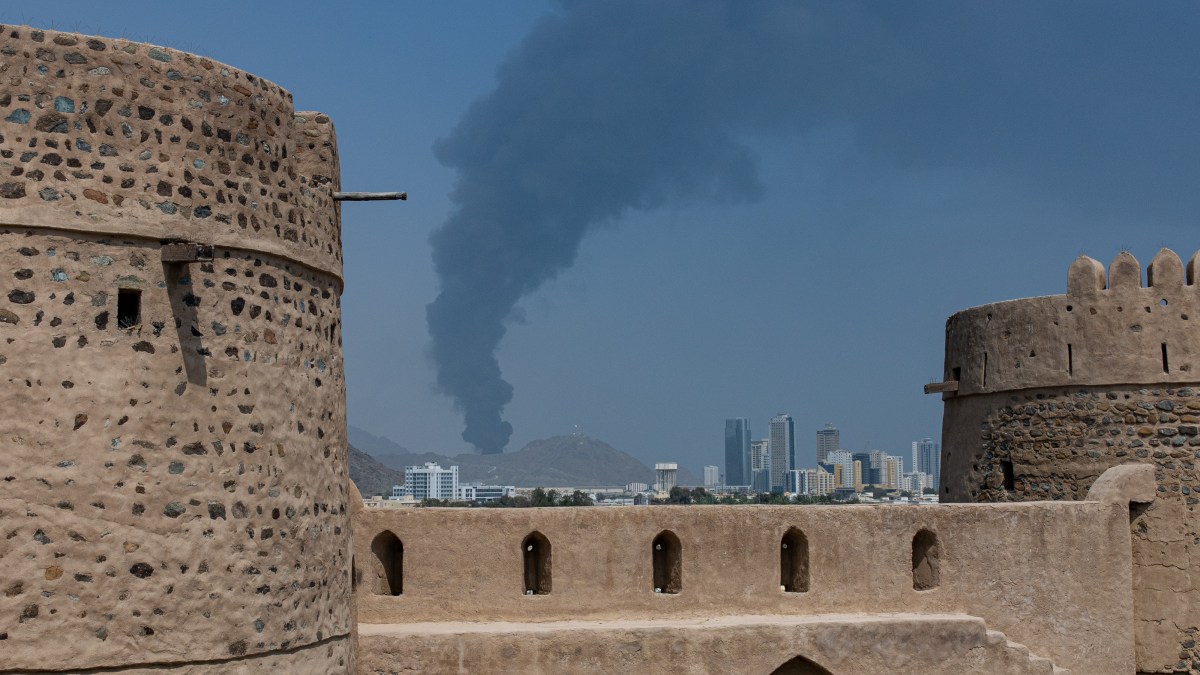
The UAE later accused Iran of attacking the eastern emirate of Fujairah with a barrage of missiles and drones, setting an oil refinery ablaze and wounding three Indian nationals.
Advertisement
The recent claims and counterclaims made by the US and Iran follow rhetoric used since early in the war in which both sides have claimed to have hit the other while denying any damage to their own assets.

What is Project Freedom?
On Monday, Trump said US forces would begin escorting stranded ships through the Strait of Hormuz, signalling a direct challenge to Iran’s closure of the strategic waterway, through which 20 percent of the world’s oil and liquefied natural gas supplies are shipped in peacetime. Iran’s threats to attack ships in effect have blockaded the strait since US-Israeli attacks started on February 28.
The closure of the vital maritime corridor has sent oil and fertiliser prices surging around the world and prompted fears of a global recession and food emergency.
In response, the US began its own naval blockade of Iranian ports on April 13.
Trump said operation Project Freedom was being mounted at the behest of countries whose vessels remain stuck on either side of the strait, and which he described as “neutral and innocent bystanders”.
“The Ship movement is merely meant to free up people, companies, and Countries that have done absolutely nothing wrong – They are victims of circumstance,” Trump posted on his Truth Social platform on Sunday, calling it a “humanitarian gesture”.
Did Iran attack a US warship on Monday?
Fars reported that a US warship had been hit by two Iranian drones after it refused orders to turn back from the strait. CENTCOM denied this, however.
The claim has not been verified by any independent observers.
“The Iranian leadership feel they need to match President Trump’s escalation with their own escalation,” Shahram Akbarzadeh, a professor in Middle East and Central Asian politics at Australia’s Deakin University, told Al Jazeera.
“If the Iranians cannot benefit from export revenue due to the US blockade, they want to inflict the same economic pain on the US and its regional allies.”
Did the US hit Iranian boats?
In a statement on Monday, US Admiral Brad Cooper said CENTCOM forces sank six IRGC vessels that had tried to interfere with Project Freedom. Trump later said seven boats had been hit.
On Tuesday, the Iranian state broadcaster IRIB, quoting an unnamed Iranian military commander, reported Tehran had launched an investigation after the US allegations of vessel attacks.
IRIB reported no IRGC vessels had been hit but its investigation had determined that US forces had “attacked two small boats carrying people on their way from Khasab on the coast of Oman to the coast of Iran on Monday”.
Advertisement
The attacks destroyed the boats and killed five civilian passengers, the commander said. The US “must be held accountable for their crime”, the commander added.
The US has not commented on this, and the claim has not been verified by any independent observers.
Was the UAE hit too?
The UAE accused Iran of attacks on Fujairah that caused a fire at an oil refinery. The Ministry of Defence said its air defences “engaged” 12 ballistic missiles, three cruise missiles and four drones launched from Iran on Monday.
Iran did not officially comment on this, and the claim has not been verified by independent observers.
On Tuesday, IRIB quoted a military official as saying: “The Islamic Republic had no preplanned programme to attack the mentioned oil facilities, and what happened was the result of US military adventurism aimed at creating a passage for the illegal transit of ships through the restricted waterways of the Strait of Hormuz. The US military must be held accountable for this.”
The official called on the US to end the “improper practice” of using force in the diplomatic process and to stop “military adventurism in this sensitive oil region, which affects the economies of countries around the world”.
Akbarzadeh said the “attack on Fujairah” represented an example of Iran “spreading the pain”.
The attack – if indeed carried out by Iran – would mark the first on the UAE since a ceasefire agreed by Tehran and Washington went into effect on April 8.
The UAE’s Ministry of Foreign Affairs condemned in the “strongest terms the renewed terrorist, unprovoked Iranian attacks targeting civilian sites and facilities in the country”.
It said it will not tolerate any threat to the UAE’s security and sovereignty and warned that it reserves the “full and legitimate right to respond” to the attacks.
Akbarzadeh said the latest developments pose a serious threat to any diplomatic efforts to end the conflict.
“We see escalation after escalation against the backdrop of shuttle diplomacy,” Akbarzadeh said.
“Such attacks, even if they are aimed to be contained, risk exploding into another major combat.”
Akbarzadeh said neither the Americans nor the Iranians want war. But, equally, neither are prepared to show weakness, he said.
“This dynamic has locked them in a perpetual conflict and in desperate need of a circuit breaker. Pakistan is trying to offer that circuit breaker with limited success.”
Related News
FBI Director Kash Patel sues Atlantic for ‘false’ reporting on drinking
Iran war: What’s happening on day 54 as Trump extends ceasefire?
Israel approves purchase of fighter jets from the US