The UWI Celebrates Dr the Hon. Ralph E. Gonsalves
 27 April 2026



The UWI Celebrates Dr the Hon. Ralph E. Gonsalves

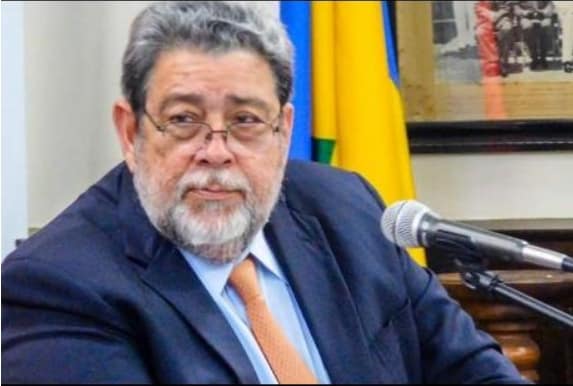
In a November 2025 reflection, UWI Emeritus Professor and Jamaica Chapter Principal Director of Transparency International, Trevor Munroe, praised Dr the Hon Ralph Gonsalves as a transformational statesman, saying, “geniuses like Gonsalves come only once in a lifetime.” Munroe highlighted Gonsalves’ visionary support for higher education and its impact on national development, noting that he pulled St. Vincent and the Grenadines (SVG) from being the third-poorest CARICOM country to 76 on the human development index. With SVG now only 0.11 points from top-tier developing countries, and positioned just behind Iran, the country is on a trajectory toward first-world status by 2040, with a goal of one university graduate per household by 2030. Munroe credited Gonsalves for remarkable developmental progress and for asserting sovereignty through measured advancement.
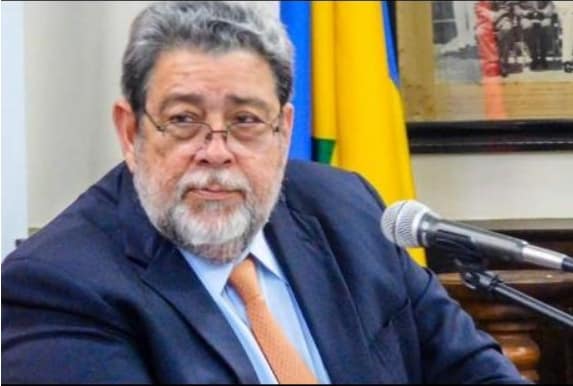
The University of the West Indies (The UWI) announces a historic honour in celebration of this respected Caribbean leader, scholar, and alumnus. This decision was confirmed at a special meeting of the University Council on April 17, 2026, and commends Dr Gonsalves’ six decades of service, scholarship, and leadership across the region.

To appreciate the significance of this honour, it helps to look back at Dr Gonsalves’ journey with The UWI, which began as an undergraduate student leader. Serving as President of the Guild of Students, he played a key role in historic campaigns, including the call to reverse the regional governments’ stance on scholar Walter Rodney. He graduated with distinction in Economics in 1969, then pursued advanced studies in East Africa and Manchester, earning his PhD before returning to The UWI as a lecturer in Political Science. He taught at both Mona and Cave Hill campuses, shaping generations of Caribbean thinkers. His most enduring impact, however, has been in politics. As Prime Minister of St. Vincent and the Grenadines, he served five consecutive terms—the longest in Caribbean history—before continuing as Opposition Leader after 2025.

This latest recognition continues a tradition by the regional university of honouring alumni who have shaped Caribbean development. Tributes to past honourees, including PJ Patterson, Owen Arthur, Edward Seaga, Michael Manley, Bruce Golding, Portia Simpson-Miller, and Sir Erskine Sandiford, all reflect the university’s belief in higher education as a foundation for leadership and nation-building.
The honour for Dr Gonsalves, however, is unprecedented in both symbolism and practicality. When approached about the University’s intention, he humbly requested that no building or centre be named after him. So instead, The UWI has chosen to dedicate a research scope specifically to development, sovereignty and education in his honour.

Building on this unique tribute, a Centre for Public Policy and Governance at Cave Hill Campus will conduct research in the areas of Dr Gonsalves’ long academic interest, such as regional integration, decolonisation and sovereignty.
Vice-Chancellor Professor Sir Hilary Beckles praised Dr Gonsalves’ fearless leadership, commitment to Caribbean sovereignty, and lifelong support for higher education. “It is only appropriate that we honour him in this way, befitting him, and having this defined intellectual discourse in development and sovereignty aligned with Dr Gonsalves at The UWI.”

END
About The University of the West Indies
The University of the West Indies (The UWI) has played a crucial role in Caribbean development for over 75 years, consistently contributing to the improvement of the well-being of people across the region.
Established in 1948 as a university college of London in Jamaica, with just 33 medical students, UWI has grown into an internationally respected, global university with nearly 50,000 students. Today, it boasts five campuses: Mona in Jamaica, St. Augustine in Trinidad and Tobago, Cave Hill in Barbados, Five Islands in Antigua and Barbuda, and its Global Campus, along with international centres in partnership with universities across North America, Latin America, Asia, Africa, and Europe.
The UWI offers over 1000 certificate, diploma, undergraduate and postgraduate degree options in Culture, Creative and Performing Arts, Food and Agriculture, Engineering, Humanities and Education, Law, Medical Sciences, Science and Technology, Social Sciences, and Sport. As the leading university in the Caribbean, it is home to the largest pool of intellect and expertise in the region, dedicated to addressing the critical issues facing both the Caribbean and the wider world.
Validated by its inclusion in the Times Higher Education (THE) annual rankings since 2018, The UWI has affirmed its position as one of the top universities globally. It stands out as the only English-speaking institution in the Caribbean featured in four of THE’s prestigious ranking lists. The World University Rankings evaluate over 2,000 research-focused universities worldwide, while the Golden Age University Rankings highlight institutions established between 50 and 80 years ago. The Latin America Rankings focus specifically on universities within Latin America and the Caribbean. Additionally, the Impact Rankings assess universities based on their contributions to the United Nations’ Sustainable Development Goals (SDGs).
This recognition has also springboarded the establishment of The UWI’s International School for Development Justice (ISDJ), a global online graduate business school aimed at preparing future leaders for sustainable development.
The UWI is an SDG-engaged university consistently recognised among the best in the world. Discover more at www.uwi.edu.
Advertise with the mоѕt vіѕіtеd nеwѕ ѕіtе іn Antigua!
We offer fully customizable and flexible digital marketing packages.
Contact us at [email protected]

Related News
VIDEO: Lovell Says All Saints West Has Potential to Become ‘Model Constituency’ with T...

LETTER: While we wait: Abortion Law
Judge Recuses Himself in Stroll v. Global Bank Case as Matter Nears Conclusion