Rubio tries to reassure Gulf allies on US-Iran deal details
 24 June 2026
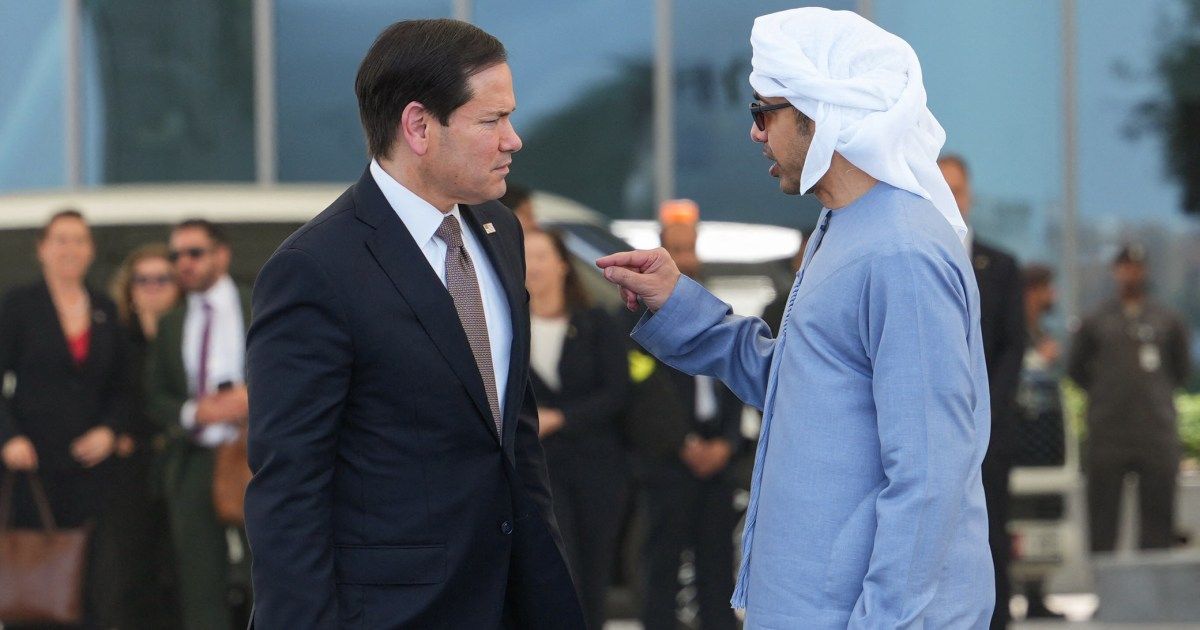

United States Secretary of State Marco Rubio is on the second day of a visit to the Gulf region to reassure allies that a deal to end the Iran-US war would account for their security concerns.
On Wednesday, Rubio held a working lunch with United Arab Emirates President Sheikh Mohamed bin Zayed Al Nahyan and other senior figures, including National Security Advisor Sheikh Tahnoun bin Zayed Al Nahyan and Foreign Minister Sheikh Abdullah bin Zayed Al Nahyan.
- list 1 of 3Israel continues attacks on Lebanon despite agreeing to ceasefire
- list 2 of 3Israel fetes Somaliland’s leader as it seeks to expand Red Sea influence
- list 3 of 3Explosion at Qatar’s Ras Laffan LNG facility kills at least 13
end of list
He is set to visit Kuwait and Bahrain in the coming days.
“We want to hear from our partners,” Rubio told reporters as he arrived in Abu Dhabi on Tuesday. “We want to make sure that their views are taken into account, and we understand their security concerns, their regional economic concerns as well.”
His comments come after the US and Iran signed a memorandum of understanding last week to extend a fragile ceasefire and work towards a permanent end to more than 100 days of war. Talks are supposed to continue for 60 days to iron out thorny issues, including Iran’s nuclear programme.
The US and Israel launched the war on February 28, killing Iran’s Supreme Leader Ali Khamenei in the initial wave of strikes. As part of its response, Tehran attacked, with varying intensity, all six Gulf Cooperation Council (GCC) countries. The UAE alone was targeted by about 2,800 missiles and drones; in Kuwait, the airport, commercial ports and desalination plants were hit; missile attacks on Qatar’s Ras Laffan Industrial City, the country’s main gas facility, caused “significant damage”.
Advertisement
Iran also attacked and threatened to attack vessels passing through the Strait of Hormuz, through which the GCC nations export most of their oil and gas to the world. Iran’s de facto blockade of the narrow waterway resulted in billions of dollars in lost revenues.
The US-Iran accord includes the resumption of traffic through the maritime trade chokepoint and the removal of a US blockade on Iranian ports. It is not clear yet whether Iran still intends to impose a fee for vessels passing through the strait, something that senior Iranian officials have previously suggested. Trump made clear on Wednesday that it’s not an option. In an all-capital letter post on his Truth Social platform, he said that no tolls, no insurance costs or charges of any kind should be applied to ships.
The agreement also includes a waiver on US sanctions and the unfreezing of Iranian assets.
It does not address Iran’s ballistic missiles nor Tehran’s relations with its regional allies – two concerns for Gulf countries, which have found their cities and energy infrastructure highly vulnerable to Iranian missiles, rockets and drones during the war.
Related News
China arrests US researcher it says is suspected of ‘spying’

Continuity or change? What to know about Colombia’s run-off election
Top Ukrainian officials return Polish awards in WWII dispute