Curiosity: The Seed of Caribbean Scientific Excellence
 06 July 2026



By Ambassador Dr. Clarence E. Pilgrim

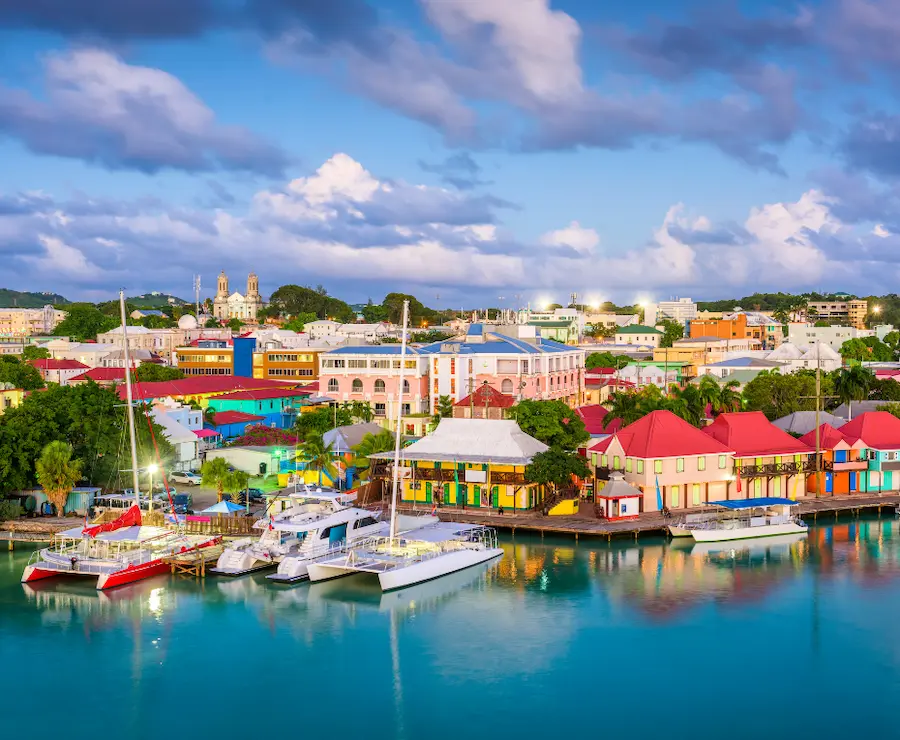
My interest in science began long before I understood the meaning of the word itself. As a boy growing up on East Street in St. John’s, Antigua, I was fascinated by how things worked, especially how plants grew. The small space where I experimented no longer exists today, but the lessons I learned there have remained with me throughout my life.
Two plants particularly captured my imagination: pumpkins and spinach.

I became convinced that feeding milk to a pumpkin plant would help it grow larger and stronger. With youthful enthusiasm, I regularly gave the plant what I believed was a secret ingredient. To my delight, the pumpkin flourished, and I proudly regarded the result as proof of my theory. Looking back, I now understand that healthy plant growth depends upon nutrients, soil quality, moisture, sunlight, and biological processes. Yet that childhood experiment taught me a lesson that has guided me ever since: progress begins with observation, experimentation, and a willingness to learn from results.

My spinach patch was equally rewarding. Enriched with a generous supply of manure, the plants grew lush, green, and abundant. I inspected them daily, fascinated by every new leaf and eager to discover what would happen next.
Although I did not realize it then, I was practising the fundamentals of scientific inquiry. I was observing, testing ideas, evaluating results, and refining my approach. In many respects, I was a homemade scientist.

That experience taught me an important truth: science does not begin in a laboratory. It begins with a question. Children naturally ask, Why does this happen? What caused that result?
What if I tried something different? Those simple questions have inspired some of humanity’s greatest discoveries.

Schools, colleges, and universities help transform that natural spirit of inquiry into expertise by providing knowledge, mentorship, and opportunity. Across the Caribbean, one organisation has been instrumental in nurturing that journey—the Caribbean Science Foundation (CSF).
Established in 2010, the Caribbean Science Foundation has been guided by Professor Cardinal Warde of MIT and other regional STEM leaders in advancing science, technology, engineering, and mathematics (STEM) education, research, innovation, and entrepreneurship throughout the Caribbean. Through initiatives such as the Student Program for Innovation in Science and Engineering (SPISE), teacher development, mentorship, and research partnerships, the Foundation is preparing a new generation of Caribbean innovators.
Most importantly, the Foundation recognises a fundamental truth: the Caribbean’s greatest resource is neither its land nor its sea, but the limitless potential of its people.
History has shown that Caribbean people can excel on the world stage when opportunity is provided. From Nobel Laureate Sir Arthur Lewis to today’s emerging generation of researchers, engineers, physicians, and entrepreneurs, our region has repeatedly demonstrated that talent flourishes when it is identified, nurtured, and encouraged.
Today, decades after those childhood experiments on East Street, my fascination with discovery remains undiminished. The questions have become more complex, but the desire to learn remains unchanged. That is why I firmly believe scientific inquiry should never be viewed as a stage of life but as a lifelong journey. Scientific inquiry should not be limited by age.
Experience is not the enemy of innovation; it is often one of its greatest allies.
Science belongs to everyone. It belongs to the child conducting an experiment in a backyard garden, the student in a classroom, the researcher in a laboratory, the entrepreneur developing a new idea, and the retiree whose decades of experience may hold the key to solving tomorrow’s challenges.
While considerable attention is rightly placed on inspiring young people to pursue STEM disciplines, there is also an untapped reservoir of knowledge, experience, and insight among our senior citizens.
Across the Caribbean, retired teachers, farmers, engineers, healthcare professionals, public servants, entrepreneurs, and community leaders possess decades of practical wisdom that could enrich scientific inquiry and innovation.
The remarkable life of George Washington Carver reminds us that science is driven not merely by knowledge, but by a lifelong commitment to observation, experimentation, and service to humanity. His example demonstrates that learning and discovery never have an expiration date.
For that reason, I respectfully challenge the Caribbean Science Foundation to pioneer a regional “Mature Citizens for Science” initiative. Such a programme could engage retirees and senior professionals in mentoring, citizen-science projects, innovation forums, research discussions, and lifelong learning. An annual symposium bringing together experienced professionals, researchers, educators, entrepreneurs, and students would further strengthen collaboration across generations.
Science has never been more important to the Caribbean than it is today.
Whether strengthening food security, improving healthcare, developing renewable energy, protecting our environment, harnessing artificial intelligence, or creating the next generation of technology companies, science will shape much of our region’s future prosperity. Investing in scientific inquiry is therefore not simply an educational priority; it is an economic and developmental imperative.
The Caribbean Science Foundation is already demonstrating what is possible when vision meets action. From 25–27 June 2026, it hosted the inaugural Caribbean SEED Summit in Barbados, bringing together innovators, investors, entrepreneurs, and regional partners to strengthen the region’s innovation ecosystem.
A highlight was the Caribbean STEM Startup Challenge, where sixteen technology ventures pitched their innovations to investors, opening doors to funding, incubation, and commercial growth. The Foundation is also advancing a regional Small Business Innovation Research and Development (SBIRD) framework to help governments support emerging technology enterprises through strategic investment and partnerships.
These initiatives demonstrate that the Foundation is not only inspiring scientific excellence but also creating practical pathways for innovation, entrepreneurship, economic diversification, and sustainable development.
As I reflect on those youthful experiments on East Street, I am reminded that every scientific journey begins with a simple question. The Caribbean Science Foundation has demonstrated the transformative power of nurturing that spirit of inquiry among our young people. The next step is to embrace an even broader vision—one that recognises that scientific discovery belongs to all of us, regardless of age or background.
By investing in STEM education, encouraging lifelong learning, and creating opportunities for both youth and senior citizens to contribute, we can build a Caribbean where innovation flourishes, discovery becomes part of our culture, and every citizen has an opportunity to shape our shared future.
The future of the Caribbean may not begin in a laboratory. It may begin, as it once did for me on East Street, with a child nurturing a pumpkin plant, asking a simple question, and daring to discover the answer.
What happens next?
Disclaimer:
The views expressed are those of the writer.
Advertise with the mоѕt vіѕіtеd nеwѕ ѕіtе іn Antigua!
We offer fully customizable and flexible digital marketing packages.
Contact us at [email protected]

Related News
Government Approves US$50,000 for Injured Police Officer's Treatment
TRINIDAD: Six Crew Members of Fishing Vessel ST VINCENT VII Rescued at Sea
Government Says Antigua and Barbuda's Debt-to-GDP Ratio Nears 60% Following Debt Reduction