DR Congo Ebola outbreak kills more than 1,700 as WHO accelerates trials
 04 August 2026
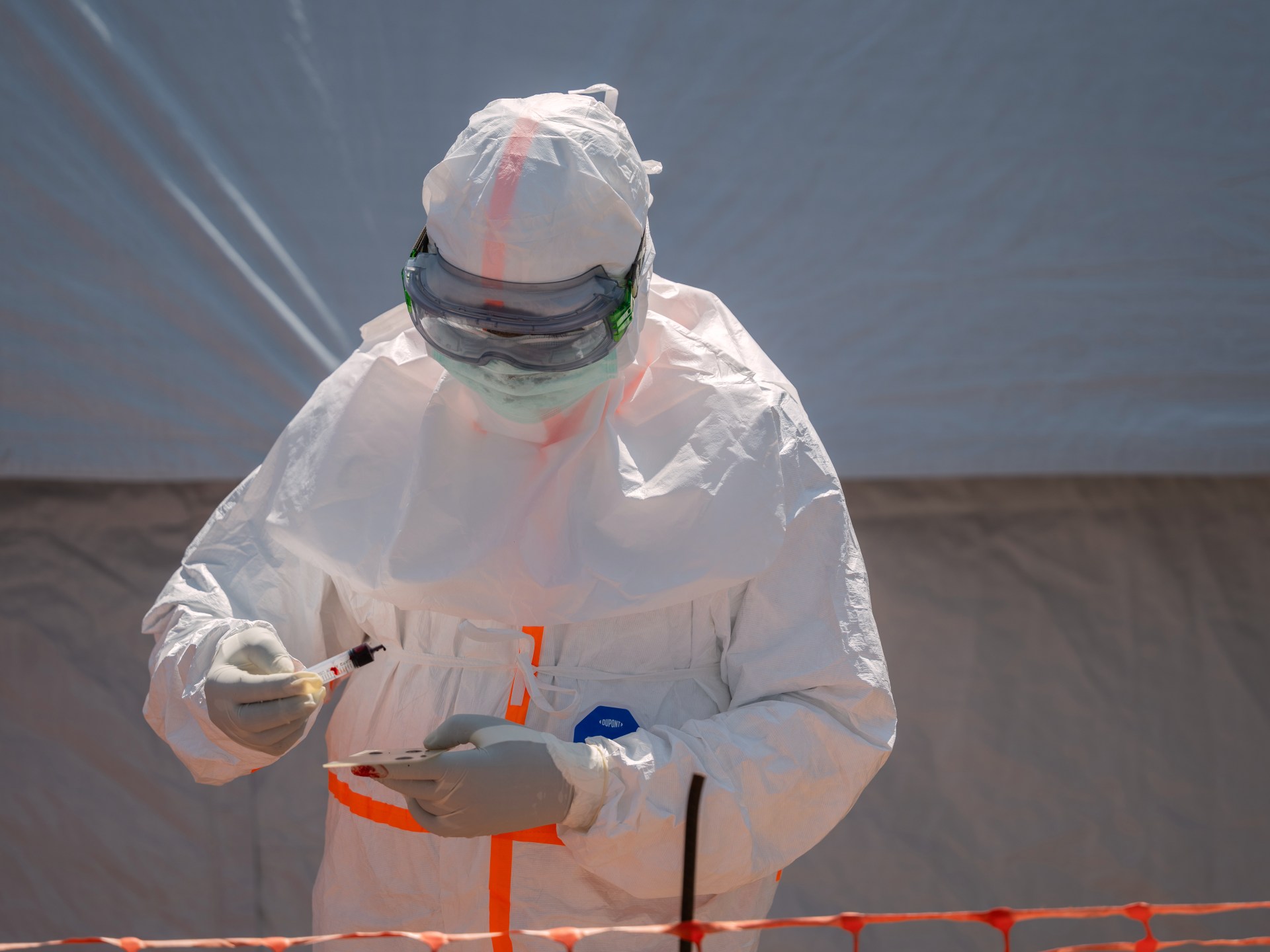

The death toll from the Democratic Republic of the Congo’s rapidly expanding Ebola outbreak has risen above 1,700, as the World Health Organization (WHO) says trials of experimental treatments, preventive medicines and vaccines are advancing at unprecedented speed.
The outbreak, caused by the rare Bundibugyo strain of the virus, has killed 1,707 people out of 3,802 recorded cases since it was declared on May 15, according to the latest government figures. More than 17,000 contacts are being monitored, with about 80 percent followed up each day, WHO data show.
- list 1 of 4Cars burn in reported settler attack in occupied West Bank
- list 2 of 4US primaries: What to watch in Kansas, Missouri, Virginia, Washington
- list 3 of 4Palestinian patients return to Gaza as thousands still await evacuation
- list 4 of 4Tech giant Palantir posts ‘otherworldly’ growth despite criticism over Gaza
end of list
The epidemic is now the second-largest Ebola outbreak on record and the fastest growing. Unlike previous outbreaks caused by other strains of the virus, there are no approved vaccines or treatments for the Bundibugyo variant.
Speaking to reporters in Geneva on Tuesday, Vasee Moorthy, acting head of the WHO’s R&D Blueprint programme, said years of advance planning had allowed researchers to begin testing experimental treatments much sooner than in previous outbreaks.
“If you compare this outbreak to previous Ebola outbreaks, we have been able to start trials more quickly,” he said. “It’s true that the preclinical data that we’re seeing is promising.”
Moorthy cautioned that only clinical trials would determine whether the experimental medicines and vaccines are effective.
WHO Director-General Tedros Adhanom Ghebreyesus is due to arrive in the Congolese capital Kinshasa on Tuesday before travelling later this week to Bunia, near the centre of the outbreak.
Africa Centres for Disease Control and Prevention Director-General Jean Kaseya, who was also in Bunia on Tuesday during his second visit to the region, said it remained unclear when the outbreak would reach its peak.
Advertisement
The outbreak is concentrated in the eastern province of Ituri, which accounts for almost 90 percent of reported cases. However, infections have also been confirmed in five other provinces, including the major city of Kisangani.
The WHO says more than 100 healthcare workers have been infected since the outbreak began. Health officials say the response has been slowed by delays in contact tracing, violence caused by armed groups, attacks on health facilities, difficulties accessing affected communities and widespread mistrust of health authorities. The response also faces a significant funding shortfall following a slew of cuts to aid funding.
The growing pressure on the health system has spurred unrest among front-line workers. On Monday, healthcare workers in the hard-hit town of Mongbwalu threatened to escalate industrial action if overdue wages were not paid within 24 hours. Staff in Bunia have previously staged strikes over unpaid salaries and what they described as dangerous working conditions.
The latest outbreak has spread more rapidly than any previous Ebola epidemic. During the 2014-2016 West Africa outbreak, which infected about 28,000 people and killed more than 11,000, it took roughly eight months for the death toll to reach 1,000.
Neighbouring Uganda declared itself Ebola-free in mid-June after its last patient was discharged from hospital.
Related News
Venezuela earthquake: Number of known dead rises to nearly 5,000 victims
In Pictures: Hunger, despair as Venezuela quake death toll rises
Cuba sees nationwide power blackout for third time in six months