UK-China ‘ice age’ thaws: Why the West needs Beijing
 03 June 2026
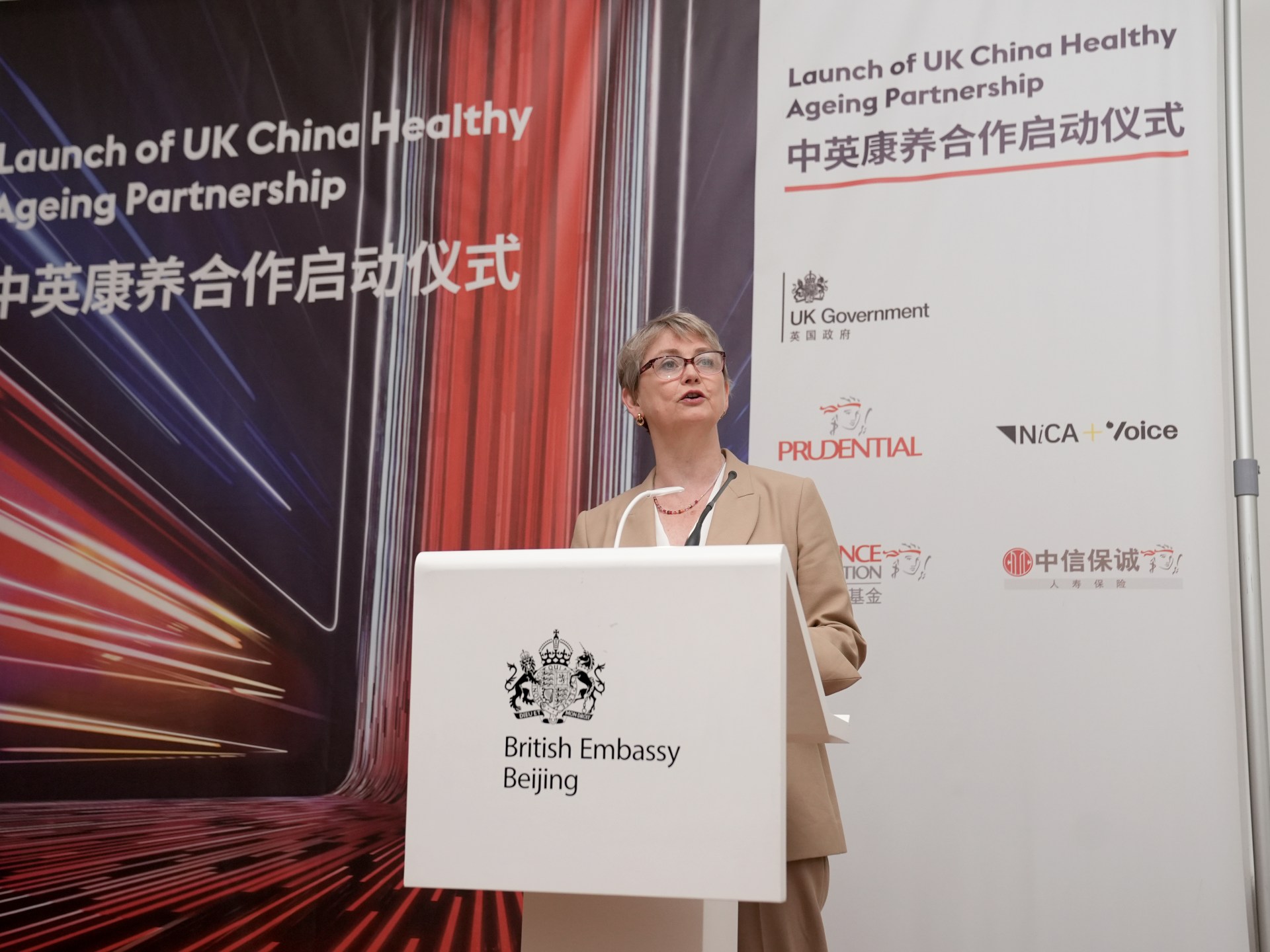

Eight years after a British prime minister and foreign secretary made back-to-back visits to China, the Keir Starmer government is once again trying to reset relations with Beijing after a long period of what Starmer had in January described as an “ice age” in relations.
Prime Minister Starmer went to Beijing in January, and Foreign Secretary Yvette Cooper is currently visiting on a three-day trip, as the United Kingdom and China try to revive economic and diplomatic ties despite lingering differences over security, human rights and the Russian war on Ukraine. Former PM Theresa May and her Foreign Secretary Jeremy Hunt made similar visits to China soon after each other in 2018.
- list 1 of 3Every world leader who has visited China in 2026 in one chart
- list 2 of 3US says ban on AI chip shipments applies to Chinese firms outside China
- list 3 of 3China opens its markets to African exports. Who benefits?
end of list
The UK isn’t alone. Cooper’s visit to Beijing this week is the latest in a string of visits by global leaders and officials seemingly eager to engage with the second-largest economy in the world at a time of heightened global instability.
During her trip so far, Cooper has called for the two nations to work together to confront a host of global challenges, including conflicts in Iran and Ukraine and the Ebola outbreak in the Democratic Republic of the Congo.
“It is in our shared interest to have a rules-based international order and to find ways to reduce rising geoeconomic tensions,” the foreign secretary said on Tuesday as she met Chinese Vice President Han Zheng at Beijing’s Great Hall of the People at the start of her visit.
While acknowledging “areas of disagreement” between London and Beijing, Cooper insisted that approaching discussions with “candour and respect” would help to increase mutual understanding.
Advertisement
“Those frank and constructive discussions can help us make meaningful progress for the benefit of our two countries and the wider world,” she said.
The rhetoric about a “rules-based order” comes at a time when, under President Donald Trump, the United States – the country that led the creation of the post-World War II global architecture – increasingly faces accusations of ripping apart the international laws that were its foundation. China has in recent years positioned itself as a grown-up, responsible and stable global power, in contrast to the US.
But behind Cooper’s comments, say analysts, is also a deeper, more pragmatic acknowledgement: Western nations like the UK need China now more than ever.
The West has come to rely heavily on China, especially when it comes to the production of advanced goods – like semiconductors, medical instruments and aerospace components – as well as its stranglehold on many of the earth’s critical natural resources required to manufacture them all, said John Minnich, assistant professor in the Department of International Relations at the London School of Economics.
“This dependence is growing by the day,” Minnich told Al Jazeera. “Whether this is a good thing for the West or this trajectory is politically sustainable is another matter.”
Diplomatic reset after years of frozen ties
Getting on a better footing with Beijing is a priority now, say observers. “The UK cannot afford a purely adversarial relationship with China,” Jing Gu, director of the Centre for Rising Powers and Global Development at the Institute of Development Studies in the UK, said.
“It’s a pragmatic response to the UK’s own global economic position and needs, and to the changing winds of US-China relations under the second Trump administration,” Minnich said.
This rapprochement has been in the works since the UK’s governing Labour party swept to power in July 2024. Former Foreign Secretary David Lammy travelled to China for a two-day diplomatic trip in October that year, as part of initial efforts to thaw what Starmer would dub a diplomatic “ice age” between the two countries. Starmer’s own trip in January, to meet President Xi Jinping, laid the groundwork for deeper economic engagement, including a $15bn investment by British pharmaceutical company AstraZeneca and visa-free travel for Britons.
On Tuesday, China’s Vice President Han gave Cooper a warm welcome, along with a cultural visit to the Forbidden City, where she was shown around the world’s largest imperial palace complex by a tour guide before meeting her counterpart, Wang Yi, for talks at Diaoyutai State Guesthouse.
Advertisement
In his address at Beijing’s Great Hall of the People, Han stressed the need to “intensify interactions and strengthen dialogue and cooperation for the sake of world peace and stability and for the growth of our respective economies”.
“Currently, the ongoing geopolitical conflicts are dealing a heavy blow to world peace and stability and affecting the prospect of the world economy,” he continued. Addressing Cooper, he said her visit would help “move our relations steadily forward along the strategic direction established by the leaders of our two countries”.
Growing economic ties
It’s not just the UK. A growing number of Western countries are seeking to reset ties with China at a time when global geopolitical tensions are causing havoc with supply chains and huge market volatility. This year, leaders and officials from the US, Ireland, Spain, Germany, Canada and Finland are just a number of those who have travelled to China in a flurry of diplomatic engagement.
US President Donald Trump’s trip to China last month signalled a shift in direction after last year’s “trade war”, in which the two sides slapped each other with tit-for-tat tariffs and China threatened to restrict exports of most of its rare-earth metals. Those tensions had been rising since Trump’s first term as president until he and Xi called a temporary truce late last year to allow for trade talks.
Also notable, however, was that Washington’s rapprochement with Beijing coincided with a tense period in US-UK relations.
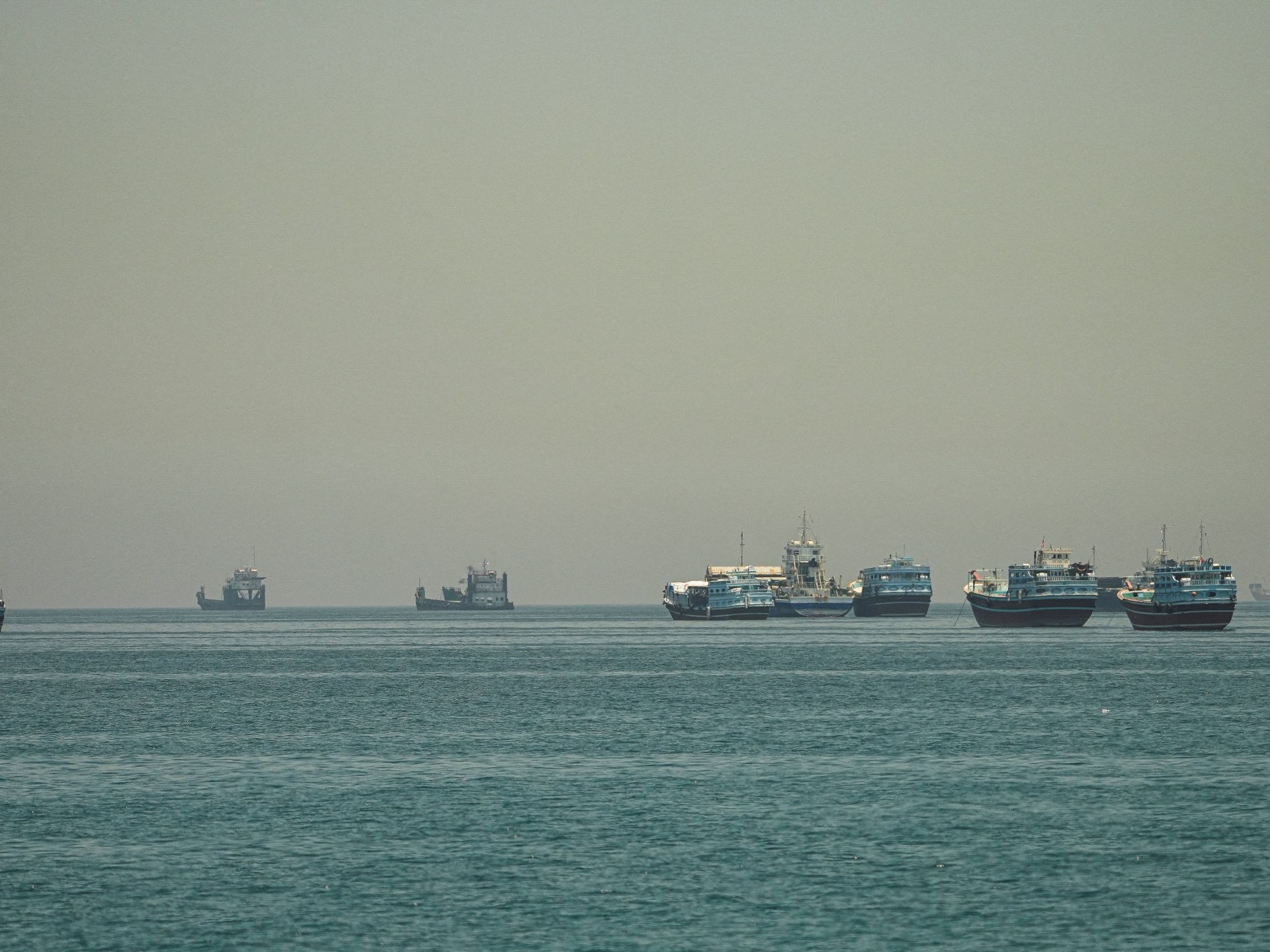
Trump publicly took Starmer to task over his refusal to assist in the US-Israel war on Iran or to send naval backup to help the US reopen the strategic Strait of Hormuz. Similarly, Trump’s outbursts over the Western response to the war generally have depicted the EU as a foe and NATO as obsolete.
For the UK, Trump’s unpredictability is what has tipped the balance in favour of reinforcing bilateral cooperation with Beijing, as Britain struggles with sluggish economic growth and global energy price shocks triggered by the war on Iran.
And there is “plenty of room for mutual beneficial economic cooperation” between the two countries, Minnich said. “The UK is unusual among major Western countries in that its economic strengths complement rather than compete with China’s.
“Unlike Germany, the UK is not heavily dependent on high-value-added manufacturing, where China is increasingly competitive. Instead, it specialises in things like high-value financial and other services in which China remains relatively weak,” he added.
Cooper is expected to fly to Shenzhen, a major technology hub, to discuss trade links as well as “the challenges of the future of AI as it rapidly changes our world”. This is significant because China is outpacing almost every country in the world in producing ideas and innovation in areas that matter to the UK, including renewable energy.
Last year, the UK and China signed a partnership agreement on clean energy covering academic, regulatory, industrial and commercial partnerships. During Starmer’s visit to China earlier this year, the prime minister announced that Octopus Energy, the UK’s largest electricity supplier by market share, had formed a joint venture with China’s PCG Power to trade renewable energy in the Asian country.
Advertisement
Access to affordable, clean technology – which China has bundles of – could help the UK reduce the cost of decarbonisation and accelerate the energy transition. “But this cannot mean passive dependence,” Gu, at the Institute of Development Studies, said. “Middle powers such as the UK are not simply choosing sides; they are trying to buy time – time to support growth, accelerate the green transition, rebuild resilience and keep diplomatic channels open while the wider strategic landscape remains unsettled.”
This is far removed from Trump’s strategy of eschewing ideas of carbon neutrality, and flogging US – and, now, Venezuelan – oil around the world instead.
Above all, though, said Steve Tsang, director of the China Institute at the School of Oriental and African Studies (SOAS) in London: Both the UK and China want a thaw in relations.
“The UK wants it for economic engagement [while] China wants it as it can take advantage of the rift between Trump’s USA and the UK and other European democracies,” Tsang said. “Beijing can also do it on the cheap, with hardly any concession on economic engagement with the UK.”
While the West increasingly looks to China, therefore, a globalised world means both sides need each other. “China is just more aggressive in asserting its clout,” Tsang said. “If Western financial services were not available to China, it would hurt China’s economy badly, too.”
Lingering disagreement and suspicion
At the same time as all this economic cooperation, London is navigating tensions with Beijing on issues relating to security and human rights.
In a sign of lingering mistrust and ongoing concern about Chinese espionage, the British delegation was travelling with “burner” phones this week, according to a report by PA.
Claims of Chinese spying in the UK led to the arrest of three men in April 2024, with Beijing labelling the allegations “malicious slander”. Last month, a UK Border Force officer and a Hong Kong trade official based in London were the first people in British history to be convicted of spying for China.
Starmer’s announcement earlier this year that the government had approved Beijing’s plan to open a “mega embassy” in London met concern, as critics said it could become a hub for espionage in Europe.
China’s support for Russia in the Ukraine war has also frayed nerves in London. In addition, the foreign secretary was expected to bring up the imprisonment of pro-democracy leader and media tycoon Jimmy Lai, who holds British citizenship.
Gu said some of these differences are “likely to become more difficult, particularly around technology, data, AI, critical minerals and supply chains”.
“The UK wants a stable economic relationship, but it also has to reassure Parliament, allies and the public that engagement does not mean strategic naivety,” the analyst added.
Tsang, at SOAS, said “fundamental differences in system and values remain, and they cannot be reconciled.
“Diplomacy is about fudging differences and focusing on shared interests to move forward for one’s country,” he added. “If done well, it can benefit both sides.”
Related News
Israel’s Netanyahu directs army to seize 70 percent of Gaza Strip

Damage seen in northern Israel after Hezbollah launches rocket barrages
Celebration, shock and scepticism follow Colombia’s presidential election