Maldives jails two journalists for reporting on president’s alleged affair
 13 May 2026
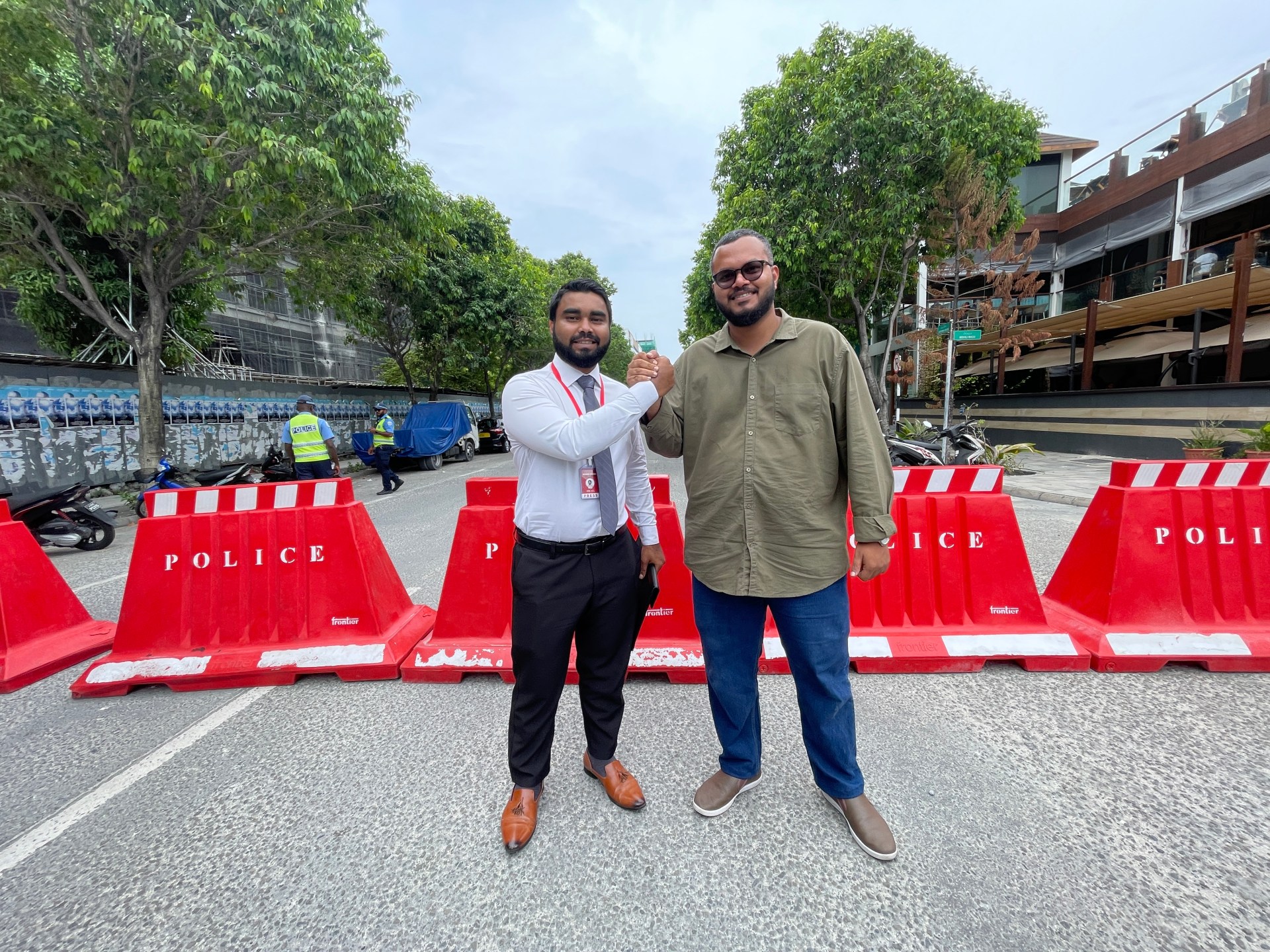

Groups advocating for freedom of the news media have called for the release of two journalists who have been jailed in the Maldives for violating a gag order banning public discussion of a documentary alleging an affair between President Mohamed Muizzu and a former aide.
The International Federation of Journalists on Wednesday “strongly condemned” the jailing of Mohamed Shahzan and Leevan Ali Nasir while the Committee to Protect Journalists described their sentences as a “punitive attempt to criminalise investigative journalism”.
- list 1 of 4‘Supercharged’ donations: How far-right Reform UK built a global network
- list 2 of 4Maldives police raid news outlet over report alleging president’s affair
- list 3 of 4Pakistan withdraws from regional women’s football tournament in India
- list 4 of 4Sri Lanka braces for new economic crisis as war on Iran continues
end of list
The journalists, who work for the news website Adhadhu, were sentenced by the criminal court in the Maldivian capital, Male, on Tuesday.
Shahzan received 15 days in jail and Nasir 10 days.
Muizzu’s spokesperson, Mohamed Hussain Shareef, rejected the criticism, saying any “attempts at portraying the criminal proceedings as an attack on free press are unwarranted and politically motivated.”
The case centres on a documentary titled Aisha, which was released on Adhadhu’s social media accounts on March 28. It featured an anonymised interview with a woman who claimed to have had a sexual relationship with Muizzu, 47, a married father of three.
Muizzu has dismissed the allegations as “baseless lies”.
Police raid on Adhadhu
Police raided Adhadhu’s offices in April over the documentary’s release, seizing the laptops of journalists, marketing staff and administrators along with hard drives and pen drives.
According to Adhadhu, Shahzan was jailed after questioning Muizzu about late-night calls he had allegedly made to the former presidential aide. Nasir was jailed for reporting on the gag order itself, which the criminal court issued on Monday at the request of prosecutors.
Advertisement
The order, published on the court’s website, bans any direct or indirect discussion of the allegations, the charges and the ongoing trials, citing constitutional provisions protecting the right to reputation.
Adhadhu said the trials were conducted in secret and concluded within hours with the journalists given just two hours to find legal counsel and no opportunity to present a defence. “For the first time in our democratic history, journalists have been jailed for challenging the most powerful man in the nation,” the outlet said.
The case has intensified concerns about democracy and media freedom in the Maldives, a Sunni Muslim nation whose luxury resorts attract tourists from around the world. Parliament passed a media law in September giving a commission stacked with government loyalists powers to fine, suspend and shut down outlets while Muizzu’s allies overhauled the Supreme Court last year, removing three judges in moves the former judges said were politically motivated.
The government denied the allegations.
The Aisha documentary was released days before a constitutional referendum that delivered a stinging midterm rebuke to Muizzu, with 69 percent of voters rejecting a government proposal on April 4 to align the presidential and parliamentary election cycles.
Critics said the plan would undermine checks and balances in the country.
Editors on trial
Two editors at Adhadhu, Hussain Fiyaz Moosa and Hassan Mohamed, also face charges of “qazf”, the false accusation of adultery or unlawful sexual intercourse under Islamic law, which carries a prison sentence of up to one year and seven months and up to 80 lashes.
Their trial began behind closed doors in Male on Wednesday.
Police have also launched an investigation into a former presidential office staffer, Aishath Easha Ashraf, in connection with the documentary.
Shareef, Muizzu’s spokesperson, denied that the prosecutions amounted to an attack on freedom of the news media, saying the cases were “not in any way related to the guaranteed legal rights and responsibilities of independent journalism”.
He said Muizzu had given the media unprecedented access and welcomed scrutiny of his policies. “We strongly believe that a responsible, vibrant and free press is a cornerstone of our democracy,” he said.
News media freedom groups, opposition leaders and legal experts disagreed.
The Committee to Protect Journalists urged authorities to release Shahzan and Nasir and “end judicial harassment of their news outlet”.
The Maldives Journalists Association called the sentences “unprecedented in the Maldives’s democratic history” and argued that the court’s gag order failed the constitutional tests of legality, necessity and proportionality.
Advertisement
It said the government’s action against the news media “clearly signals the back sliding of democratic rights” under Muizzu’s government.
Former President Ibrahim Mohamed Solih, whose opposition Maldivian Democratic Party is aligned with Adhadhu, said the jailing “marks another shameful chapter in the government’s attempt to intimidate the press and silence public dissent”.
Former Supreme Court Judge Husnu Al Suood also criticised the imprisonment.
In a post on X, he said it “undermined the principles of press freedom, accountability, and democratic transparency”.
He added, “Journalism is not a crime.”
Related News
Cuban man is 18th person to die in US ICE custody this year: Monitor
How impunity in Shireen Abu Akleh’s case fuels Israeli attacks on the press

Gaza filmmakers slam BBC after shelved documentary wins Bafta