Editorial Independence at Risk in OECS as Political Influence Grows
 04 May 2026



OECS Press Freedom Remains Strong but Concerns Grow Over Political Influence — Report

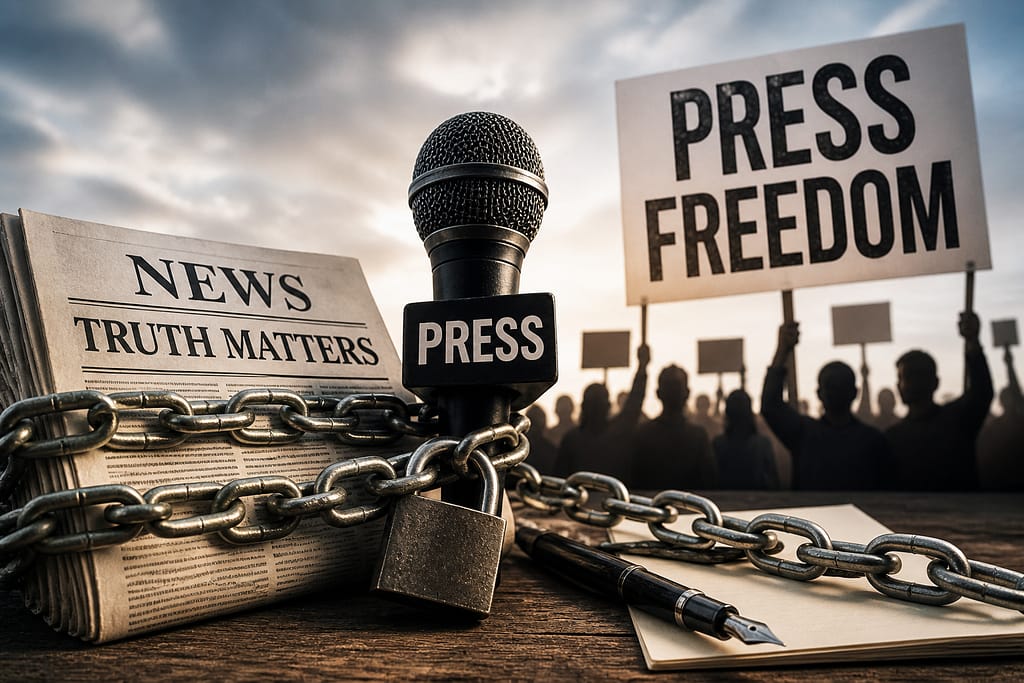
Countries within the Organisation of Eastern Caribbean States (OECS) continue to maintain relatively strong press freedom standings, but concerns are mounting over political influence, editorial pressure, and economic challenges facing journalists, according to the 2026 World Press Freedom Index.
The report groups OECS member states together and notes that while journalists generally operate in a free environment, structural issues across the region are increasingly affecting media independence.

A key concern highlighted is the ownership and control of media houses. On several islands, political parties reportedly hold majority shares in media companies, raising questions about impartiality and editorial independence. Governments are also said to exert influence over radio stations, newspapers and online platforms.
The report points to the growing role of political bloggers and online commentators, who are increasingly challenging traditional media. At the same time, journalists face frequent attacks on social media from political advocates, adding to pressure within the profession.
During election periods, the influence of governments is said to intensify. The report notes that state advertising—an important source of revenue for many outlets—can be withdrawn at any time, creating financial vulnerability and potential leverage over editorial decisions.

Examples from the region underscore these concerns. In Grenada, authorities were accused of limiting media access to a cabinet swearing-in ceremony in 2024, while a separate case saw legal threats issued against a media outlet, with a published story later removed despite editorial support.
Legal frameworks in some OECS countries are also flagged. In Saint Vincent and the Grenadines, cybercrime legislation introduced in 2016 has been criticised for potentially restricting online press freedom under provisions linked to defamation.

Economic pressures remain a persistent issue. Although parts of the media sector have seen growth, journalists across the region continue to face low salaries and limited training opportunities. The report notes that in some countries, wages have yet to recover to pre-pandemic levels, contributing to high attrition, particularly among women.
Social perceptions also play a role, with journalism described as neither prestigious nor financially rewarding in many OECS societies.
On safety, the report indicates that journalists generally work without major physical threats, but warns of increasing intimidation, particularly online. The rise of digital platforms has brought more exposure to harassment, especially from politically aligned individuals.
Despite these challenges, the report records no killings, detentions, or imprisonments of journalists or media workers in the OECS so far for 2026.
Overall, while the region maintains a relatively strong press freedom environment, the report suggests that political influence, economic instability, and evolving digital pressures continue to test the independence and sustainability of journalism across OECS states.
Advertise with the mоѕt vіѕіtеd nеwѕ ѕіtе іn Antigua!
We offer fully customizable and flexible digital marketing packages.
Contact us at [email protected]

Related News
Adrian Williams Unveils 10-Point Plan for City South Ahead of April 30 Vote

Prime Minister Hon. Gaston Browne expresses his sympathy to the Mason family on the passin...

WATCH: American streamer Ishowspeed goes live in Antigua to millions of viewers