
Why an attack on Bushehr nuclear plant would be catastrophic for the Gulf
 05 April 2026
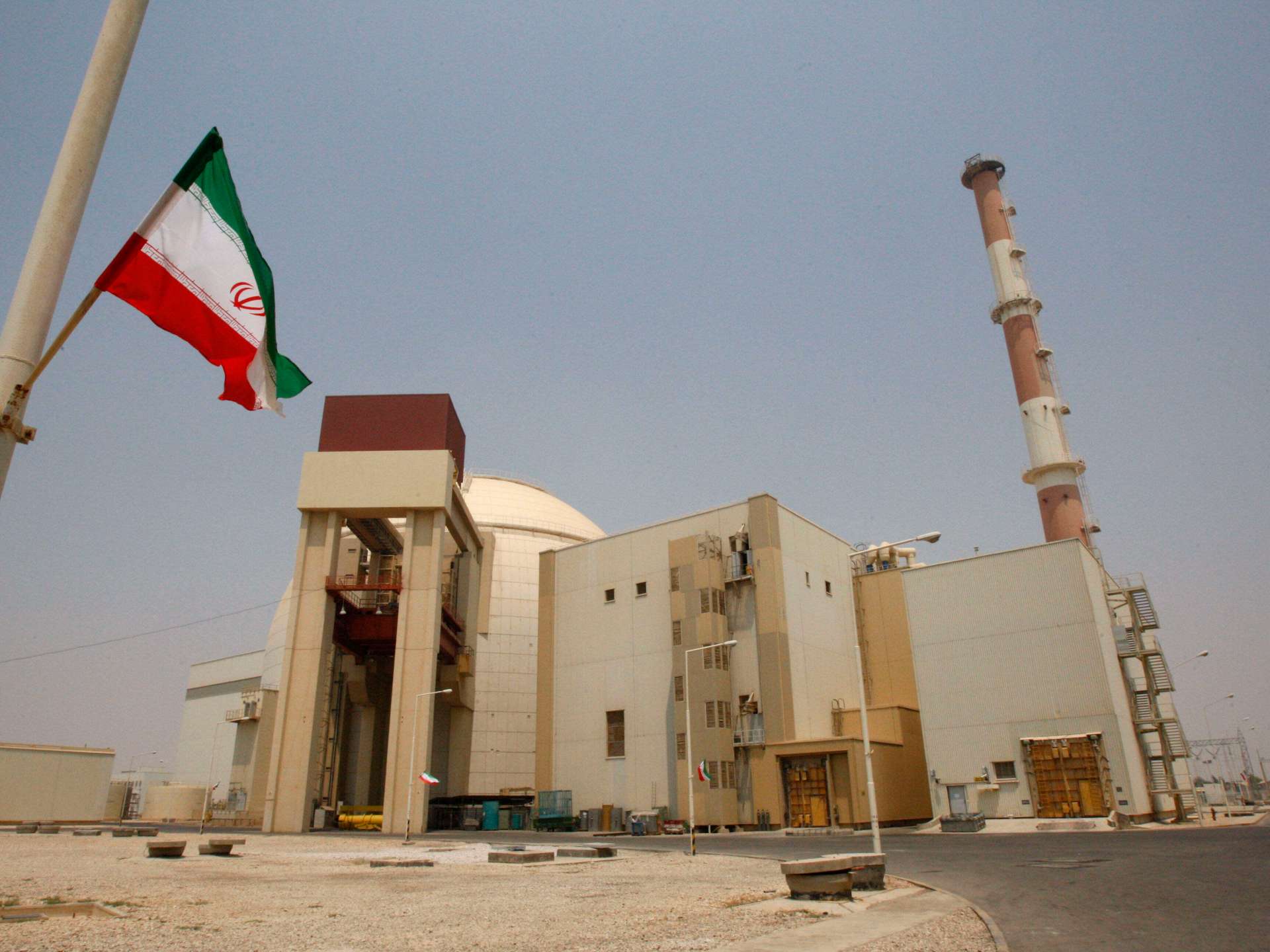

Iran’s only functioning nuclear plant, the Bushehr power plant, has come under repeated attacks in the ongoing Israel and US war on Iran, raising fears of a possible nuclear incident that could prove “catastrophic” across all Gulf countries.
The latest attack on the plant came on Saturday, after missiles hit a location close to the plant, killing one security guard and causing damage to a side building, according to the state-run Atomic Energy Organisation of Iran (AEOI).
- list 1 of 4Trump seeks to end the war without it becoming ‘an abject failure’
- list 2 of 4Photos: Thousands rally in Iraq against ‘senseless’ US-Israel war on Iran
- list 3 of 4Kuwait’s power, water plants damaged as Iran keeps attacking Gulf states
- list 4 of 4‘We got him!’: How the US rescued downed airman in Iran
end of list
In a statement criticising the attack, Iran’s Foreign Minister Abbas Araghchi claimed the Bushehr facility had now been “bombed” four times since the war erupted on February 28. He criticised what he said was a “lack of concern” for nuclear safety on the part of the United States and Israel.
Nuclear experts and regional authorities have long sounded the alarm over the incredible damage that bombing Bushehr would do, not just to Iran and Iranians, but to neighbouring countries as well.
Here’s what to know about the Bushehr plant and why its safety is paramount:

What is the Bushehr plant?
The Russia-built Bushehr plant is a nuclear power plant located in the coastal city of Bushehr, which has a population of 250,000.
Work on it initially started in 1975 by German companies, but it was eventually finished in 2011 by Russia’s atomic energy ministry. To date, hundreds of Russian personnel are stationed in Bushehr, with some having been evacuated following recent strikes.
Advertisement
It’s the first nuclear power plant in the Middle East, with one operational reactor. Bushehr Unit 1 currently provides about 1,000MW to the national grid. Two additional reactor units are expected to be operational by 2029.
What would happen if Bushehr were attacked?
Iranian officials say Bushehr has now been attacked four times in the course of the US-Israel war on Iran.
That’s separate from an initial strike on February 28, when the US and Israel first launched attacks, sparking off the war. Strikes hit Bushehr city, a few hundred metres from the plant.
A strike on a nuclear reactor or storage pools for used fuel would cause the release of radiological particles, specifically the hazardous isotope Caesium-137, into the atmosphere.
These can be spread far beyond the release point by wind and water and can contaminate food, soil, or drinking water sources for decades. Close exposure to such material would burn the skin and increase cancer risks.
The International Atomic Energy Agency (IAEA), the United Nations’ atomic watchdog, has been warning against targeting the plant for months.
During Israel’s 12-day war on Iran last year, IAEA Director-General Rafael Grossi told the UN Security Council that an Israeli strike on the Bushehr power plant could trigger a regional catastrophe.
Directly hitting the plant, which tonnes of nuclear material, could “result in a very high release of radioactivity”, with “great consequences” beyond Iran’s borders, Grossi warned, calling for “maximum restraint”.
A strike on the lines supplying electricity to Bushehr, which keep the cooling system operating, could cause a reactor meltdown and trigger a radioactive leak, he said. Evacuation orders would have to be issued within several hundred kilometres of the plant, extending to countries outside Iran.
He said authorities would also have to administer iodine to those within the area and potentially restrict food supplies due to possible radioactive contamination. Areas beyond the immediate danger zones would then have to be monitored as well for hundreds of kilometres.
Grossi, in the wake of the latest attack on Saturday, reiterated calls for restraint.
What are the risks of water contamination for the Gulf?
There are also fears that damage at Bushehr could contaminate the waters of the entire Gulf region. Radioactive contamination would affect marine life in the area, and the Gulf’s shallowness could see the negative effects remain over a long period, research finds.
Advertisement
It would also affect drinking water supplies. Most Gulf countries lack groundwater and rely heavily on desalination of seawater. But desalination plants are not inherently built to filter radioactive material, and not all plants at the moment have the technologies required.
Alan Eyre of the Middle East Institute told Al Jazeera that academic research has shown that the concentration of radioactive material at Bushehr might not be enough to cause Chornobyl-level disasters, referencing the 1986 tragedy in then-Soviet Ukraine.
But “more serious is the threat of radioactive material in the water because once you get an appreciable amount of radioactivity in the water, that precludes desalination”, he said, explaining that high radioactive material could halt desalination altogether.
Last year, Qatar’s Prime Minister Sheikh Mohammed bin Abdulrahman bin Jassim Al Thani revealed in an interview with right-wing US media personality Tucker Carlson that a hit on the plant would affect “all of us”.
Sheikh Mohammed said that Qatar, which is about 190km (118 miles) south of Iran, had simulated the possible effects of a Bushehr attack. Authorities found that the sea would be “entirely contaminated” and the country would “run out of water in three days”, he said.
“No water, no fish, nothing… no life,” he added.
Is there a law against targeting civilian nuclear facilities?
Yes, there are international frameworks protecting nuclear facilities during conflict. Launching attacks on energy or nuclear facilities while knowing it could cause extensive loss of life and environmental damage is a war crime.
Article 56 (Protocol I) of the Geneva Conventions prevents the targeting of “works and installations containing dangerous forces”, including those containing nuclear material.
Warring parties are also meant to differentiate between facilities serving civilians, as opposed to military targets. The Bushehr plant provides electricity for national use.
The IAEA’s guidelines similarly prohibit indiscriminate targeting of a nuclear facility. They include that countries must avoid physically hitting reactors and stored fuel, that they must ensure the safety of staff, ensure power to the grid to prevent reactor core melt, and have systems in place to monitor radiation.
Has the Western response been muted compared to Ukraine’s Zaporizhzhia?
Iran’s Aragchi on Saturday called out Western nations for failing to speak up about the possible dangers of targeting Bushehr in the same way they did over Ukraine’s Zaporizhzhia Nuclear Power Plant during the ongoing Russia-Ukraine war.
“Remember the Western outrage about hostilities near Zaporizhzhia Nuclear Power Plant in Ukraine?” he said in a post on X. “Radioactive fallout will end life in GCC capitals, not Tehran,” he added.
Russia attacked the plant in March 2022 using heavy tanks and artillery, causing a major fire. In reaction, the United Kingdom and Ukraine called an emergency UN Security Council meeting.
The UN, the US, the EU, and dozens of other countries issued immediate statements condemning the action. NATO warned that any radioactive fallout reaching a member state would trigger its collective defence mechanism.
Advertisement
French President Emmanuel Macron later spoke with Russian President Vladimir Putin about the incident and requested that IAEA staff be allowed to monitor the occupied site.
The European Union has not, in this instance, commented on the attacks on Bushehr. Russia, which has scores of staff there, has meanwhile issued a statement raising concern and “strongly condemning the atrocity”.
What nuclear accidents have happened in the past?
Japan’s Fukushima nuclear reactors melted following an earthquake in 2011.
Some 160,000 residents were evacuated to avoid radiation risks. There was one recorded death from lung cancer as a result of clean-up activities later in 2018. However, the stress of evacuation, trauma, and general disruption at the time of the disaster led to thousands of deaths.
In the April 1986 Chornobyl disaster, a reactor exploded during tests, resulting in a massive explosion that blew off the facility’s heavy roof and resulted in a fire that burned for days.
High levels of radiation were released in the explosion. Some 30 people died at the time of the blast or in the immediate aftermath. About 20,000 others would later develop thyroid cancer, especially children. More than 300,000 were evacuated, and the area is still largely deserted.
Related News

Ukraine’s Zelenskyy urges allies to pressure Russia ahead of US talks
Iranian authorities taunt US, Israel, EU amid strikes and assassinations
Oman, Iran discuss smooth transit in Strait of Hormuz, Muscat says