
Who Speaks After Babatunde: The Work That Did Not End
 22 January 2026
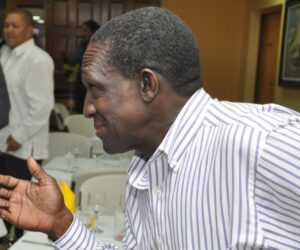

News Americas, NEW YORK, NY, Thurs. Jan. 22, 2026: “Unno nuh tired fi pressure poor people? Well, Babatunde have a message fi you.” Those words, spoken by Babatunde, open the song ‘Anytime,’ by Bounty Killer, setting the tone for a message that confronts power, accountability, and social pressure head on.
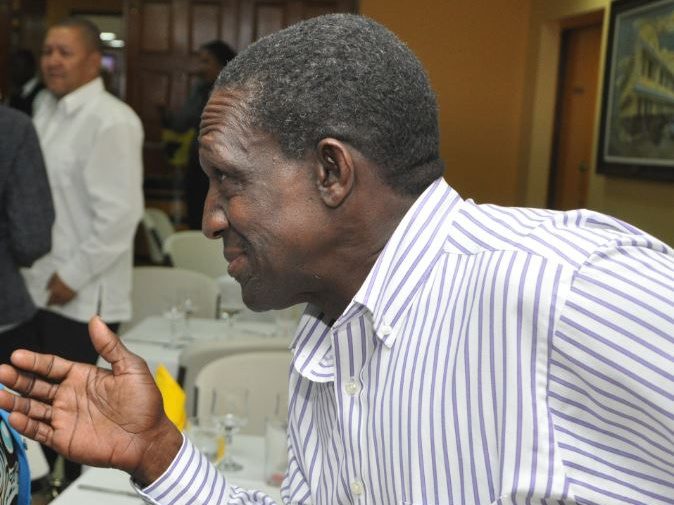
When I was younger, there was a Jamaican man whose voice carried a kind of authority that could not be ignored. It was not authority rooted in position or power, but authority shaped by conviction. He called himself Babatunde, a name that sounded exactly like what he represented. Strength. Presence. Purpose. His given name was Winston “Babatunde” Witter, but to the people who tuned in daily, Babatunde was far more than a radio host. He was a conscience that refused to sleep.
Babatunde hosted a daily talk show in Jamaica at a time when speaking openly about social conditions was not without consequence. He addressed issues that made those in power uncomfortable. Not because discomfort was the goal, but because truth, when spoken plainly, has a way of disrupting comfort. In many ways, he was the voice for the voiceless. When others were silent out of fear of social isolation, political retaliation, or threats to life and property, he chose to speak. He was the exception in moments when exceptions mattered.

His voice was raspy, weathered, and unmistakable. It was the kind of voice that demanded attention even before the message landed. When Babatunde spoke, people listened, not because they were entertained, but because they were being addressed. He sounded like a parent who was not afraid to scold you when you were wrong, but who cared deeply about teaching you how to do better. There was discipline in his words, but also love. Correction without contempt. Urgency without chaos.
As the years have passed, I find myself thinking often about men like him. About what it means to stand up consistently for what is right. About what happens to a society when those voices begin to disappear. History has taught us repeatedly that progress is not self sustaining. It requires vigilance. The moment we take our foot off the pedal, momentum does not simply slow. It begins to erode. Like an engine that has lost steam, the loss may not feel immediate, but over time the power fades. Eventually, the significance of the mission becomes harder to connect to the urgency that once drove it.
Today, as I look around and listen within our society, I sit with uncomfortable questions. Where are the voices for the homeless. Where are the voices for the underserved. Where are the voices for starving children. Where are the voices for those who wake up each morning on concrete and call the streets home. Who is willing to speak for them without condition, without branding, without expectation of applause.
I ask these questions not as an outsider, but as someone who has lived between worlds. I was educated here. I have lived here for many years. I understand the language of progress, of opportunity, of achievement. I also understand how easily those narratives can obscure what remains unresolved. As a writer, I find myself constantly questioning where we are today and whether we have confused improvement with completion.
There is a growing tendency in our society to declare the race over. We are told that progress has been made, therefore urgency is no longer required. That we no longer need voices that push, challenge, or unsettle. That running slower is acceptable because we will still cross the finish line. But life does not work that way. When effort slows, problems do not disappear. They accumulate. Neglect compounds quietly until it becomes impossible to ignore.
I fear that many of the glaring issues we see today are the result of this slow accumulation. Not because people stopped caring entirely, but because they were convinced that caring loudly was no longer necessary. That silence could now be mistaken for peace. That comfort was evidence of justice.
One of the most dangerous narratives of our time is the belief that social issues are now purely individual problems rather than collective responsibilities. Poverty is framed as a personal failure. Homelessness is treated as a choice. Inequality is dismissed as outdated rhetoric. These conclusions are rarely reached through deep engagement. They are the product of surface level observation. And surface level observation has never been sufficient to diagnose systemic reality.
Babatunde did not operate at the surface. He walked within communities. He listened to people whose stories rarely made headlines. He understood that lived experience reveals truths statistics alone cannot capture. When he sensed something was wrong, he did not wait for validation from institutions or approval from those in power. He trusted his discernment. He picked up the microphone and said plainly that something was wrong.
There is a difference between being politically charged and being substantively grounded. Some voices are loud but empty, fueled more by outrage than understanding. Others speak with restraint, but their words carry weight because they are informed by observation, empathy, and accountability. Babatunde belonged to the latter. He was not interested in spectacle. He was interested in responsibility.
He inspired people to speak. To call into radio shows and share their lived realities. To pick up pens and pencils and name what mattered. He reminded them that silence was not neutrality. Silence was often complicity. Through his work, people learned that using one’s voice was not about attention, but about stewardship.
Today, writers, broadcasters, and communicators face a different kind of resistance. Not always direct threats, but dismissal. There is a subtle pressure to move on, to stop asking difficult questions, to accept that certain conversations are no longer necessary. People are quick to say that equality exists everywhere now. That freedom has been achieved. That social issues are relics of the past. These statements are often delivered with confidence, as if repetition alone makes them true.
But confidence without examination is not wisdom. If one is willing to dig beneath the surface, to listen carefully, to observe honestly, it becomes clear that the race is far from over. Progress has occurred, yes, but progress does not negate responsibility. It increases it. The more we know, the more accountable we become.
The lesson from Babatunde’s life is not that everyone must shout. It is that everyone must be willing to speak when substance demands it. There is a difference between noise and conviction. Between performance and purpose. He understood that moral clarity requires restraint as much as it requires courage.
This article is not written to romanticize the past. It is written to acknowledge legacy. To give credit to a man who carried the voice of the people with integrity. Winston Witter took his bow years ago, but his absence leaves a question that time alone cannot answer.
Where do we go from here.
Because voices like his do not automatically replace themselves. They must be taken up intentionally. They must be carried by individuals willing to listen deeply, speak carefully, and act courageously even when it is inconvenient. The mantle does not disappear when a life ends. It waits.
Time has a way of making people forget. That is not cruelty. It is human nature. But forgetting does not erase responsibility. If anything, it makes remembrance an act of leadership. To remember voices like Babatunde is to recommit to the values they embodied. Moral consistency. Intellectual honesty. Courage rooted in care.
We live in an era saturated with communication and yet, it is starving for conscience. Platforms are abundant, but conviction is scarce. Everyone has a microphone, but few are willing to use it responsibly. Babatunde reminds us that voice without purpose is just sound. Purpose without voice is unfinished work.
The question before us is not whether society needs voices for the voiceless. The evidence answers that clearly. The question is whether we are willing to become them. Not for recognition. Not for legacy. But because silence has consequences.
The race continues. The work remains. The voice of the core is still needed.
Related News

What The U.S.’ 2025 Narco Report Said About Drug Trafficking In The Caribbean

CARICOM’s Animal Farm? – Why The Caribbean Is United in Rhetoric, Divided In Reality

When Immigration Policy Meets Tourism Economies: The Caribbean’s New Reality