Who leads Iran? Assassinations leave leadership and command in question
 19 March 2026

After the assassination of Ali Larijani, the powerful secretary of Iran’s Supreme National Security Council, questions have emerged over who will lead the country.
Larijani was one of the government’s most prominent faces, who had stepped into the spotlight after the assassination of Iran’s Supreme Leader Ayatollah Ali Khamenei and other top military and political figures by Israel and the US, which began attacking Iran on February 28.
- list 1 of 3Iran attacks cut 17% of Qatar’s LNG capacity for up to 5 years: QatarEnergy
- list 2 of 3European nations, Japan to join ‘appropriate efforts’ to open Hormuz Strait
- list 3 of 3Death toll surpasses 1,000 in Lebanon as Israeli bombardment continues
end of list
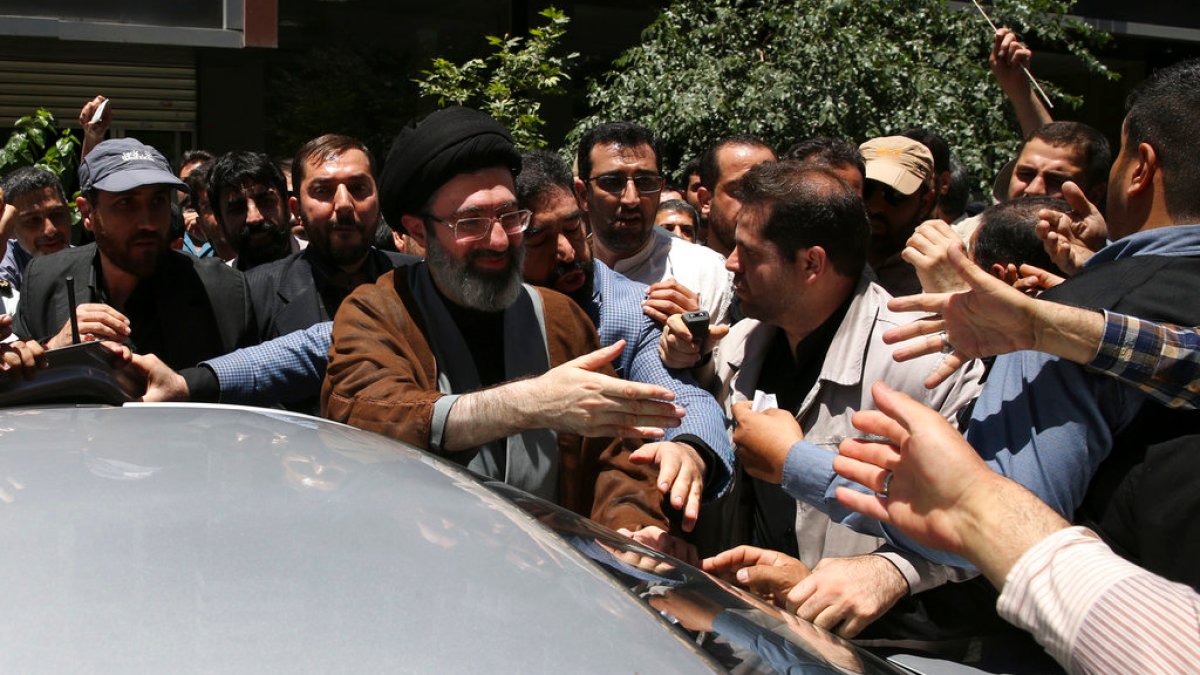
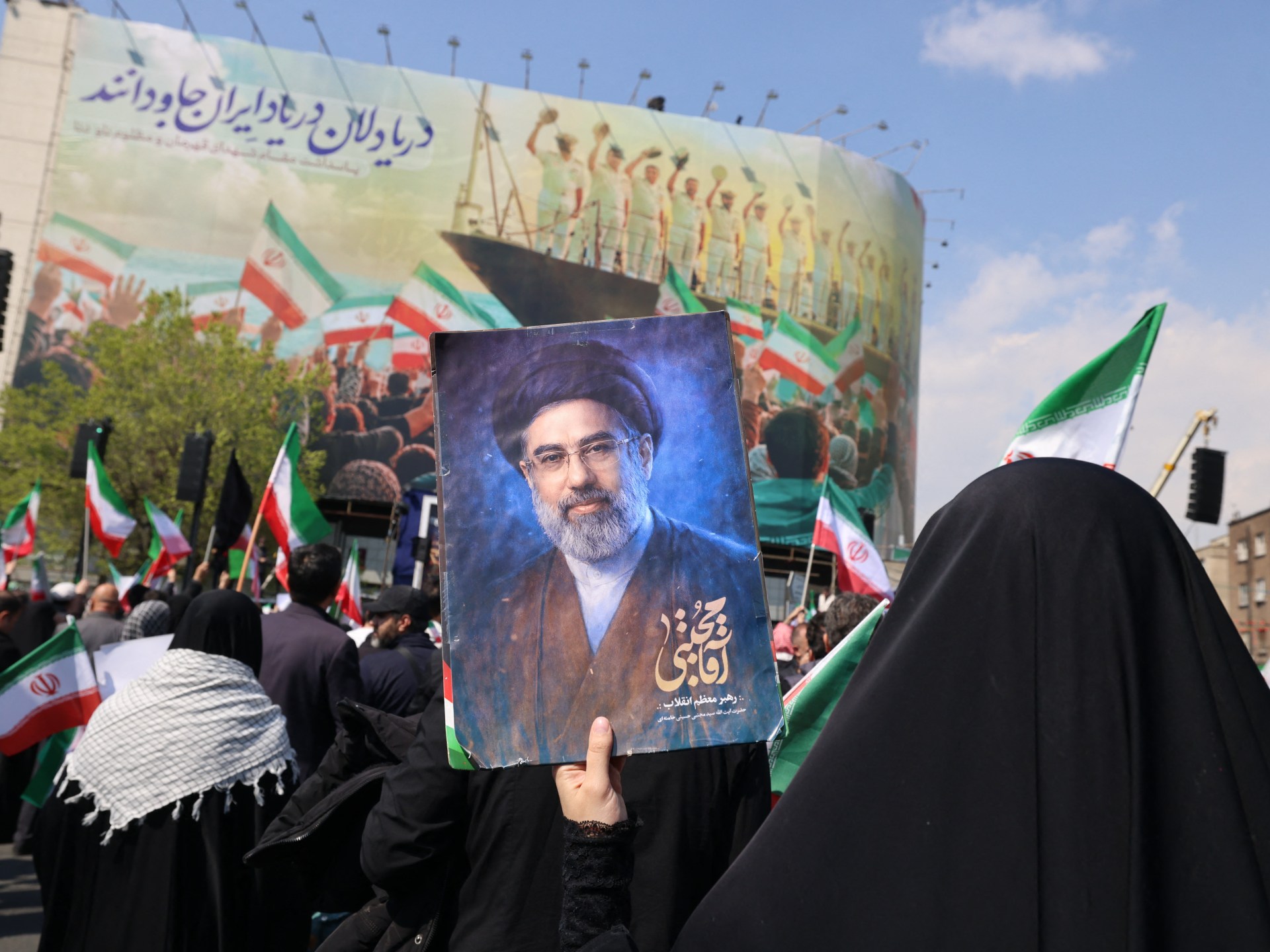
Mojtaba Khamenei has been announced as his father’s successor as supreme leader. But US officials claim that he is wounded, and analysts say he has never held an executive role. That has left observers wondering what the chain of command looks like in Tehran, and who the most powerful figures in the country are.
Influential figures
For now, analysts said it wasn’t completely clear who would succeed Larijani. Historian Reza H Akbari, who is also an analyst on Iran at the Institute for War and Peace Reporting, said that while there are mechanisms and constitutional processes in place, specific names might be harder to guess.
The number of assassinations also could lead to lesser-known entities assuming powerful positions, or even less transparency, analysts said.
“It might be in Iran’s interest not to name a successor to Larijani, since that would just be putting a target on his back,” Barbara Slavin, a distinguished fellow at the Stimson Center, told Al Jazeera.
However, she said there were a number of figures who “remain influential in both the political and military realms”.
Advertisement
Among the names Slavin said could play important roles are Mohammad Bagher Ghalibaf, the speaker of the parliament; Saeed Jalili, a former national security adviser who was also involved in nuclear negotiations; Ali Akbar Salehi, a former foreign minister who is also a nuclear expert; Hassan Rouhani, the former president and national security adviser; and Mohsen Rezaie, the former head of the Islamic Revolutionary Guard Corps (IRGC). who has been named a senior adviser to Mojtaba Khamenei.
“Other IRGC figures will be important, including Ahmad Vahidi, members of its intelligence branch, and leaders in the Basij,” Slavin said.
Killing off-ramps
Ayatollah Ali Khamenei was Iran’s leader for 36 years. He guided the country’s decision-making domestically and internationally and expanded the influence of the IRGC. But despite having a single leader for nearly four decades, the Iranian system is somewhat decentralised, according to analysts.
“The Iranian system is durable and built to take hits like this,” Akbari told Al Jazeera.
“One of the ways they do that is what has been nicknamed the mosaic defence, essentially the process through which regional and provincial commanders of the country’s military apparatus are empowered to act autonomously,” Akbari said.
Still, the killing of Khamenei and a number of other figures, including commander of the internal Basij militia Gholamreza Soleimani, has had an impact on Iran’s chain of command, analysts said.
And yet, it is unlikely to uproot the regime, even as both US President Donald Trump and Israeli Prime Minister Benjamin Netanyahu have said, at times, that regime change is the goal for Iran.
“This morning we eliminated Ali Larijani, the boss of the Revolutionary Guards, which is the gang of gangsters that actually runs Iran,” Netanyahu said on Tuesday.
“If we persist in this – we will give [Iranians] a chance to take their fate into their own hands,” he said.
Analysts, however, said the decapitation efforts were unlikely to cripple the regime.
“There’s always another leader,” Mohamad Elmasry, professor at the Doha Institute for Graduate Studies, told Al Jazeera. “I don’t think this is going to suggest any kind of collapse of the Iranian regime.”
What it has done, according to Akbari, is remove “potential off-ramps” that would lead to de-escalation of the war. Larijani was one of the officials who had been involved in negotiations with the West over the nuclear file, and had the influence and authority to calm tensions.
New generation
Larijani was the highest-ranking political official assassinated since Khamenei was killed on the first day of the war.
Advertisement
Akbari said that even with Larijani assassinated, the Supreme National Security Council that he headed is still operational, and the country’s constitution has mechanisms aimed at keeping the system ticking.
Like many of the top officials of his generation, Larijani fought in the Iran-Iraq War (1980-1988). That generation is giving way now to a younger generation, analysts said, who instead cut their teeth fighting in Iran’s proxy wars in Syria and Iraq. And analysts fear that the US decision to undermine negotiations, as well as the killing of many Iranian officials with the authority to de-escalate tensions, may lead to the emboldening of a new generation of younger hardliners.
“We inch closer and closer to what many predicted in [Iran] becoming a security state,” Akbari said. “The Iranian state quickly is securitising, and many of the remaining politicians and diplomats are taking a back seat to military, security and intelligence figures.”
Related News
Kurdish opposition mulls whether to trust Trump after Iran uprising call
Ukraine, Russia free 200 POWs each in latest swap amid stalled peace talks
Qatar partially reopens airspace as Iranian strikes continue to hit Gulf