What happened on diverted Flydubai flight from Dubai to Tel Aviv?
 30 September 2026
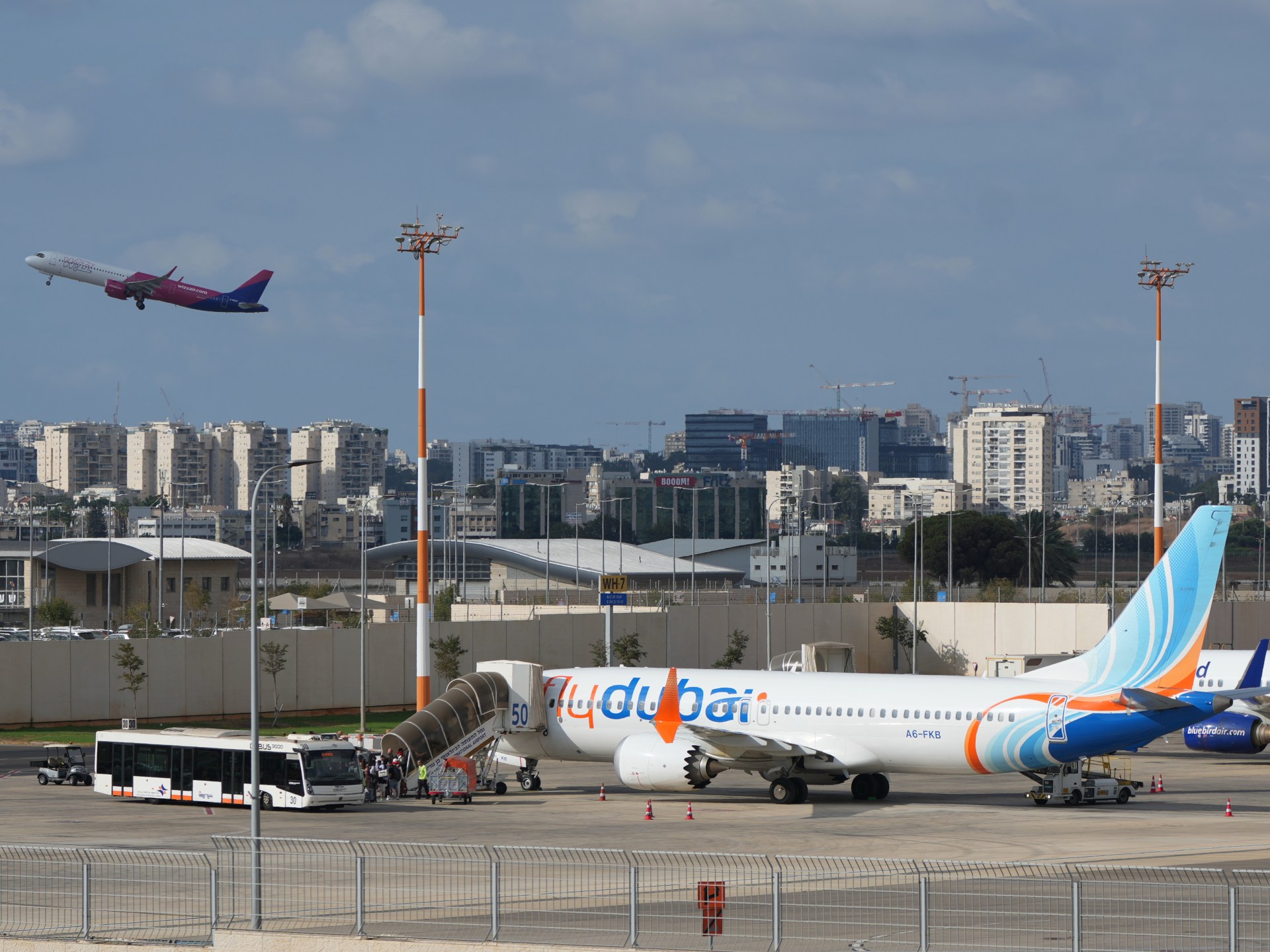

A flight from the United Arab Emirates to Israel was diverted to Saudi Arabia after issuing a distress signal in what appeared to be a hijacking attempt on Wednesday.
The Flydubai flight FZ1073 was diverted as it flew from Dubai to Tel Aviv through Jordanian airspace, prompting Israel to deploy warplanes, the Reuters news agency reported.
- list 1 of 3Flydubai flight to Israel diverted to Saudi Arabia after emergency alert
- list 2 of 3The October 7 warnings threatening Netanyahu’s Israeli election campaign
- list 3 of 3Flydubai flight to Israel diverted after attack on pilot
end of list
Israeli Prime Minister Benjamin Netanyahu said one of the pilots had stabbed the other and then tried to crash the plane. He added that Israel was preparing for other “potential threats” after the incident.
There has been no official confirmation of a hijacking attempt, however.
Flydubai said an altercation had occurred on the flight deck and that all passengers were safe and accounted for. The plane was secured by on-duty crew travelling onboard, it added.
At Saudi Arabia’s Tabuk airport, where the plane landed, officials said both the plane’s captain and first officer were taken to hospital after sustaining injuries, according to a statement from the Prince Sultan bin Abdulaziz international airport in Tabuk, carried by the Saudi state-run Al Ekhbariya television.
The UAE has become a popular holiday destination for Israeli tourists since the countries normalised ties in 2020. Here’s what we know about what happened.
What happened?
Footage taken onboard the plane appears to show the captain of the aircraft lying on the cabin floor with several stab wounds, and a passenger with a bloody wound to the head.
In another video, passengers weep and cry out in distress as the aircraft shakes.
Advertisement
Yasmin Abukasis, the mother of one of the passengers onboard, said her daughter Miriam thought she was going to die. “The plane started to lose control,” she told journalists at Israel’s Ben Gurion airport, before other pilots onboard took control of the aircraft.
Flight tracking data indicated the plane descended about 14,000 feet (4,300 metres) in less than 30 seconds about two and a half hours after leaving Dubai. Flightradar24 said on X that an initial general emergency signal designated by code 7700 was issued at about 05:31 GMT and was later changed to another emergency signal with code 7500 declaring “unlawful interference”.
Passenger Dalia Shpigel told Israeli newspaper Haaretz that some people seated towards the front of the plane broke into the cockpit after the plane began to descend and they realised something was wrong.
“An hour before landing, we felt that there was no control over the plane, that it was starting to jump,” she said. “The guys saw that the plane had begun to dive and broke into the cockpit.”
Netanyahu said he later spoke to one of the Israeli passengers who broke into the cockpit and overpowered one of the pilots who was reportedly trying to sabotage the aircraft’s systems.
“I salute these heroes who demonstrated extraordinary resourcefulness and courage,” Netanyahu said in a statement. “They saved many lives and prevented a major disaster.”
Timeline of events (GMT)
03:05 – Flight FZ1073 takes off from Dubai05:21 – Altitude fluctuations begin05:22 – Aircraft drops more than 14,000ft in less than 30 seconds05:31 – Signal from aircraft changes to 7700 (general emergency)05:38 – Signal changes to 7500 (unlawful interference)06:45 – Aircraft lands at Tabuk regional airport
The motive of the apparent attack was not immediately clear. Netanyahu said Saudi authorities were interrogating the pilot accused of carrying out the attack.
Israel’s Defence Minister Israel Katz said preliminary information indicated the attacker intended to crash the plane, killing everyone onboard, calling the incident an “attempted jihadist terror attack”.
An Israeli official who spoke to Reuters on condition of anonymity identified the attacker as an Omani national.
Israel does not have formal diplomatic relations with Saudi Arabia or Oman, maintaining a policy of occasional dialogue through informal channels. Muscat has chosen not to join other countries in the region in normalising ties with Israel over Palestinian rights. Saudi Arabia has made normalisation of Israeli ties conditional on Israel’s acceptance of a Palestinian state.
Advertisement
Israel is days away from marking the anniversary of the Hamas-led attack on southern Israel on October 7, 2023, in which about 1,200 people were killed and which triggered Israel’s genocidal war on Gaza that has killed more than 75,000 Palestinians – mostly women and children – including about 1,400 since a United States-brokered “ceasefire” supposedly took effect in October 2025.
Was a second Flydubai flight diverted?
No. A second Flydubai flight from Dubai to Tel Aviv, FZ1081, was erroneously reported in Hebrew media to have turned around, according to The Times of Israel.
The news outlet added that the mistake appeared to have been due to a glitch on flight-tracking sites.
The plane did not issue any emergency signal, and it was reported to be on its course to Tel Aviv without disruptions.
What has the response been?
Opposition leader Yair Lapid claimed Netanyahu’s political allies had attempted to pass off the incident as the fulfilment of warnings a day earlier about a possible attack on Israel ahead of its legislative election scheduled for October 27.
“The warning about activity abroad is specific, has been in place for more than two years, and has nothing to do with planes or anything resembling what happened this morning,” Lapid wrote on X.
Speaking of Netanyahu, Lapid said: “He’s trying to hitch a pathetic ride on heroic Israelis who prevented a disaster that he (once again) wasn’t prepared for.”
Related News

Iran war live: 12 killed in Riyadh, US weighs joining fight against Houthis

Gentle giant Backpack wins Alaska’s Fat Bear Week

Israel’s West Bank road closures turn routine journeys into long ordeals