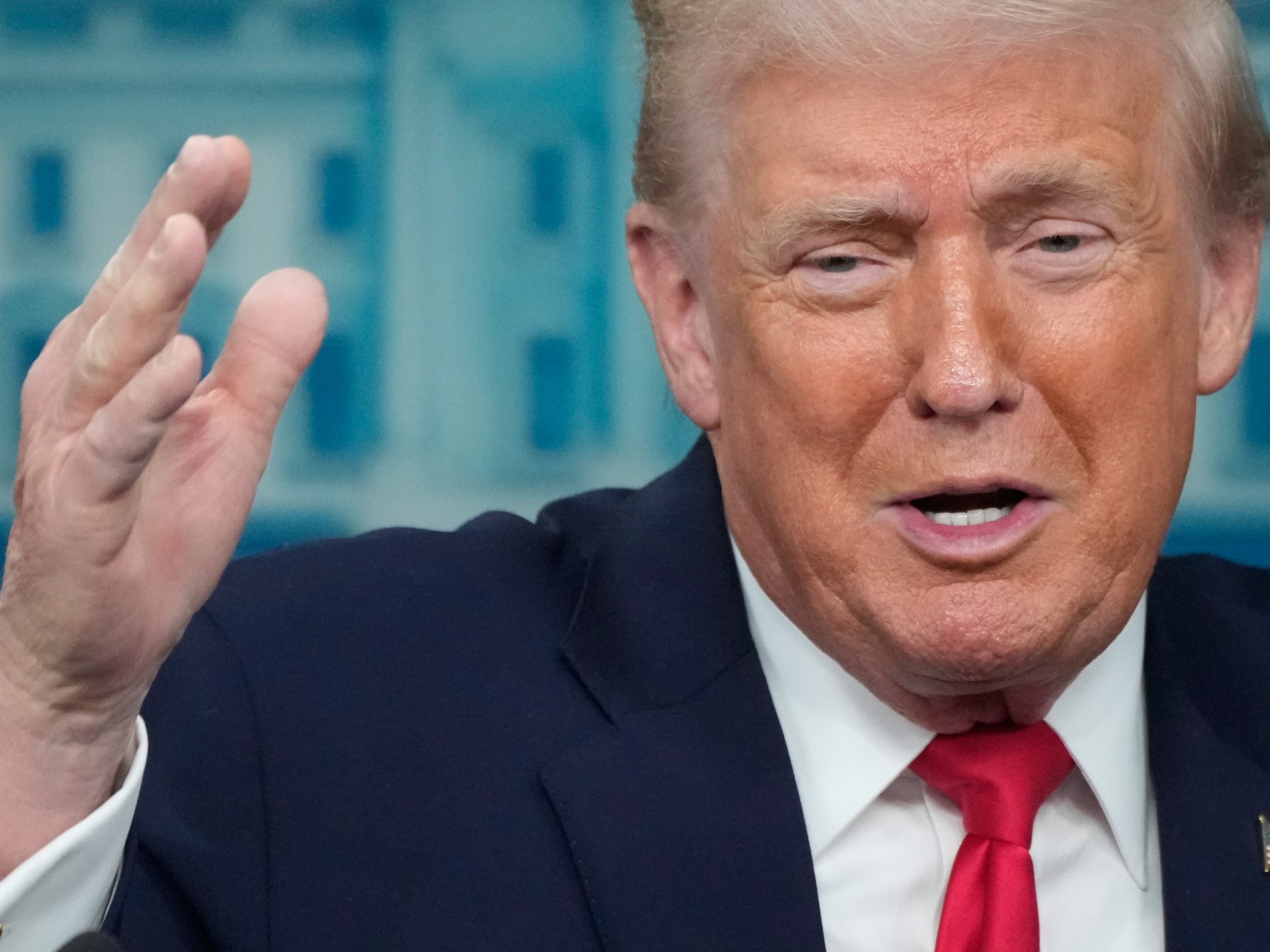
Venezuela and Mexico: How Trump is trying to choke Cuba’s oil supplies
 28 January 2026
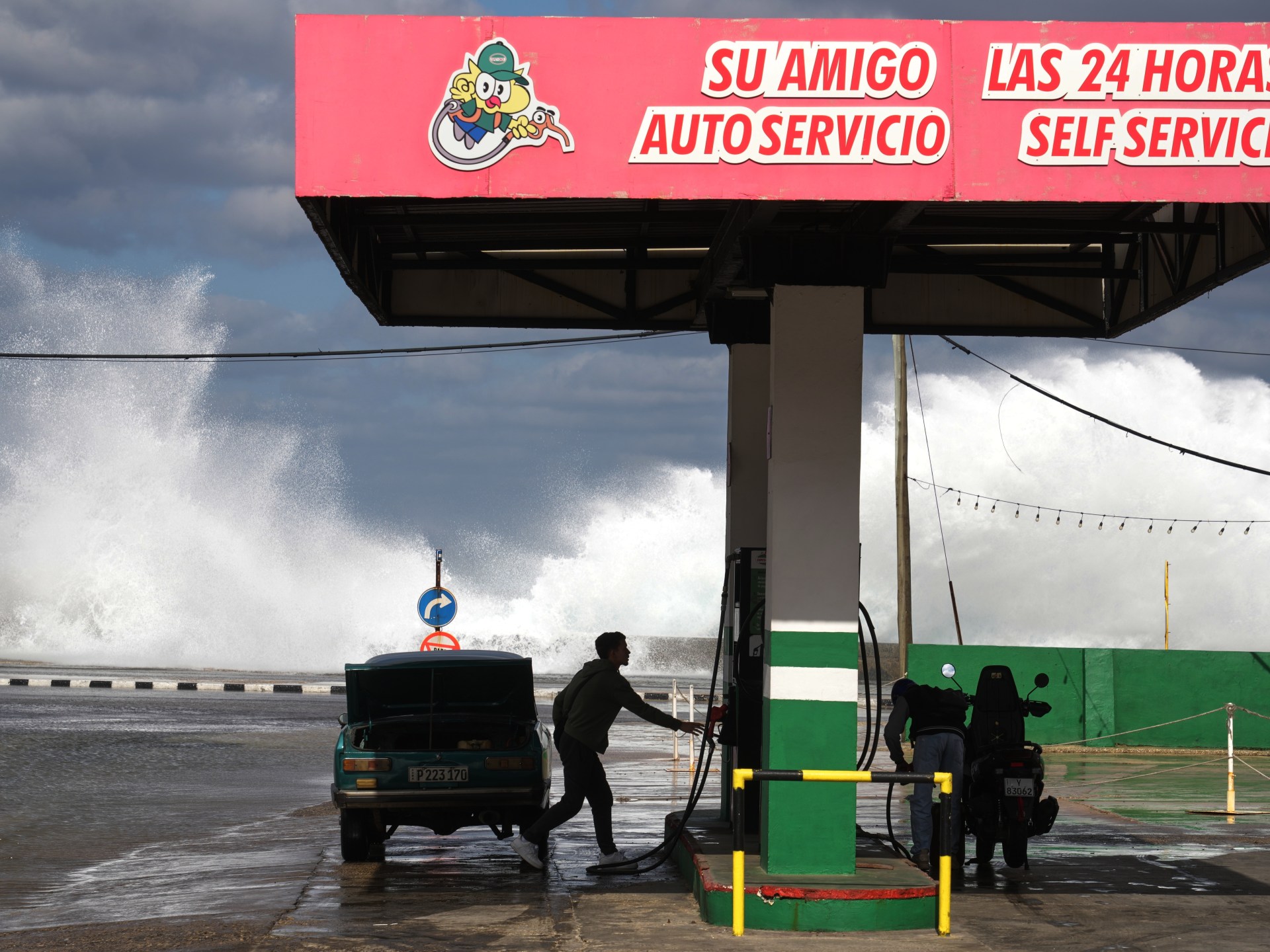

Mexico has temporarily halted oil shipments to Cuba amid heightened rhetoric from United States President Donald Trump, who has been seeking to isolate the communist-ruled island nation.
President Claudia Sheinbaum, however, said the pause was a “sovereign decision” not made under pressure from the US.
- list 1 of 4Cuban president says no talks with the United States at present
- list 2 of 4US air authority warns of ‘military activities’ over Mexico, South America
- list 3 of 4Cuban official accuses US of ‘piracy’ against sanctioned Caribbean island
- list 4 of 4Mexico vows ‘solidarity’ with Cuba after oil shipment cancellation reports
end of list
Mexico, along with Venezuela, has been providing the bulk of Cuba’s oil supplies, but Venezuelan crude was cut off from Havana after its president, Nicolas Maduro, was abducted in a military operation and taken to the US on January 3.
Mexico supplied 44 percent of Cuban oil imports and Venezuela exported 33 percent until last month, while some 10 percent of Cuban oil is sourced from Russia. Some oil is also sourced from Algeria, according to The Financial Times figures.
The erstwhile Soviet Union was the biggest backer of Cuba for decades, but since its fall in 1991, support has dwindled drastically.
So, what’s behind the Mexican government’s decision and will it exacerbate Cuba’s deepening energy and economic crisis?
What did Mexican President Claudia Sheinbaum say?
Asked at her regular morning press conference whether she denied a media report that Mexico had halted the shipment, Sheinbaum responded: “It is a sovereign decision and it is made in the moment when necessary.”
Sheinbaum sidestepped a question about whether Mexico would resume oil shipments to Cuba, answering: “In any case, it will be reported.”
She also said Mexico would “continue to show solidarity” with Cuba.
In its most recent report, Mexico’s state-owned oil corporation Pemex said it shipped nearly 20,000 barrels of oil per day to Cuba from January through September 30, 2025.
Advertisement
With Venezuela offline, shipments from Pemex have become a critical, though insufficient, lifeline for the island.
Analysts now expect further pressure from Washington to halt those shipments more permanently, given Trump’s growing demands that Mexico deliver stronger results in the fight against drug cartels.
Mexico has been trying to balance its traditional ties with Cuba amid mounting pressure from the Trump administration.
The Reuters news agency last week reported that the Mexican government was reviewing whether to keep sending oil to Cuba amid growing concerns within Sheinbaum’s government that continuing the shipments could put the country at odds with the US.
Mexico is currently negotiating a trade agreement with the US amid tariff threats.

Why isn’t Cuba getting Venezuelan oil any more?
Trump has said that no Venezuelan oil or money will go to Cuba after abducting President Maduro and taking control of Venezuela’s oil industry.
“THERE WILL BE NO MORE OIL OR MONEY GOING TO CUBA – ZERO! I strongly suggest they make a deal, BEFORE IT IS TOO LATE,” Trump wrote on his Truth Social platform on January 11.
“Cuba lived, for many years, on large amounts of OIL and MONEY from Venezuela,” Trump added.
Trump did not elaborate on his suggested deal, but US officials have hardened their rhetoric against Cuba in recent weeks.
However, Cuban President Miguel Diaz-Canel has rejected talks. “We have always been willing to maintain serious and responsible dialogue with the various US administrations, including the current one, on the basis of sovereign equality, mutual respect and the principles of international law,” Diaz-Canel said.
Following the US attack on Venezuela, the Trump administration has escalated its rhetoric against Cuba, which has been under strict US economic sanctions for decades.
Last week, the US-based Wall Street Journal reported that Trump aims to remove Cuba’s leadership and is actively seeking government insiders in Havana who are willing to make a deal with Washington to “push out the Communist regime”.
Trump on Tuesday said that Cuba is on the brink of collapse. “Cuba is really a nation that’s very close to failing,” he said during a visit to the US state of Iowa.
The US president said that Cuba no longer receives oil and money from Venezuela, a close ally of Havana since the days of former socialist President Hugo Chavez.
Advertisement
Last week, a Cuban diplomat based in Bogota accused the US of “international piracy” over Washington’s blockade of Venezuelan oil.
“The US is carrying out international piracy in the Caribbean Sea that is restricting and blocking the arrival of oil to Cuba,” Carlos de Cespedes, Cuba’s ambassador to Colombia, told Al Jazeera on Saturday, adding that Havana is facing more powerful US threats than it has in the 67 years since the revolution.
Earlier, US Secretary of State Marco Rubio, who is of Cuban descent and is believed to orchestrate policies towards Venezuela and Cuba, has described the government in Havana as a “huge problem”.
About a week after Maduro’s abduction, Trump urged Cuba to make a deal “before it is too late,” without specifying what kind of agreement he was referring to.
In a post on Truth Social, Trump suggested Rubio could become the president of Cuba. “Sounds good to me!” he said.
Relations between Havana and Washington have been tense for decades. The ties were normalised in 2014 under former President Barack Obama, in a major foreign policy shift. But Trump, who succeeded Obama, reversed the decision and reimposed sanctions during his first term.
In 2019, Trump banned cruise ships from visiting Cuba, one of the most popular forms of travel to the island, which earns much-needed revenue from tourism.
Mexico faces its own pressure from Washington, as Trump has threatened to take military action against Mexican drug cartels. Last week, the country transferred dozens of suspected cartel members to the US amid pressure from the Trump administration.
Since Trump’s return to power in January last year, the war on drugs has been at the top of his administration’s agenda. The US said its action against Maduro was justified, based on claims that Venezuela sent drugs to the US. But Caracas is not the main source of drugs coming into US territory.
How has the US policy affected Cuba?
Cuba is enduring its worst economic crisis since Fidel Castro’s 1959 revolution, as fuel shortages have caused prolonged power cuts, water and food supply disruptions.
Analysts say the Cuban economy could collapse completely as Mexican and Venezuelan oil supplies dry up.
A total blockade on oil imports to Cuba is part of possible new tactics by the Trump administration to drive leadership change in the Caribbean country, according to the US-based Politico site.
Al Jazeera could not confirm Politico’s report.
Rising geopolitical tensions with the US have also driven tourists away from Cuba, with the number of visitors dropping by nearly 70 percent since 2018.
For decades, tourism – a source of livelihood for millions of Cubans – generated up to $3bn a year for Cuba. Some 1.6 million tourists visited Cuba last year, significantly lower than the 4.8 million in 2018 and the 4.2 million in 2019, before the COVID-19 pandemic hit.
Havana classic car driver Aldama recalled that he would sometimes work until 9pm. Nowadays, he’s lucky if he takes one or two tourists for a spin in a day.
Advertisement
He used to charge $50 for a drive around the capital. Now, given the lack of demand, he has lowered his price to $25 and even $20 if a tourist insists on bartering.
“The day that we run out of fuel, we’ll stop driving and look for another job,” Aldama told The Associated Press. “There’s no other choice.”
Related News

Who got the most nods? The complete list of 2026 Oscar nominations
UK prosecutors seek to reinstate ‘terrorism’ charge against Kneecap rapper
Anger as MSF agrees to Israel’s ‘unreasonable demands’: What to know