US partially lifts Iran oil sanctions amid ‘encouraging’ talks
 22 June 2026

The United States has partially lifted sanctions on Iranian oil exports following “encouraging” talks over ending the conflict between the pair.
The US Treasury issued a 60-day waiver on Iran’s oil sanctions on Monday, paving the way for the production, delivery and sale of Iranian oil to the US. The move came amid positive reports from mediators and the US vice president regarding talks in Switzerland between Washington and Tehran aimed at establishing a full peace deal.
- list 1 of 4What are the key outcomes of the Iran-US talks, what next?
- list 2 of 4US, Iran agree on ‘roadmap’ towards final deal in Switzerland talks
- list 3 of 4JD Vance touts progress on key issues in US-Iran negotiations
- list 4 of 4Vance’s warning to Israel signals a new phase in US-Israeli relations
end of list
The waiver is a condition included in the 60-day memorandum of understanding (MoU) signed by Tehran and Washington on June 17.
US Treasury Secretary Scott Bessent said that the US-Iran talks have been “productive”, and that several of the MoU’s stipulations are moving ahead.
“Iran has committed to free and open transit in the Strait of Hormuz and to permit International Atomic Energy Agency (IAEA) inspectors into their country,” he wrote on social media. “As part of the framework, Treasury has issued a temporary 60-day general license authorizing the production, delivery, and sale of Iranian oil.”
The licence lasts through August 21 and covers crude oil, petrochemical products, or petroleum products of Iranian origin. It permits Iranian oil to be imported into the US but does not authorise transactions involving US-sanctioned North Korea or Cuba, or Russian-occupied Ukraine.
There was no immediate response from Iranian government officials.
Oil prices continued their recent decline upon news of the waiver, with Brent crude dropping over 3.5 percent to $77.7 per barrel.
Advertisement
‘Good foundation’
Bessent’s announcement came as US Vice President JD Vance projected optimism over the Tehran-Washington discussions at the Swiss resort of Burgenstock.
He told reporters “we laid a very good foundation for a successful final deal,” and shrugged off yesterday’s online tit-for-tat between President Donald Trump and top negotiator Mohammad Bagher Ghalibaf.
“Social media threats that they would walk out” did not come to fruition,” he noted. “There was a little bit of threatening, there was a little bit of whining, but at the end of the day the talks continued and we made great progress.”
Mediators at the talks said that Washington and Tehran had made “encouraging progress” at the first round, according to Reuters.
The vice president did not give a firm timeline for when nuclear inspections may start, but said conversations with the IAEA could happen as soon as Monday.
The US has said that the need to prevent Iran from developing a nuclear weapon was a key driver of its attacks, and demands that Tehran reopen its nuclear facilities to international oversight.
Iran has persistently rejected accusations that it seeks to develop a nuclear arsenal, insisting that its nuclear programme is pure for civilian purposes.
A busier waterway
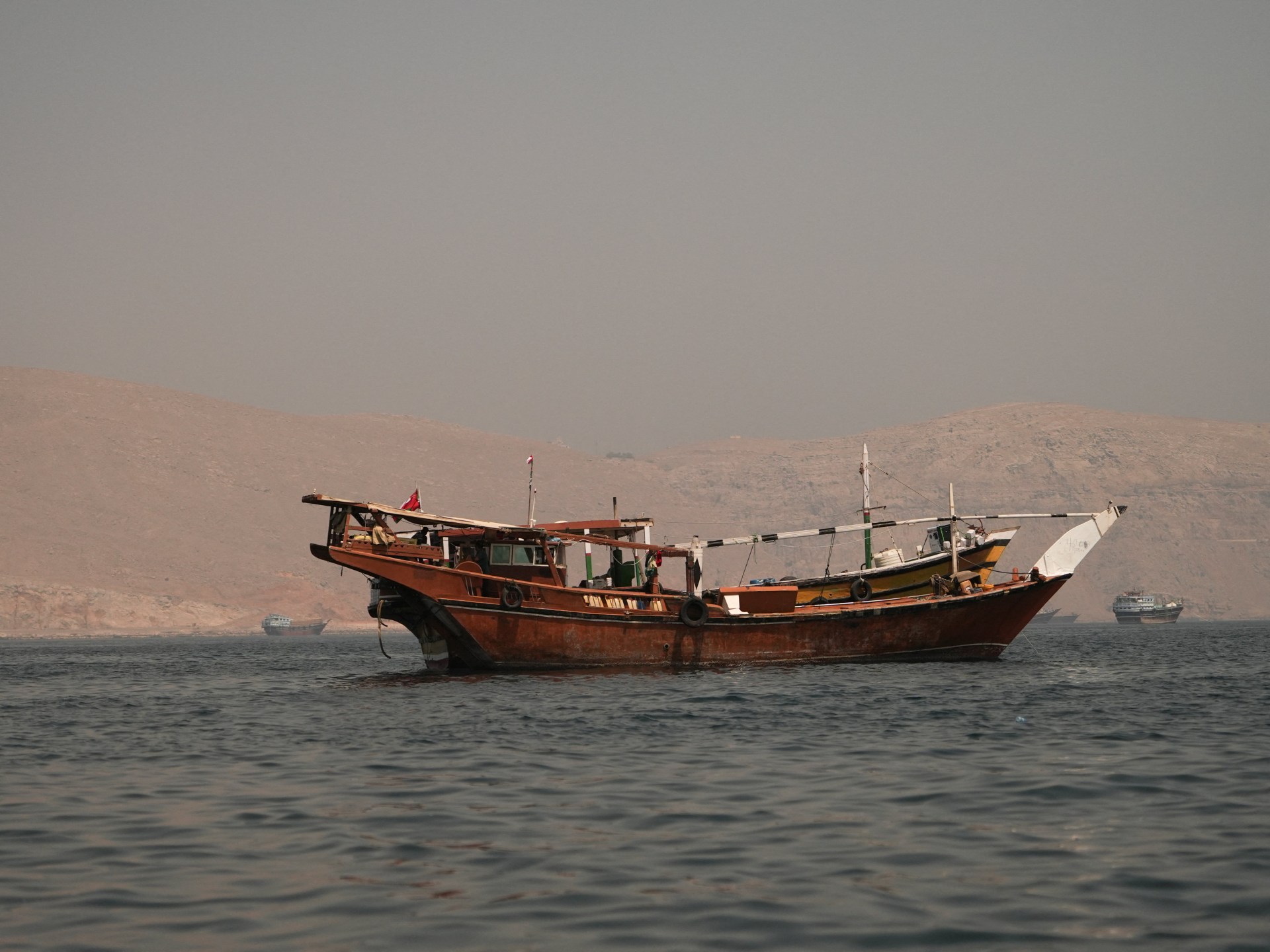
Shortly ahead of the announcement of the waiver, the Strait of Hormuz was reported to be seeing an uptick in oil and gas tanker traffic, just two days after Iran said it would re-close the waterway amid Israeli attacks on Lebanon.
Four Qatar-controlled LNG tankers headed into the Gulf and through the strait on Monday, while two supertankers – which can lug up to 4 million barrels of crude oil – crossed into the Gulf. One indicated its destination as the Iraqi port of Basra, according to ship tracking data from Kpler.
Meanwhile two smaller crude tankers, laden with just under 2 million barrels of oil total, sailed out of the waterway and into the Gulf of Oman on Monday, according to MarineTraffic.
“While daily transits remain below the 125 crossings prior to the Iran hostilities, the trend is positive,” ship broker Clarksons said.
The US has maintained that the strait was never closed for the second time, tracking 55 merchant ships transiting the strait Saturday with more than 17 million barrels of oil.
Related News

‘My voice is being heard’: A month of India’s Cockroach Janta Party

Israeli forces kill three-year-old Palestinian boy on family farm in Gaza
Albanian protesters rally against Kushner-backed resort in protected area