US fertility rate drops to all-time low, continuing a two-decade decline
 09 April 2026
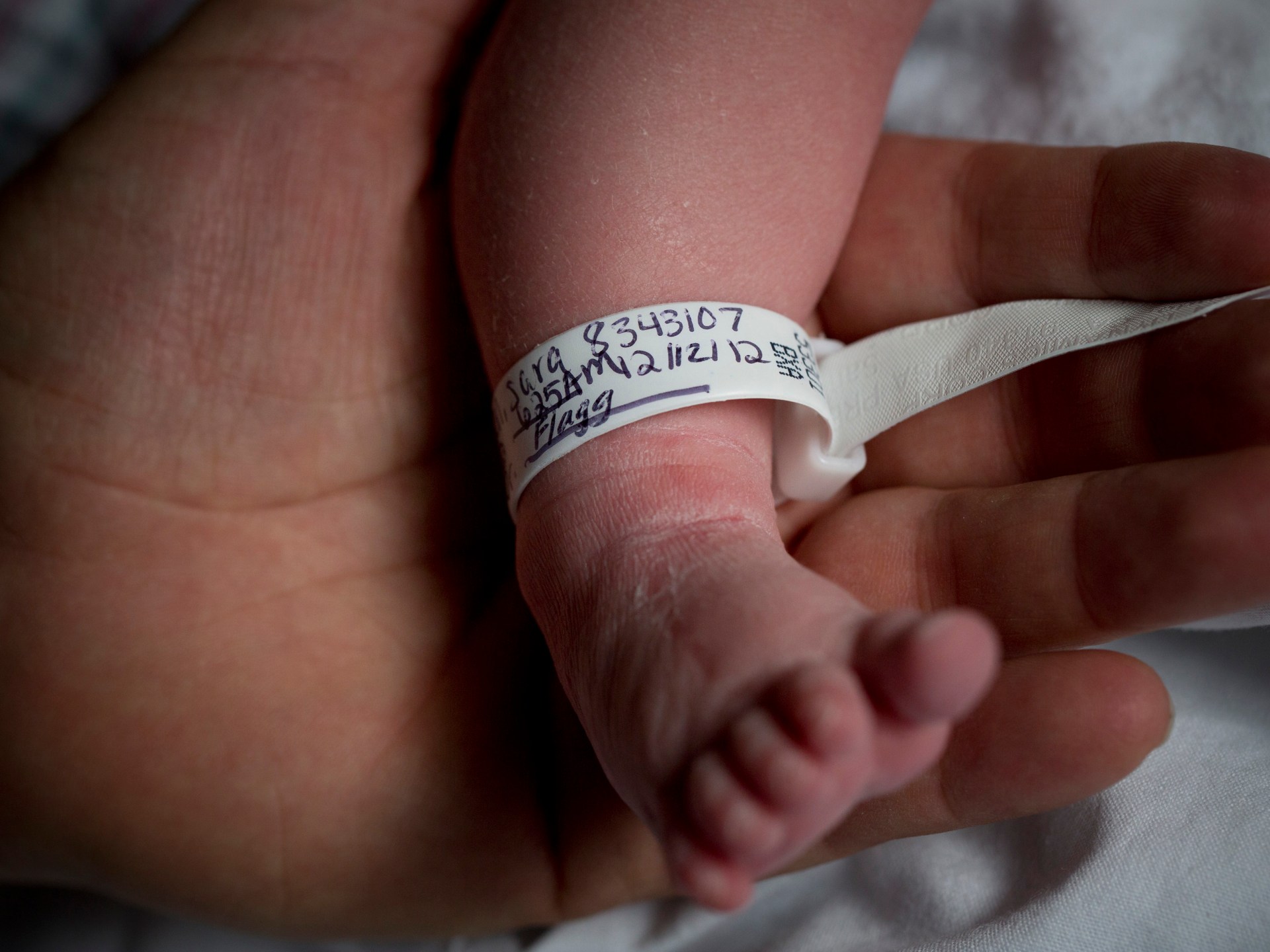

The fertility rate in the United States has dropped to an all-time low, continuing a trend that has seen births in the country drop by nearly 23 percent since 2007.
Data released by the US Centers for Disease Control and Prevention (CDC) on Thursday shows that the fertility rate for 2025 was 53.1 births per 1,000 women aged 15 to 44, a one percent drop compared to the year before.
- list 1 of 3What does the falling birthrate mean for the British economy?
- list 2 of 3Taiwan battles low birth rate with new family subsidies
- list 3 of 3‘Party of parents’: Trump touts government guidance to increase IVF access
end of list
Experts attribute the change to a variety of factors, from changing priorities among younger women to socioeconomic factors such as anxiety over the cost of living and the affordability of housing and childcare.
According to the Economic Policy Institute, a progressive think tank focused on economic issues, the average cost of childcare in the state of California was nearly $22,000 per year. In states with a lower cost of living such as Alabama, it was nearly $8,000.
Even though Alabama’s costs were lower, the institute noted that $8,000 is the equivalent of 27 weeks of full-time work for a labourer making the minimum wage in the state.
For California, it would take a minimum-wage worker 33 weeks to earn enough for childcare costs alone.
Phillip Levine, an economics professor at Wellesley College, told the news agency Reuters that factors such as “greater and more demanding job market opportunities, expanded leisure options, [and] increased intensity of parenting” have made “the option to have children less desirable”.
Falling birth rates have also grabbed the attention of policymakers, with some seeking to roll out tools to incentivise young couples to have children.
Advertisement
The administration of United States President Donald Trump promised to embrace pro-birth policies, sometimes referred to as pro-natalist policies. Last year, the administration touted new guidance to increase access to IVF treatments as evidence that the Republican Party was the “party of parents”.
Such steps, however, have been paired with enormous reductions in access to government healthcare and other social programmes.
After unveiling his recent budget request for fiscal year 2027, Trump justified the need to slash social spending, while defending his $1.5 trillion request for military spending.
He has suggested that existing federal programmes be offloaded onto states, which have varying resources.
“The United States can’t take care of daycare. That has to be up to a state. We can’t take care of daycare. We’re a big country,” Trump said last week.
“Medicaid, Medicare, all these individual things, they can do it on a state basis. You can’t do it on a federal [basis]. We’ve got to take care of one thing: military protection. We have to guard the country. But all these little things, all these little scams that have taken place, you have to let states take care of them.”
Far-right politicians have also become fixated on falling birth rates in Western countries, using them to promote a narrative that white majorities could be “replaced” by migrants from non-Western countries.
The number of babies born in the US in 2025 also saw a slight drop of about one percent, down to 3.6 million.
Related News

Pakistan maintains ‘delicate balancing act’ as it hosts Iran talks

Funeral held for Al Jazeera’s Wishah killed in Israeli strike in Gaza

Reza Pahlavi pledges to ‘make Iran great again’ at 2026 CPAC conference