Trump administration sued by 25 states over new tariffs on trading partners
 03 August 2026
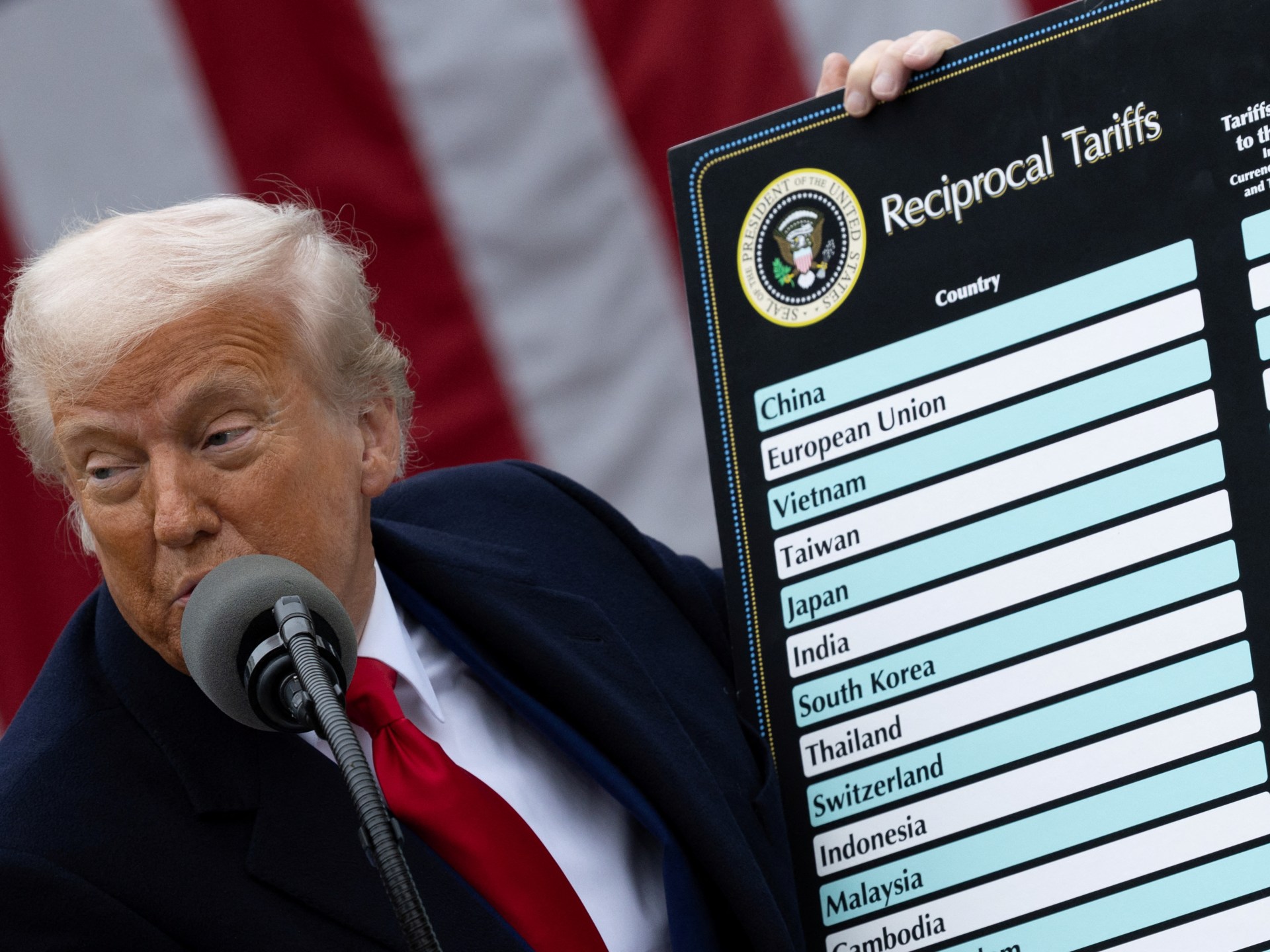

A group of 25 Democratic-led states has sued Donald Trump’s administration over its latest tariffs, claiming that the US president has exceeded his legal authority to implement the levies.
The lawsuit, filed in the US Court of International Trade on Monday, targets new double-digit tariffs imposed on 60 trading partners last month over allegations they were not doing enough to stop the importation of goods produced with forced labour.
- list 1 of 3Why has Trump refused to renew the USMCA, and what will that mean?
- list 2 of 3Did the US just start a trade war with Brazil?
- list 3 of 3Trump’s latest ‘forced labour tariffs’: Who’s been hit, how badly?
end of list
These latest tariffs took effect just as the clock ran out on temporary tariffs that Trump had turned to after the Supreme Court struck down his flagship “liberation day” levies in a February ruling.
“After losing at the Supreme Court, the administration is once again trying to illegally raise taxes on families and businesses with a new round of tariffs,” said New York Attorney General Letitia James.
The states that sued over the new tariffs, including Oregon and New York, all have Democratic attorneys general or governors.
In response, White House spokesman Kush Desai said the levies were an appropriate and legal response to unfair trade practices in other nations.
“A foreign country’s failure to impose and effectively enforce a prohibition on the importation of goods produced with forced labor is unreasonable and burdens US commerce, including American workers, and must be addressed,” Desai said.
Trump, who argues that high tariffs will revive US manufacturing, last year overturned decades of Washington policy that favoured lower tariffs and ever-freer trade.
Advertisement
Invoking the 1977 International Emergency Economic Powers Act (IEEPA), he imposed double-digit tariffs on imports from almost every country, saying the US’s longstanding trade deficit amounted to a national emergency.
But the Supreme Court ruled that IEEPA did not authorise tariffs. The decision forced the administration to establish a refund process for importers who had paid the tariffs.
Eager to make up the lost revenue, Trump turned to temporary 10 percent worldwide tariffs, but they expired at midnight on July 24.
The latest round of global tariffs was imposed under Section 301 of the Trade Act of 1974, meant to combat unfair or discriminatory economic practices by other nations. The tariffs imposed in July affect more than 99 percent of US imports.
The states’ complaint, like two previous lawsuits filed by small businesses over the tariffs, argued that the new tariffs used “forced labor” as a pretext to re-impose the tariffs that had already been ruled illegal in court. They said that a sweeping tax on imports would do nothing to address the real problems of forced labour around the world.
Related News

How Virunga Park protects people and gorillas from Ebola in eastern DRC
Supreme Court strikes down US campaign spending limits in landmark ruling
‘Critic to Israel’: Document reveals how Israel scrutinised global NGOs