
Some ECCU Member States Not on Track to Meet 60% Debt Target by 2035, Governor Says
 14 February 2026
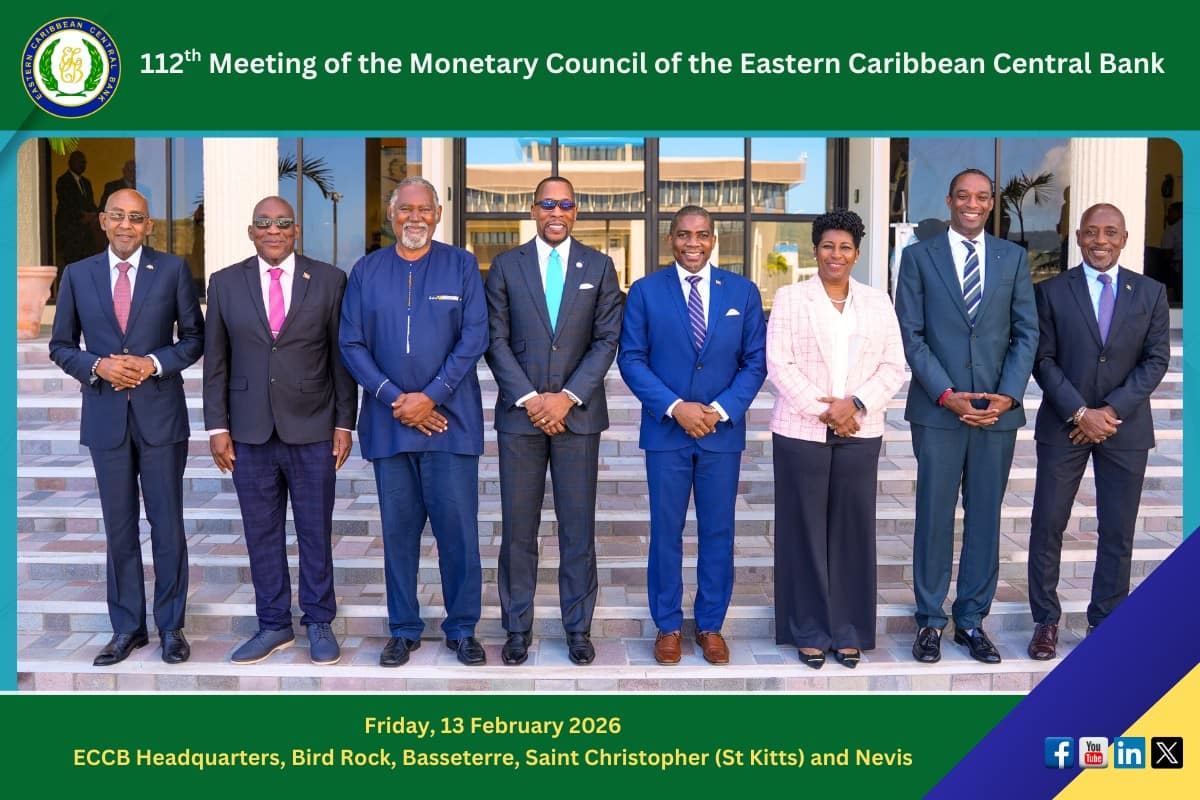




Some ECCU Member States Not on Track to Meet 60% Debt Target by 2035, Governor Says

Some member countries of the Eastern Caribbean Currency Union (ECCU) are not on track to reduce their debt-to-GDP ratios to the regional target of 60% by 2035, according to the communique issued after the 112th meeting of the Monetary Council of the Eastern Caribbean Central Bank (ECCB).
The issue was raised during a media briefing following the council meeting, where a journalist asked for clarification on which countries were projected to miss the benchmark and what factors were driving the shortfall.

In the communique, the council stated that “some member countries are not on track to secure the debt-to-GDP ratio of 60% by 2035,” while acknowledging ongoing efforts by governments to strengthen fiscal and debt sustainability .

ECCB Governor Timothy N.J. Antoine said the debt-to-GDP ratio remains a “key metric” and an anchor for the monetary union.
“During the pandemic, the monetary council took the very carefully considered decision to extend the period by which countries should attain a debt-to-GDP ratio of 60% from 2030 to 2035,” Antoine said, describing COVID-19 as a “one in 100 year event” that required additional time for economic adjustment and recovery .

Since then, he noted, member states have faced additional shocks, including inflation, volcanic eruptions in St. Vincent and the Grenadines, hurricanes and other natural disasters.
“As we speak, the range is somewhere between 6% to 100%,” Antoine said, referring to debt levels across the union, adding that “members are making efforts to converge to the target, some faster than others” .

The governor did not identify specific countries but stressed that the region operates in a “difficult environment” where shocks continue to disrupt fiscal consolidation efforts.
“What the Monetary Council also recognized and encouraged is the adoption of fiscal resilience frameworks,” Antoine said. Such frameworks, he explained, set fiscal rules to guide countries toward the debt target and require a disciplined annual budget approach, including debt-reducing balances or primary surpluses .
He described the process as a “work in progress,” emphasizing the need to build fiscal space so governments can respond to crises without derailing long-term debt objectives.
The communique underscored that sustainable fiscal policy remains essential to preserving macroeconomic stability and supporting long-term growth across the currency union .
Despite the debt concerns, the council reported that the EC dollar remains strong, with a backing ratio of 99.5%, well above the statutory minimum of 60%, and foreign reserves totaling EC$5.83 billion .
The 112th Monetary Council meeting was held Feb. 13, 2026, at the ECCB headquarters in St. Kitts and Nevis under the chairmanship of Antigua and Barbuda Prime Minister Gaston Browne, who participated virtually.
Advertise with the mоѕt vіѕіtеd nеwѕ ѕіtе іn Antigua!
We offer fully customizable and flexible digital marketing packages.
Contact us at [email protected]

Related News
Hospital Beds Occupied by Social Cases, Straining Emergency Care
Ghanaian nurses begin two-week orientation at Sir Lester Bird Medical Centre

Students Donate Essential Items to Sir Lester Bird Medical Centre Paediatric Ward