Smog blankets New Delhi as Diwali firecrackers worsen air quality
 09 November 2026
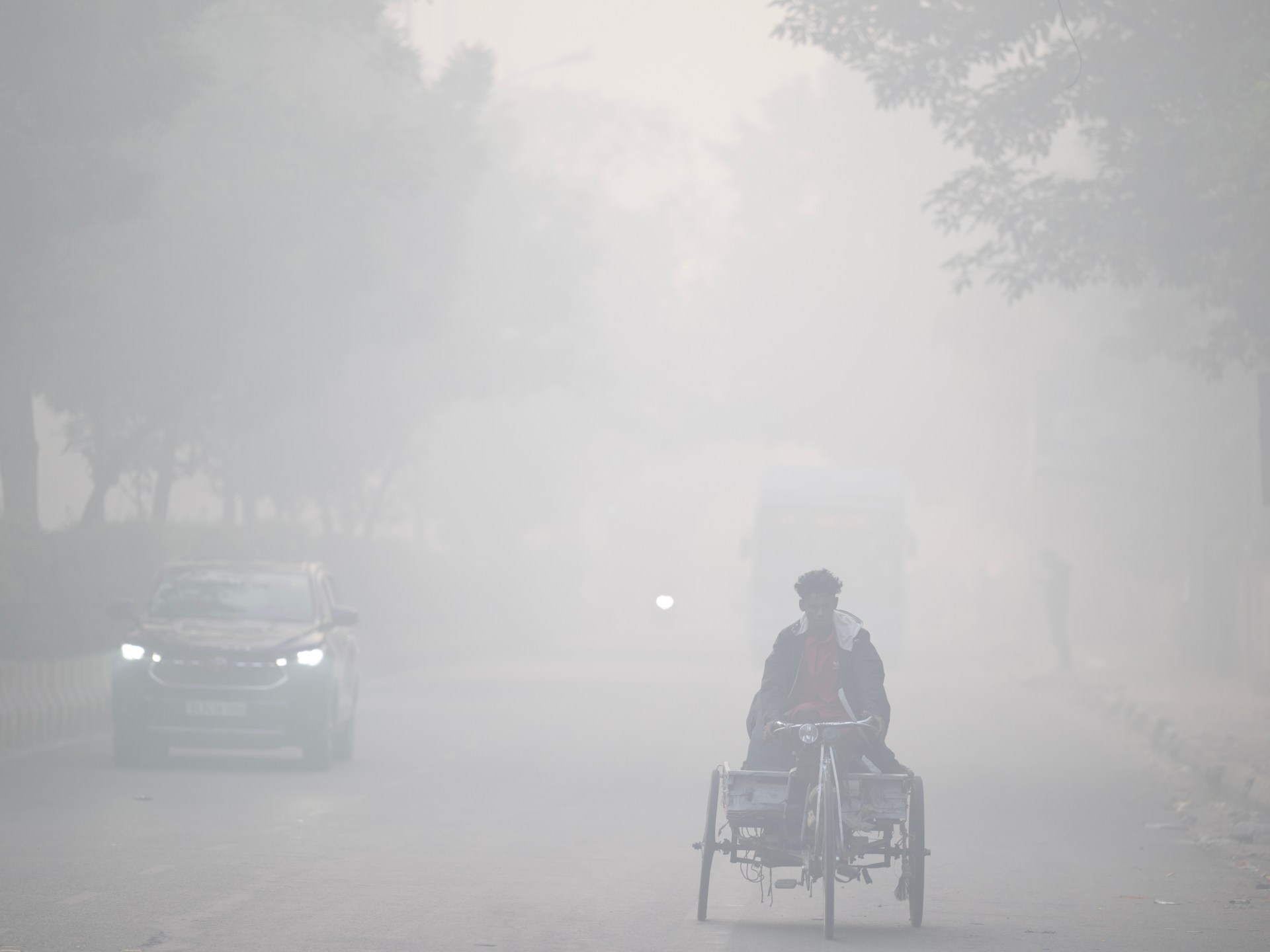

Heavy smog has blanketed New Delhi after firecrackers lit up the Indian capital during Diwali celebrations, worsening the seasonal pollution crisis.
Diwali, the Hindu festival of lights, was celebrated across India on Sunday. Despite restrictions on fireworks, New Delhi residents celebrated the festival of lights with firecrackers throughout Sunday evening, releasing smoke and fine particulate matter into the atmosphere.
- list 1 of 3Rent-a-grandchild: Businesses offering companions to elderly grow in India
- list 2 of 3UK jailing of Indian sailor over Russia sanctions sets off ‘perfect storm’
- list 3 of 3India beat New Zealand by four runs via DLS in rain-hit second ODI
end of list
On Monday morning, the Air Quality Index exceeded 350 in several parts of the capital, categorised as “severe” and posing significant health risks, according to the World Health Organization’s (WHO) recommended exposure thresholds.
Last month, India’s Supreme Court put in place restrictions to limit Diwali pollution, allowing only approved “green firecrackers” under specified conditions for three-hour windows on Saturday and Sunday. The approved crackers produce fewer emissions but are not pollution-free.

On Wednesday, days before Diwali, toxic air pollution in New Delhi surged to more than 30 times the WHO’s recommended daily limit, data from air monitors showed.
New Delhi, home to 30 million people, persistently ranks among the world’s most polluted capital cities.
The issue is exacerbated during the winter, when cooler temperatures, low wind speeds and stagnant atmospheric conditions prevent pollutants from dispersing.
Advertisement
Vehicles account for 23 percent of New Delhi’s winter pollution, while biomass burning, including farm stubble fires, contributes 20 percent, according to India’s Ministry of Environment, Forest and Climate Change.
The result is a thick haze that can linger over the capital and surrounding areas for days.
Related News
Photos: Thousands rally in France over rising costs and economic struggles
Iran commander sets out five conditions for regional security
Egyptian parliament authorises military aid for Saudi Arabia