Russian air attacks kill five at Ukraine’s Naftogaz gas facilities
 05 May 2026
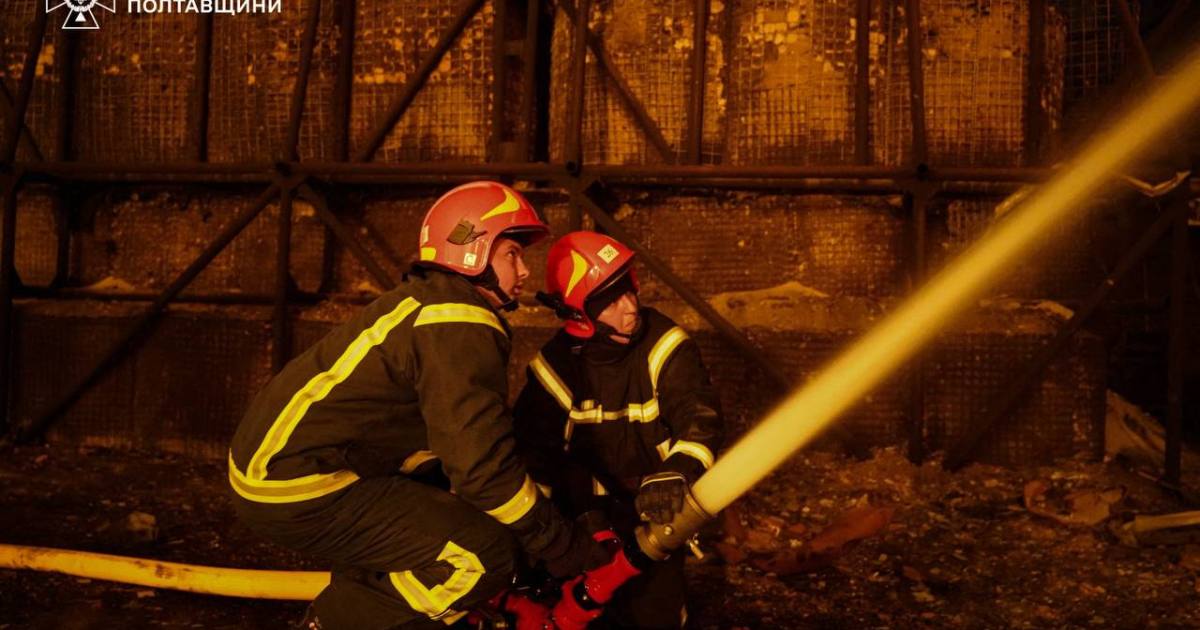

At least five people have been killed in Russian air strikes on Ukrainian state-run gas facilities in the Poltava and Kharkiv regions, officials said, a day after Kyiv and Moscow announced unilateral ceasefires to take effect later this week.
Three employees and two rescue workers were killed and 37 people were wounded in the overnight missile and drone barrage, Serhiy Koretskyi, the CEO of Ukraine’s state energy company Naftogaz said on Tuesday.
- list 1 of 4How to escape Russia’s army: Soldiers serving in Ukraine seek a way out
- list 2 of 4What is the Ukrainian anti-drone system Sky Map being used in the Gulf?
- list 3 of 4Russian strikes kill at least eight in Ukraine, drones hit Moscow
- list 4 of 4Russia and Ukraine declare competing ceasefires
end of list
“We have sustained significant damage and production losses. This was a combined strike involving UAVs (unmanned aerial vehicles) and ballistic missiles,” said Koretskyi.
He added that the attack cut gas supply to nearly 3,500 customers.
Ukrainian President Volodymyr Zelenskyy said Russian authorities had shown “utter cynicism” by announcing a ceasefire and then launching missile and drone attacks on his country.
“Russia could cease fire at any moment, and this would stop the war and our responses. Peace is needed, and real steps are needed to achieve it. Ukraine will act in kind,” he said on X.
A day earlier, Russian President Vladimir Putin declared a two-day ceasefire in the war with Ukraine on May 8 and 9 to mark Russia’s World War II victory. Zelenskyy countered with his proposed pause in fighting starting on the night of May 5.
Ukraine’s air force said Russia had launched 11 ballistic missiles and 164 drones at the country since 6pm (15:00 GMT) on Monday. One missile and 149 drones were shot down or neutralised, it said, but eight missiles and 14 drones struck 14 locations.
Advertisement
Reporting from Kyiv, Al Jazeera’s Audrey Macalpine said Russian missile attacks were posing a challenge for Ukraine.
“Ukraine has become accustomed to intercepting drones regularly, but it still lacks sufficient means to intercept, especially ballistic missiles, which is why you hear Ukrainian President Volodymyr Zelenskyy so often pleading with his European partners for more air defence, for things like Patriots, because they are the only weapons that are capable of intercepting ballistic threats,” she said.
Meanwhile, Ukraine attacked one of Russia’s biggest oil refineries on Tuesday, sparking a fire in an industrial area of the Russian town of Kirishi in the Leningrad region, Governor Alexander Drozdenko said.
“The enemy’s main target was the [Kirishinefteorgsintez] oil refinery,” Drozdenko said, adding that there were no casualties as a result of the attack.
The fire was contained, and firefighting operations were nearing completion, he said.
According to industry sources, the Kirishinefteorgsintez oil refinery, one of the largest in the country, processed 17.5 million metric tonnes of oil (350,000 barrels per day) in 2024, which amounted to 6.6 percent of Russia’s total oil refining volumes.
It produced 2 million tonnes of petrol, 7.1 million tonnes of diesel, 6.1 million tonnes of fuel oil and 600,000 tonnes of bitumen.
The Russian Ministry of Defence said its air defence forces destroyed 289 Ukrainian drones over Russian regions overnight.
Related News
Iran war live: Tehran says US ports siege ‘intolerable’; Trump mulls action

Iran war: What’s happening on day 61 as UAE exits OPEC?
Russia attacks Odesa, claims Ukraine hit Zaporizhzhia nuclear plant