Passport Power Doubles as Global Peace Declines
 21 July 2026

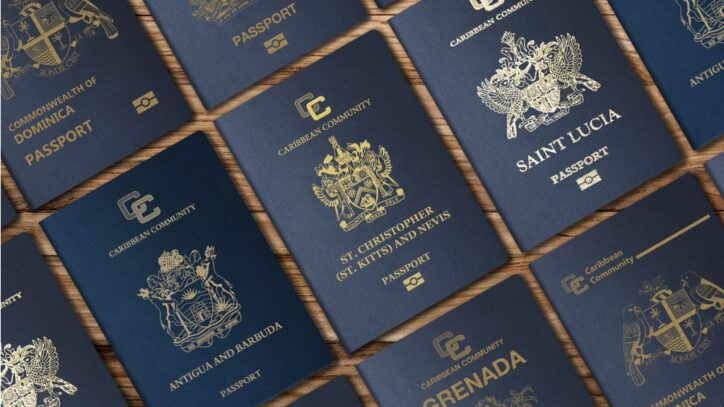


The 20th anniversary edition of the Henley Passport Index reveals that the average passport now provides visa-free access to 108 destinations worldwide — up from just 58 when the index was first launched in 2006 — demonstrating how dramatically global mobility has expanded over the past two decades.

The findings stand in stark contrast to the latest Global Peace Index, which also marks its 20th edition and paints its bleakest picture yet. According to the Institute for Economics & Peace, the world is experiencing the highest number of state-based conflicts since the Second World War, with global peacefulness declining for the 12th consecutive year. Today, 119 of the 163 countries measured are less peaceful than they were in 2008, while 103 countries have been involved in an external conflict during the past five years — almost double the number recorded when the index began.
As millions of travelers prepare to cross borders for the peak Northern Hemisphere summer holiday season, the July 2026 Henley Passport Index — based on exclusive Timatic data from the International Air Transport Association (IATA) — shows that international mobility continues to evolve despite an increasingly complex and conflicted geopolitical landscape. Singapore retains its position as the world’s most powerful passport with visa-free or visa-on-arrival access to 192 destinations, while the United Arab Emirates is the biggest mover since January, climbing three places to join Japan and South Korea in 2nd place with access to 188 destinations.

The UK has climbed one place to 6th since the start of the year after securing visa-free access to China and Malawi, while Canada has risen to 7th following similar gains. The United States remains in 10th place and is now one of the few top-ranked passports whose citizens still require a visa to visit China.

UAE — The Making of a Mobility Superpower
The UAE’s latest rise is particularly significant in this anniversary year, recording the greatest improvement of any passport in the index’s history, adding 153 visa-free destinations over 20 years and rising from the middle of the rankings to become one of the world’s most powerful passports — a striking example of how sustained diplomatic engagement and international cooperation can transform global mobility.

Dr. Christian H. Kaelin, Chairman of Henley & Partners and creator of the Henley Passport Index, says the two historic datasets reveal a profound shift in the nature of global power. “Twenty years of data show that passport power is one of the clearest expressions of a country’s geopolitical capital. It reflects far more than peace or prosperity alone. The world’s strongest passports belong to nations that other countries want as partners — for trade, investment, security, or cooperation. Mobility is ultimately a measure of the value other countries place on their relationship with you.”
The Winners, the Losers, and the Growing Gap

Over the past 20 years, global travel freedom has expanded dramatically. In 2006, the most powerful passports — held by citizens of the USA, Denmark, and Finland — provided visa-free access to 130 destinations. Today, Singapore sits at the top of the index with access to 192 destinations.
Yet the gap between the most and least mobile citizens has widened sharply. In 2006, Afghanistan ranked last with access to just 12 destinations, creating a 118-destination gap between the top and bottom of the index. Today, Afghanistan remains at the bottom with access to only 22 destinations, while Singapore’s score of 192 creates a record breaking 170-destination global mobility gap.
Remarkably, Bolivia is the only passport in the world to have recorded a net loss in visa-free access over the past two decades, reducing their score by six destinations. Every other passport has become more powerful.
The Waning Power of the Atlantic Alliance
The composition of the world’s mobility elite has changed significantly since the Henley Passport Index was launched. In 2006, the USA enjoyed 1st place and the UK ranked 3rd. Twenty years later, the USA sits in 10th place and the UK ranks 6th, underscoring a longer-term shift in mobility power away from the traditional transatlantic leaders.
Asia has become far more prominent at the top of the index. Singapore, which ranked 8th in 2006, now holds 1st place, while Japan and South Korea share 2nd place with the UAE.
Europe still dominates the upper ranks, but the balance has changed. The Top 10 now includes 38 passports, compared with 26 in 2006, with more countries competing within a narrower bandwidth of high mobility. This reflects a broader trend: passport power has expanded globally, but relative advantage has become harder to maintain.
When Peace Predicts Passport Power
New analysis by Henley & Partners comparing the Henley Passport Index (HPI) and the Global Peace Index (GPI) over the past two decades reveals a strong positive relationship between peacefulness and passport power (Spearman rank correlation ρ = 0.65, p < 0.001). At both ends of the spectrum, the pattern is remarkably consistent. Many of the world’s most peaceful countries also hold the world’s strongest passports. Singapore ranks 8th on the GPI and 1st on the HPI, while Japan, Switzerland, Ireland, Austria, Portugal, Finland, Denmark, New Zealand, Canada, Czechia, and Malaysia all feature among the global leaders on both indexes.
The same pattern is evident at the opposite end of the rankings. Afghanistan, Syria, and Yemen sit among the world’s least peaceful nations and have the world’s weakest passports, illustrating the impact that conflict, instability, and state fragility have on international mobility.
When Diplomacy and Geopolitical Power Trumps Peace
The most revealing findings, however, emerge from the exceptions. Countries whose passports significantly outperform what their peace rankings alone would predict include Israel (159th on GPI, 18th on HPI), the United States (134th on GPI, 10th on HPI), France (99th on GPI, 4th on HPI), Ukraine (160th on GPI, 31st on HPI), the UAE (73rd on GPI, 2nd on HPI), South Korea (57th on GPI, 2nd on HPI), Brazil (124th on GPI, 16th on HPI), Mexico (139th on GPI, 22nd on HPI), and Russia (163rd on GPI, 47th on HPI). Their positions demonstrate that while peace provides the foundation for international mobility, diplomacy, geopolitical influence, economic strength, and regional integration can all have an even greater impact.
America and Israel are the clearest statistical outliers. Despite the USA sitting in the bottom fifth of the GPI rankings and Israel among the five least peaceful nations in the world, both continue to enjoy exceptionally powerful passports. Their positions reflect decades of accumulated diplomatic capital, geopolitical influence, economic importance, and international confidence in the integrity of their institutions and travel documents. At a time when tensions with Iran and instability across the Middle East once again dominate headlines, their mobility strength illustrates that passport power is shaped by far more than peacefulness alone.
The Great Mobility Divide
France is perhaps the clearest European outlier. Its 99th place on the Global Peace Index ranking reflects the index’s inclusion of militarisation and external conflict alongside domestic security, yet it shares 4th place on the Henley Passport Index with 10 other European countries that all rank within the top 35 for peacefulness. Its exceptional passport strength highlights the mobility dividend created by Schengen membership, European integration, and extensive diplomatic and economic ties.
Ukraine offers a different kind of exception. Ranked 160th on the GPI as a result of the ongoing conflict with Russia, it nevertheless holds 31st place on the HPI. Its passport strength reflects the resilience of long-term mobility agreements and the deepening relationship with the European Union, demonstrating that international mobility can endure even amid prolonged conflict.
For many countries across the Global South, peace creates the conditions for stronger passport power, but mobility remains constrained by weaker diplomatic leverage, limited reciprocal visa-waiver agreements, and a global visa system that continues to favour wealthier and more influential states. As Professor Mehari Taddele Maru of the European University Institute and Johns Hopkins University argues in recent research published by Henley & Partners on EU visa reforms, aspects of contemporary visa policy can reinforce structural bias against African travelers, raising important questions about fairness and equity in global mobility.
From Passport Power to Personal Resilience
The findings provide a timely backdrop to Henley & Partners’ upcoming Safe Haven Forum, a globally unique event bringing together leading geopolitical experts, investors, heads of government, policymakers, and wealth advisors from around the world to examine how families and countries can build resilience through diversified residence, citizenship, and wealth attraction strategies in an increasingly fragmented world.
Henley & Partners’ own client data suggests geopolitical trends are increasingly shaping decision-making of wealthy families. The firm has received applications from 86 nationalities across 47 residence and citizenship programs in the first six months of 2026, with more than 28% of applicants already living outside their country of nationality. Americans remain the firm’s largest source market, and enquiries from UAE-based residents have increased by 41% since conflict escalated in the Gulf in February, reflecting greater contingency planning.
Dr Kaelin says the findings point to a broader shift in how both nations and families are thinking about mobility. “For twenty years, we have measured how nations build freedom of movement for their citizens. Today, we are witnessing the same shift in how families think about their future. They recognize that true wealth is no longer defined solely by financial capital, but by the freedom to choose where they and future generations can live, work, study, invest, and belong. In an increasingly uncertain world, the greatest privilege is no longer simply the freedom to travel — it is the freedom to choose, to have access rights.
Advertise with the mоѕt vіѕіtеd nеwѕ ѕіtе іn Antigua!
We offer fully customizable and flexible digital marketing packages.
Contact us at [email protected]

Related News
Pringle Questions Government's Handling of EU Pressure Over Citizenship by Investment Prog...
Antigua and Barbuda Government Responds to JetBlue’s Planned End of Nonstop JFK Service
Benjamin Says Government Will Continue Investing in Police Technology and Training