Panama Canal may cut ship traffic further as El Niño strengthens
 07 September 2026
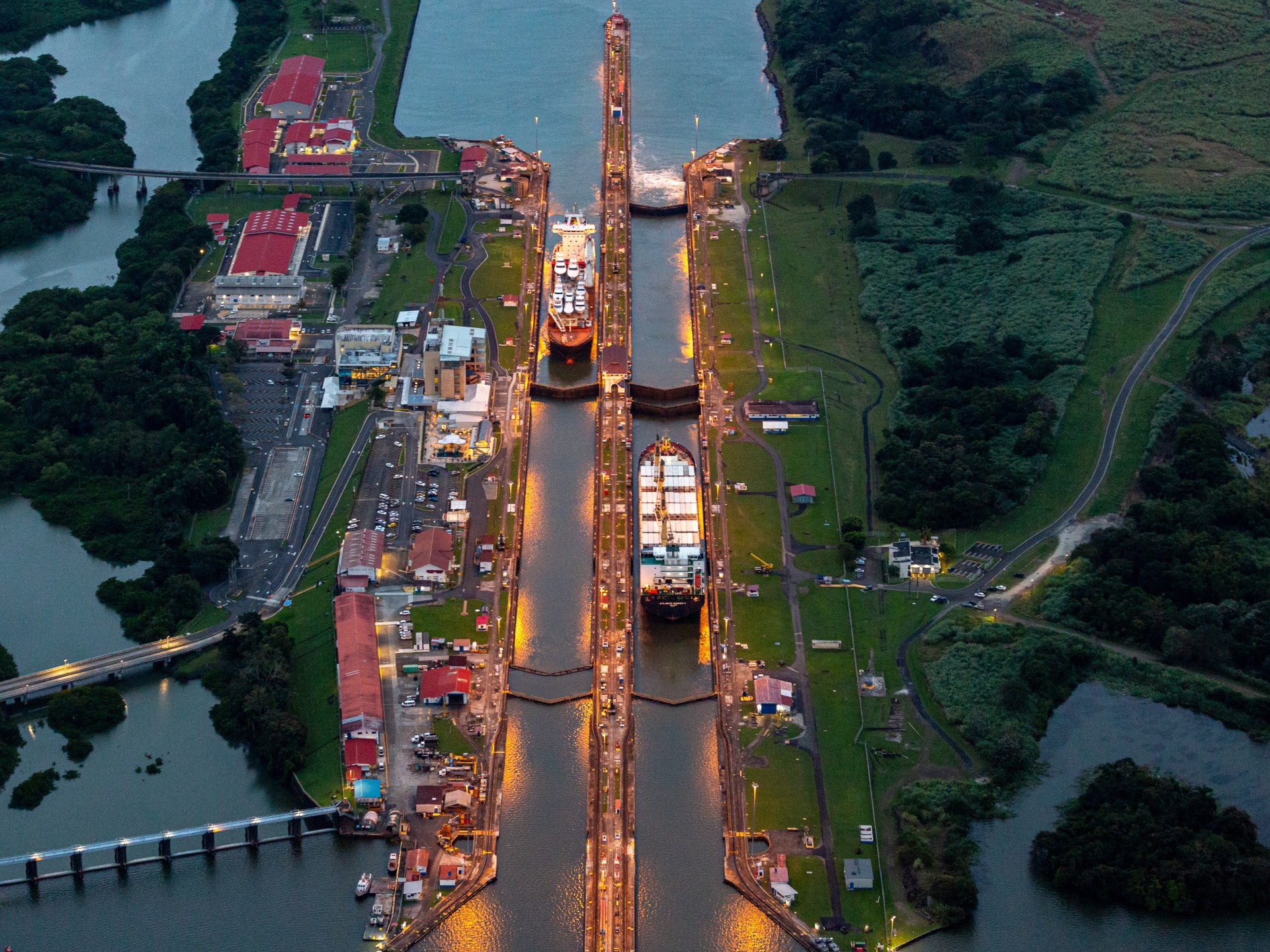

Panama could impose further cuts on the number of ships sailing through the Panama Canal, an official said, as a strengthening El Niño raises fears of water shortages at one of the world’s busiest maritime trade routes.
The warning from the new administrator of the Panama Canal Authority, Ilya Espino de Marotta, on Monday came after the government declared a nationwide state of emergency over El Niño on August 26.
- list 1 of 4Strait of Hormuz: What has happened since the US-Iran MoU on June 17?
- list 2 of 4Panama’s Grand Canal
- list 3 of 4Can Iran enforce a restricted zone in the Strait of Hormuz?
- list 4 of 4How much oil is going through Hormuz? Why data doesn’t match US claims
end of list
The canal, which handles 5 percent of global maritime trade, has already reduced the maximum number of ships allowed through daily, from 36 last month to 34 starting on September 4.
A further reduction will start on September 15, when the limit will be 32 ships.
Espino, who took over as administrator of the Panama Canal Authority on Monday, told the AFP news agency that restrictions could be tightened again if the drought does not subside.
She said she was not ruling out the possibility that in February or March, the limits “could be reduced to 29 or something similar”.

She said rainfall over the coming months would determine whether further restrictions are needed.
“Depending on how much rain falls in September, October and November – the three critical months – that will determine whether I need to lower any slots further in January, February or March,” she told the Reuters news agency last week.
The restrictions are not expected to become as severe as during the 2023-24 drought, when daily crossings fell as low as 22.
Advertisement
The Panama Canal depends on freshwater to operate the locks that raise and lower vessels travelling between the Atlantic and Pacific oceans. Water comes mainly from the artificial Gatun and Alajuela lakes, which are replenished by rainfall.
An average transit consumes about 200 million litres (about 53 million gallons) of water.
That dependence makes the 80km (50-mile) canal particularly vulnerable to prolonged dry weather, and levels in both reservoirs have already dropped with the onset of El Niño.
This year’s El Niño – which affects weather patterns and pushes up global temperatures – is expected to be the strongest since record-keeping began four decades ago.

Apart from reducing the number of vessels transiting the Panama Canal, authorities have also reduced their maximum draft, from 15.2 metres to 14.6 metres (50 feet to 48 feet).
Draft is the depth of water a ship needs to float safely. A lower draft limit means vessels may have to carry less cargo to pass through the canal.
The disruption comes at a sensitive time for global shipping.
The Panama Canal’s importance has increased as traffic through the Strait of Hormuz in the Middle East has fallen sharply amid the US-Israel war on Iran. Some vessels have recently paid more than $1m at auction to secure transit slots through the canal.
Panama is betting on a new reservoir at Rio Indio – a river in the country’s centre – as a longer-term solution.
The project is intended to provide water for canal operations and more than half of Panama’s population for the next 50 years, but it is expected to take five to six years to complete.
Espino, the new administrator, told Reuters that the reservoir would “ensure that the canal never again has to resort to lowering the draft or reducing the number of transits”.
Related News

Trump dismisses calls for AI slowdown from leading tech CEOs

Mapping the Iran war’s strikes on Gulf energy – and what comes next for oil

Argentina’s Milei says UN ‘looking the other way’ on Falkland Islands