‘No one power’ can solve global problems, says UN chief as US veers away
 30 January 2026
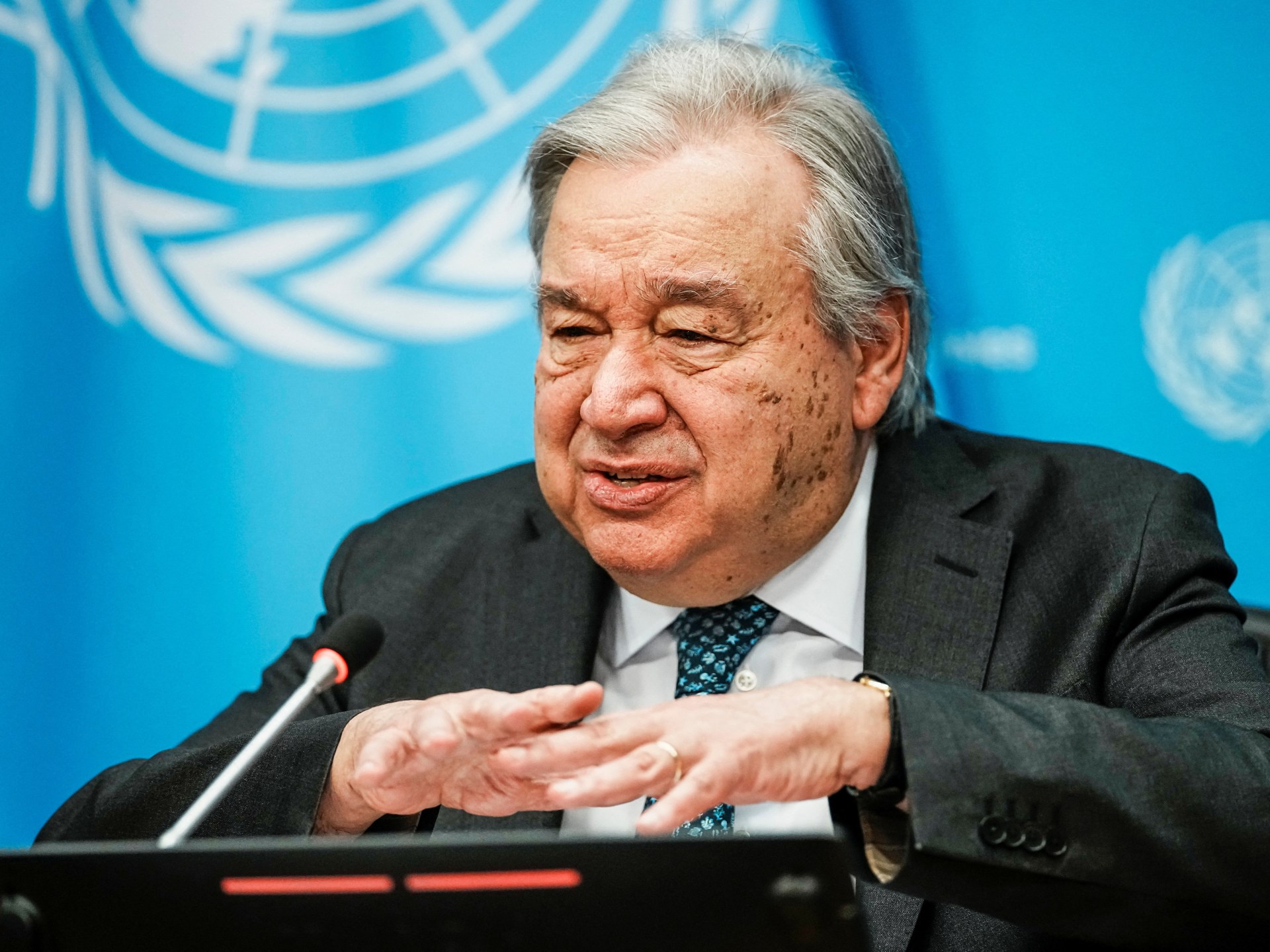

United Nations Secretary-General Antonio Guterres has warned that international “cooperation is eroding” in the world, during a media briefing where he took aim at one – maybe two – powerful countries undermining efforts to solve global problems collectively.
In his annual address as secretary-general, where he outlined priorities for the UN, Guterres said on Thursday that the world body stood ready to help members do more to address their most pressing issues, including the climate catastrophe, inequality, conflict and the rising influence of technology companies.
- list 1 of 4Is Trump’s ‘Board of Peace’ a threat to the United Nations?
- list 2 of 4Trump’s ‘Board of Peace’ puts rights abusers in charge of global order
- list 3 of 4Is Trump’s ‘Board of Peace’ an effort to curtail Europe’s middle powers?
- list 4 of 4Canada’s Carney hails new trade deals, ‘expects’ US to respect sovereignty
end of list
But he warned that “global problems will not be solved by one power calling the shots,” in apparent reference to United States President Donald Trump’s administration and his moves to abandon much of the UN system, while also impelling countries to join his newly-created “Board of Peace”.
Guterres went on to say that “two powers” would also not solve key problems by “carving the world into rival spheres of influence”, in what appeared to be a reference to China and its growing role in global affairs.
Guterres, who will step down from his position at the end of the year, underscored the UN’s ongoing commitment to international law amid concerns that treaties, which countries have abided by for decades, are coming undone.
Amid Israel’s genocidal war on Gaza and the brazen abduction of Venezuela’s President Nicolas Maduro by US forces, the UN chief warned that international law is being “trampled” and “multilateral institutions are under assault on many fronts.”
Advertisement
But, he added, the UN was still “pushing for peace – just and sustainable peace rooted in international law”.
Beginning in his first term as US President, Trump sought to end his country’s formal participation in many aspects of the UN system, while also eager to wield influence over key decision-making bodies, including through the use of the US veto in the UN’s powerful Security Council.
Trump’s current administration has also imposed sanctions on UN Special Rapporteur for Palestine Francesca Albanese and threatened to sanction negotiators involved in UN talks on shipping pollution at the International Maritime Organization.
The US leader’s actions have drawn criticism.
Brazilian President Luiz Inacio “Lula” da Silva earlier this month accused Trump of wanting to create “a new UN”.
Lula made his comment just days after Trump launched his “Board of Peace” initiative at the World Economic Forum in Davos, Switzerland.
While more than two dozen countries in the Middle East, Africa, Asia, Latin America and Europe have signed up as founding members of the peace board, several major nations, including France, have turned down invitations to join, and Canada has been excluded.
France said the Trump-led peace board “goes beyond the framework of Gaza and raises serious questions, in particular with respect to the principles and structure of the United Nations, which cannot be called into question”.
Related News
Public opinion shifts on ICE as advocates warn of US ‘inflection point’
Thousands rally in Serbia as students continue fight against corruption
US envoy says SDF’s role in Syria has ‘largely expired’ after ISIL