MSF says it will not hand over staff details to Israeli authorities
 30 January 2026
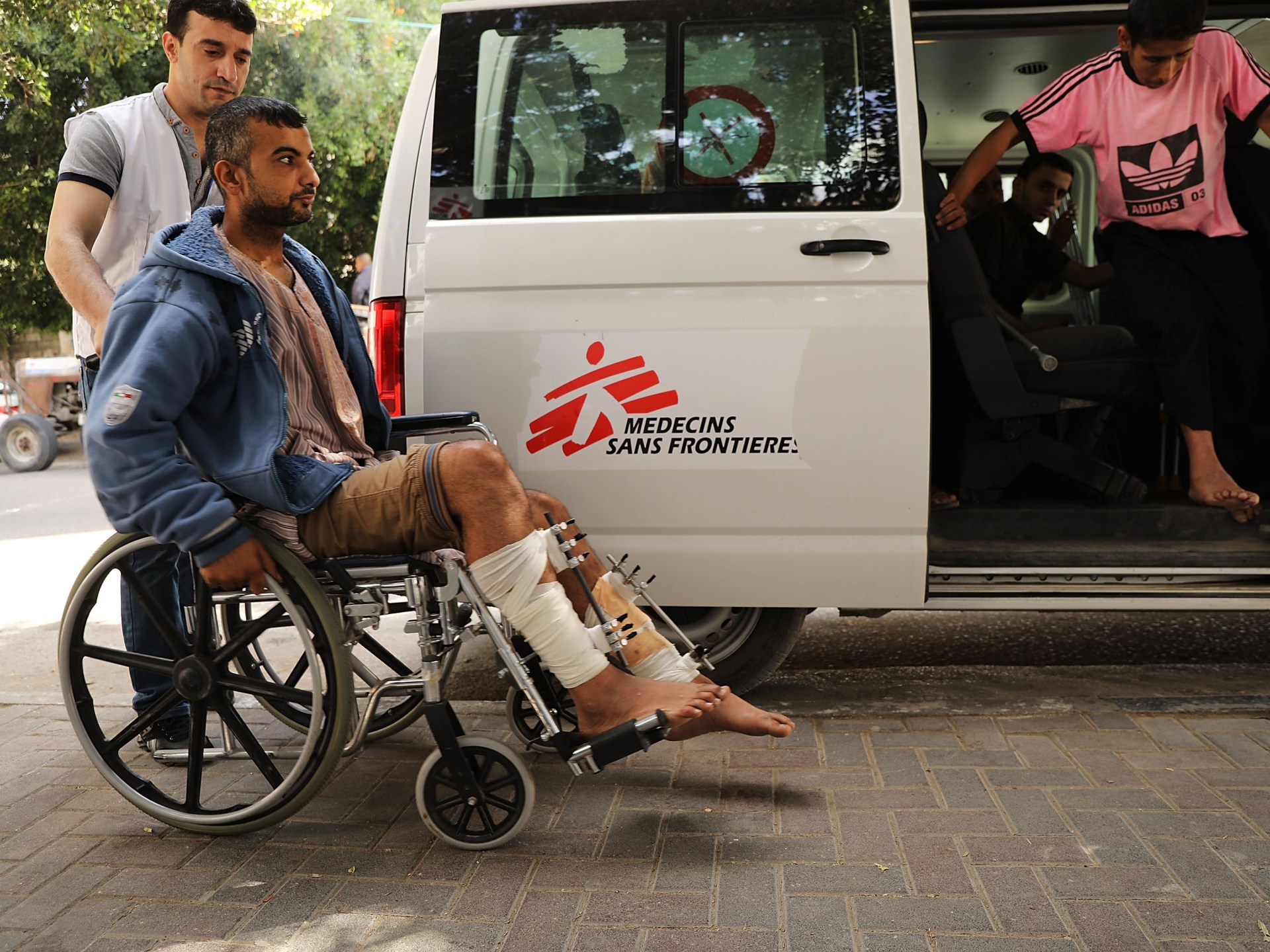

Doctors Without Borders, known by its French initials MSF, has said it will not provide Israeli authorities with the personal details of its staff working in Gaza and across the occupied Palestinian territory, citing concerns for staff safety and a lack of assurances over how the information would be used.
The decision on Friday follows criticism of MSF’s statement last week that it was prepared to share the names of its staff under strict conditions – a position that sparked concern among aid workers and rights advocates.
- list 1 of 4Ukrainian President Zelenskyy invites Putin to Kyiv for talks
- list 2 of 4Defeated Zeverev slams Alcaraz timeout in longest Australian Open semifinal
- list 3 of 4US-Iran tensions: The diplomatic scramble to prevent a war
- list 4 of 4Trump nominates Kevin Warsh to replace Powell as Fed chair
end of list
The organisation has since said it was unable to secure the guarantees it sought from Israeli authorities and has now ruled out sharing any staff data “under the current circumstances”, citing risks to its workers’ safety.
Israel demanded last year that several international aid organisations hand over detailed information about their staff, funding and operations as part of what it described as new “security and transparency standards”.
The move has been widely criticised by humanitarian groups, who say it risks further endangering aid workers in a context where Israel’s military has already killed more than 1,700 health workers since the start of its genocidal war against Palestinians in Gaza in October 2023, including at least 15 MSF employees.
Aid groups’ safety concerns
On January 1, Israel withdrew the licences of 37 aid organisations – including MSF, the Norwegian Refugee Council, the International Rescue Committee and Oxfam – saying they had failed to comply with the new requirements.
Advertisement
Under regulations issued by Israel’s Ministry for Diaspora Affairs, organisations are required to submit sensitive information, including passport copies, CVs and the names of family members, including children.
The rules also allow Israel to bar organisations it accuses of inciting racism, denying Israel’s existence or the Holocaust, or supporting what it calls “an armed struggle by an enemy state or a terrorist organisation”.
MSF said that after months of engagement with Israeli authorities, it concluded that it could not safely comply with the demands.
It comes after MSF previously saying it was prepared to share a defined list of Palestinian and international staff names, subject to “clear parameters”, and only with the express agreement of those concerned.
The organisation said this position had been defined following consultation with Palestinian colleagues, with staff safety as the central consideration.
However, MSF said it was unable to secure the concrete assurances it requested.
“These included that any staff information would be used only for its stated administrative purpose and would not put colleagues at risk; that MSF would retain full authority over all human resource matters and management of medical humanitarian supplies, and that all communications defaming MSF and undermining staff safety would cease,” the aid group said in a statement.
Humanitarian organisations fear that such data could be used to target aid workers in Gaza, the occupied West Bank and East Jerusalem.
Israel has accused MSF – without providing evidence – of employing people who fought with Palestinian armed groups, part of a broader campaign. Israeli officials have also alleged, without proof, that United Nations agencies and other humanitarian groups are linked to Hamas.
Aid organisations say such accusations have helped normalise attacks on humanitarian workers and undermine life-saving operations. According to the International Rescue Committee, Palestinians make up nearly one-fifth of all aid workers killed globally since records began.
MSF operates medical services across Gaza and the occupied West Bank, providing emergency and critical care. The organisation warned that expelling MSF from Gaza and the West Bank would have a “devastating impact” as Palestinians face winter conditions amid widespread destruction and urgent humanitarian needs.
Humanitarian conditions in Gaza remain dire, MSF said, with nearly 500 people killed since October, basic services largely destroyed and the health system “nearly non-functional”, with specialised care, such as burn treatment, unavailable.
Advertisement
In 2025, MSF said it provided 800,000 consultations, assisted one in three births and supported one in five hospital beds.
“MSF remains open to ongoing dialogue with Israeli authorities to maintain our critical medical operations in Gaza and the West Bank,” the organisation said, “and to ensure that MSF can continue delivering essential, lifesaving medical care to those in desperate need”.
Related News

US military moves Navy, Air Force assets to the Middle East: What to know
At least 2 sailors dead after cargo ship sinks in disputed South China Sea
North Korea fires suspected ballistic missiles into sea, S Korea, Japan say