
Lunar New Year: Why is China pinning hope on the festival to boost economy?
 17 February 2026
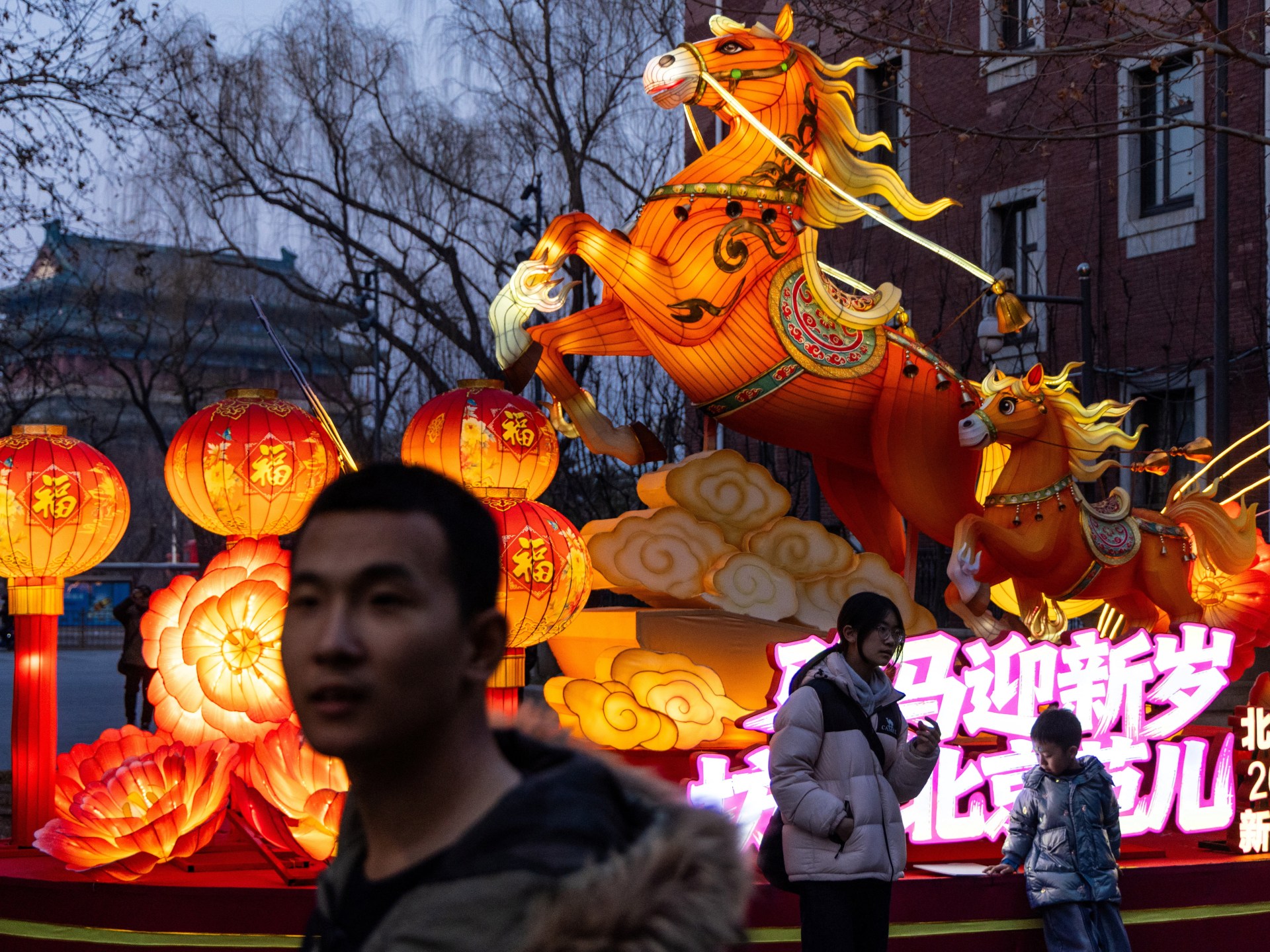

About 1.4 billion people began marking the Lunar New Year on Tuesday amid fireworks as China enters the Year of the Fire Horse, one of 12 animals in the Chinese zodiac.
Known as the Spring Festival in China, the new year, based on the lunar calendar, also brings about the world’s largest annual human migration, called Chunyun, as millions travel across the country for family reunions.
It is also a huge opportunity to boost domestic consumption in the world’s second-largest economy, which has been driven by exports.
Monday night’s gala, one of the largest state-sponsored televised events, was marked by a stunningly synchronised kung fu performance by robots and children.
The Year of the Horse, said to bring optimism and opportunity, is following the Year of the Snake, which represented transformation and strategy.
Here is a quick snapshot of the festival.

What’s Lunar New Year?
It is the most important holiday in China and is celebrated by millions of people in the country and in East and Southeast Asia.
In the days leading up to it, people clean their homes and decorate with red lanterns, couplets, and paper cuttings that represent prosperity and good fortune.
On the eve of the Lunar New Year, families gather for a large reunion dinner, exchanging hongbao, red envelopes of cash as a symbol of blessings and good fortune.
Advertisement
The celebrations usually last about 15 days, ending with the Lantern Festival. Fireworks, dragon and lion dances, temple fairs across big cities and the hinterland are common during this period.
In the Chinese zodiac, each year is associated with one of the 12 zodiac animals, which is believed to influence the year’s character and fortune.
The animal from the Chinese zodiac is then paired with any one of the five elements: metal, wood, water, fire and earth.
This is the Year of the Fire Horse.
This year’s official holiday is nine days, rather than the typical eight, with New Year’s Day falling on Tuesday, February 17.

What’s Year of the Fire Horse?
The Chinese zodiac system is incredibly complex, repeating every 12 years, each represented by an animal in this order: rat, ox, tiger, rabbit, dragon, snake, horse, goat, monkey, rooster, dog and pig.
The year of one’s birth decides their zodiac sign; meaning, the ones born last year were Snakes, this year’s children would be Horses and next year’s would be Goats.
A complex mechanism decides how the year will be paired with one of the five elements.
This year, the element is Bing, or big sun, paired with the Horse. This pairing occurs every 60 years, most recently in 1966.
For those who believe in the Chinese zodiac, the Year of the Fire Horse represents an explosion of energy and independence, with unpredictable realignments.

Why is China hoping the Lunar New Year spending will boost the economy?
The Spring Festival in China is not just cultural but also economically significant, typically driving a spike in consumption across multiple sectors.
People spend heavily on food and festive goods, entertainment, and tourism, with retail and e-commerce platforms registering a surge in sales during the pre-holiday period.
The Chinese government is also expecting a record 9.5 billion passenger trips during the 40-day Spring Festival period, up from nine billion trips last year, as they travel for annual reunions.
The government has also issued consumer vouchers worth more than 360 million yuan ($52m) this month to boost consumption.
China is looking to boost domestic spending in its next five-year economic plan, where households save nearly a third of their income.

Where else is Lunar New Year celebrated?
It is a global phenomenon extending beyond China. In East and Southeast Asia, several countries observe the Lunar New Year under distinct cultural pretexts.
Advertisement
For instance, Vietnam celebrates Tet Nguyen Dan, which emphasises family reunions and specific culinary traditions like banh chung. In South Korea, Seollal, or the Korean New Year, focuses on honouring ancestors and the consumption of tteokguk, a rice cake soup believed to grant people another year of age.
In Southeast Asian countries like Singapore and Malaysia, the holiday is a multicultural event marked by public holidays.
Diaspora communities in cities like San Francisco, London, and Sydney also host some of the largest celebrations in the world, featuring massive parades, dragon boat races and fireworks.
This Lunar New Year found its mascot in a rather unusual place: in the World of Harry Potter, a wildly popular British production. And that too in the franchise’s most popular villain, Draco Malfoy.
In Mandarin, the name Malfoy is written phonetically as “ma er fu”. The opening character, ma, signifies “horse” and the closing character, fu, represents “fortune” or “blessing”.
Related News

Over 100 artists for Palestine back UN’s Albanese after resignation calls
Six men named in US Congress: Why is so much redacted in the Epstein files?
US-Iran talks set to begin in Oman amid regional push to quell tensions