Lucy Letby inquiry blames hospital for ‘complete failure’ to protect babies
 15 September 2026
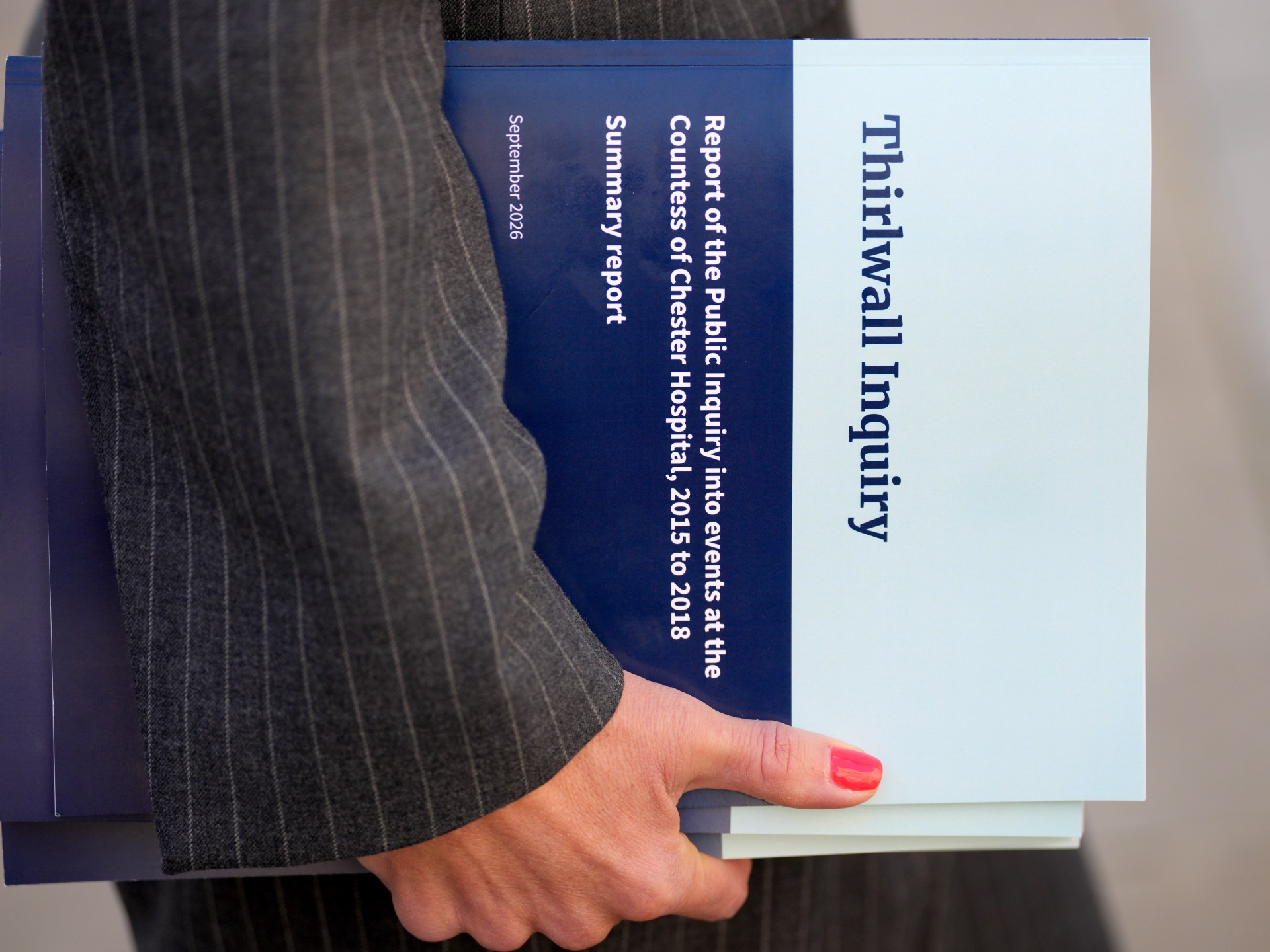

A statutory public inquiry has blamed an English hospital for a “complete failure at all levels” to protect newborns, after former neonatal nurse Lucy Letby was convicted of murdering seven babies under its care.
The Countess of Chester Hospital could have prevented the deaths of several infants, as well as the attempted murders of six others, between June 2015 and June 2016, Lady Justice Kathryn Thirlwall said on Tuesday.
- list 1 of 3Medical experts dispute evidence in Lucy Letby’s baby killing conviction
- list 2 of 3Baby murderer or scapegoat? Why is the Lucy Letby case so divisive?
- list 3 of 3UK begins inquiry into how nurse Lucy Letby murdered seven babies
end of list
“Errors were made by nurses, doctors and managers,” Thirlwall said. “There was also complete failure at all levels to invoke safeguarding procedures at any point.”
Thirlwall set out 17 recommendations in her findings, urging neonatal wards to equip every incubator with webcams or video monitors so families can watch their infants remotely.
The judge also pushed for round-the-clock CCTV over all hospital refrigerators containing insulin until facilities introduce tighter, keycard-restricted access to the drug, which Letby used in her crimes.
Hospital executives kept parents completely in the dark regarding mounting suspicions around Letby while conducting quiet internal reviews, leaving families unaware until police arrested her in July 2018.
Management also handed over the infants’ confidential medical files to external experts without parental knowledge or consent, a systemic disregard for families that Thirlwall branded “reprehensible”.
Letby, 36, was handed 15 life sentences for the murders and attempted murders. Since her arrest, she continues to stand by her innocence and has been denied permission to appeal twice.
Advertisement
Growing scrutiny from an international panel of medical experts and statisticians has challenged the forensic evidence used to convict Letby, prompting her legal team to submit an application to the Criminal Cases Review Commission.
Thirlwall clarified that re-evaluating the trial’s evidence or the safety of the criminal verdicts fell outside the legal remit of her inquiry, which focused strictly on institutional failures and hospital management.
Related News

Michelle Bachelet exits UN chief race after low poll support

Saudi-led coalition says power station attacked in Medina, blames Houthis

Canada pledges aid for Palestine as UK and France demand action at UNGA