Hungary’s former PM Orban re-elected party leader despite election loss
 13 June 2026
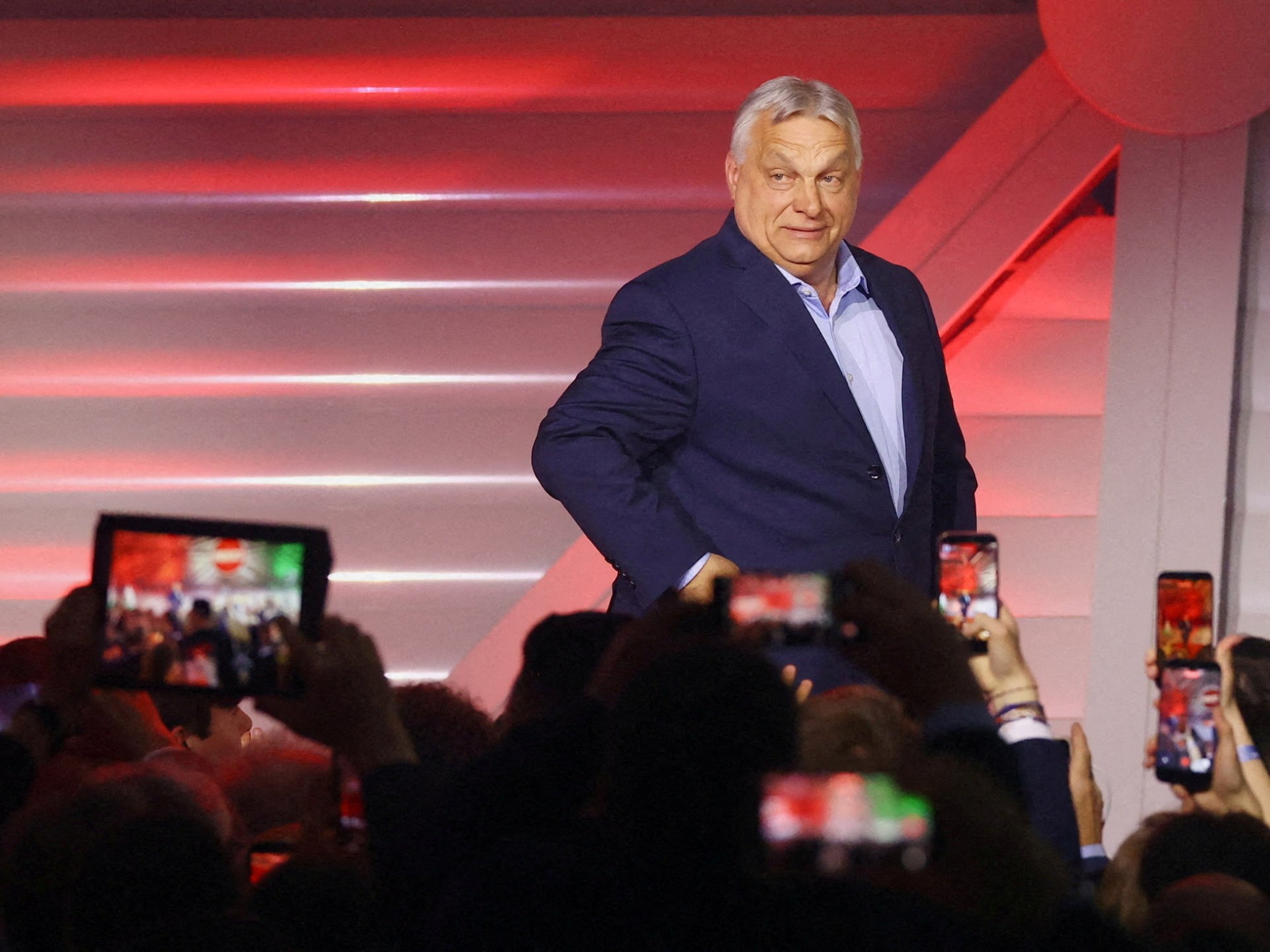

Hungary’s main opposition Fidesz party has re-elected former prime minister Viktor Orban as its leader for another year, despite the pro-Russian party’s loss in the April election to the centre-right, pro-Western Tisza party.
Some 729 delegates out of 737 voted to re-elect Orban, who ran unopposed, at Fidesz’s party congress, state news agency MTI reported on Saturday.
- list 1 of 3Hungary’s Magyar urges president to quit, vows to overhaul state media
- list 2 of 3Orban was defeated in Hungary, but Orbanism lives on
- list 3 of 3Is Magyar’s election win the end of the EU’s troubles with Hungary?
end of list
Orban’s political future was in question after Fidesz’s defeat, as he faced pressure from some erstwhile loyalists to bow out of politics, the first such criticism levelled at him since he swept to power in 2010.
“I do not give up, I never, never, never, never, never give up,” Orban told the congress in a speech before the vote, reiterating that he took full responsibility for the party’s election defeat.
Orban, 62, said Fidesz had been a “fantastic governing party” for 16 years but needed to change to become a functional opposition party that could become ready to govern again.
Nationalist Orban inspired right-wing conservatives across Europe and the United States as the mastermind of what he called an “illiberal” model of democracy. During his time in office, he fostered close ties with United States President Donald Trump and Russian President Vladimir Putin.
In the April 12 election, Prime Minister Peter Magyar’s Tisza party won a two-thirds parliamentary majority, enough to reverse constitutional changes introduced under Orban that eroded the judiciary, media, universities and other institutions.
Since coming to power in May, Magyar has promised to amend the constitution to remove President Tamas Sulyok and other officials appointed by Orban. His new government also agreed to drop Orban’s veto against Ukraine pursuing European Union membership, allowing the accession process to resume next week with talks in Luxembourg.
Advertisement
In turn, the EU announced that it would unlock 16.4 billion euros ($19bn) out of the 18 billion euros ($21bn) it had earmarked for Hungary, but frozen when Orban came to power due to democratic backsliding, corruption and the treatment of LGBTQ issues.
Fidesz has lost support since the election, according to opinion polls. A May survey by the Publicus Institute showed Tisza with 55 percent support, up from the 53 percent it secured in the election, while backing for Fidesz fell to 17 percent, down from 39 percent.
Related News
China’s Xi Jinping arrives in North Korea on rare state visit

‘They were laughing’: Israel’s use of rape and sexual abuse in prisons
Pro-Russian opposition party calls for Armenian election result annulment