
How will Trump’s new 25% tariff impact Iran’s trading partners?
 13 January 2026
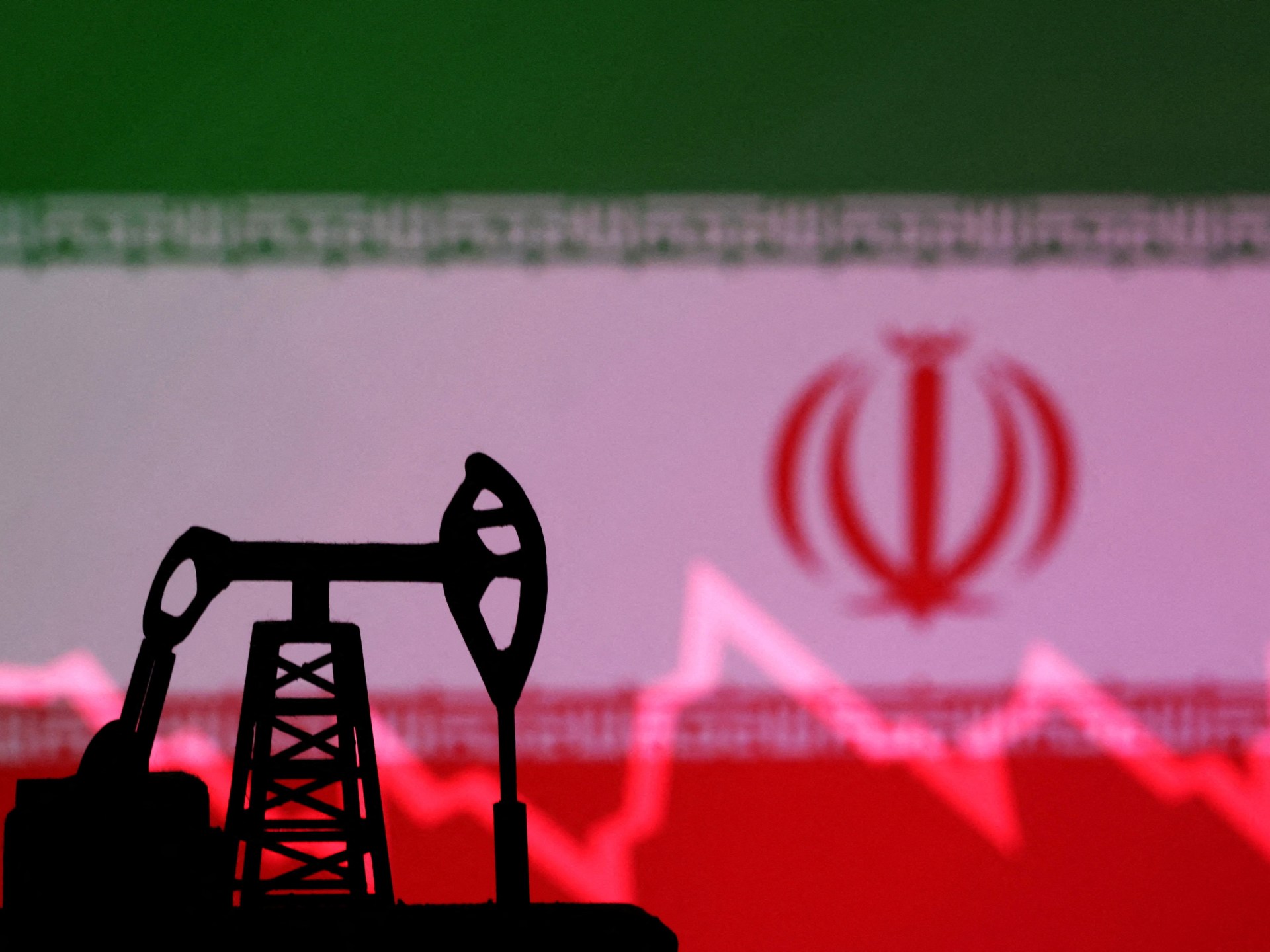

United States President Donald Trump says he will slap a 25 percent tariff on any country doing business with Iran, ratcheting up pressure on its government, which is facing its biggest protests in decades.
Years of Western sanctions have battered the OPEC member nation’s economy, causing high inflation, unemployment and the collapse of its currency, the rial.
- list 1 of 4China eyes risks, gains as Trump pushes for ‘spheres of influence’
- list 2 of 4BRICS wargames: Why they matter, why India opted out
- list 3 of 4Trump administration says still considering US military strikes on Iran
- list 4 of 4Trump says any country doing business with Iran will face 25 percent tariff
end of list
The current protests were triggered by the mounting economic woes, which the Iranian government has struggled to address, partly due to its economic isolation.
Its main source of revenue comes from exports to China, Turkiye, Iraq, the United Arab Emirates and India.
So how will Trump’s threat on Monday impact Iran’s international trade? How will countries like China, which buys 80 percent of Iran’s oil, respond?
What did Trump say?
“Effective immediately, any country doing business with the Islamic Republic of Iran will pay a Tariff of 25% on any and all business being done with the United States of America,” Trump said in a post on his Truth Social platform.
“This Order is final and conclusive,” the US president wrote without providing further details.
There was no official documentation about the policy from the White House on its website or information about the legal authority Trump would use to impose the tariffs.
Trump has piled pressure on Iran’s leaders, including by threatening military action.
In response, Iranian Foreign Minister Abbas Araghchi warned that Iran is ready for war if Washington wants to “test” it in an exclusive interview with Al Jazeera Arabic on Monday.
Advertisement
“If Washington wants to test the military option it has tested before, we are ready for it,” Araghchi said, adding that he hoped the US would choose “the wise option” of dialogue while warning of “those trying to drag Washington into war in order to serve Israel’s interests”.
Who are Iran’s main trading partners, and what is the volume of trade?
China
China is Iran’s largest trading partner with bilateral trade of more than $13bn in 2024, according to United Nations Comtrade, a global database of official international trade statistics.
However, due to sanctions, a lot of the trade takes place through a shadow fleet and is not officially recorded. For instance, World Bank data from 2022 suggested the overall trade volume between China and Iran was worth $37bn.
China imported 80 percent of Iran’s oil last year, providing much-needed revenue as other major oil buyers, such as India, drastically cut back their imports after US sanctions were imposed during Trump’s first term in office.
Al Jazeera’s Katrina Yu, reporting from Beijing, said China has been Iran’s top trading partner since 2016. The trade has provided an “economic lifeline to Iran”, she said.
“China does not just buy oil. It also purchases other things, such as plastics, iron ore and chemicals. It’s also a major buyer of Iran’s methanol. There are reports that China was considering even increasing its purchase of Iranian oil in the light of the turbulence now in Venezuela,” she said.
The new tariff, the Al Jazeera correspondent said, “is really going to hurt Chinese manufacturers” because it will apply on top of the 35 percent tariff that Chinese goods already face in the US.
The potential new tariff comes months after the US and China announced a trade truce, bringing down China’s tariff from more than 100 to 35 percent following a meeting between President Xi Jinping and Trump in October on the sidelines of the Asia-Pacific Economic Cooperation summit in South Korea.
The Al Jazeera correspondent said the new tariff threat “not only could jeopardise the current stability that we have between Beijing and Washington, it will also jeopardise Trump’s planned trip to Beijing in April this year”.
The Chinese embassy in Washington condemned Trump’s policy, warning that Beijing would take “all necessary measures” to defend its interests and rejecting what it called “illicit unilateral sanctions and long-arm jurisdiction”.
“China’s stance against the arbitrary use of tariffs has been consistent and clear. No one wins in tariff or trade wars, and coercion and pressure are not a solution,” an embassy spokesperson said on X.
Advertisement
Chinese Ministry of Foreign Affairs spokeswoman Mao Ning said, “There are no winners in a trade war.”
“China will resolutely safeguard its legitimate rights and interests,” Mao told reporters on Tuesday.
Stressing that China wants peace in the Middle East, Mao said Beijing supports Iran to “maintain national stability” and “oppose[s] interfering in the country’s internal affairs and the use, or threat of use, of force in international affairs”.
Turkiye
According to the UN Comtrade data from 2024, Turkiye was Iran’s second largest trading partner. The trade between the two countries was worth about $5.7bn.
Turkiye faces a baseline tariff from the US of 15 percent. Since June, the US has doubled its tariffs on steel and aluminium from most of its trading partners, including Turkiye, raising them from 25 to 50 percent.
Pakistan
Pakistan is a top export destination for Iran, where the total value of exports was about $1.2bn in 2024.
Pakistani exports to the US face a 19 percent tariff at the moment.
India
India is a top export destination for Iran, where the total value of exports was just over $1.05bn in 2024.
India faces 50 percent US duties on its steel and aluminium. A range of other Indian exports also faces a 50 percent tariff from the US.
Last week, media reports said the Trump administration is planning to slap 500 percent tariffs on India for buying Russian oil.
How have sanctions impacted Iran’s exports?
The US has imposed sanctions to cut off funding for Tehran’s nuclear programme. Washington accuses Iran of planning to make a nuclear bomb. But Iran has insisted that its nuclear programme is for civilian purposes only and has allowed inspections by the global nuclear watchdog.
But after the US bombed a nuclear plant during Israel’s 12-day war with Iran in June, Tehran imposed restrictions on the nuclear inspections. Talks to break the logjam have stalled as Tehran has accused the US of imposing conditions.
Fuel is Iran’s biggest export item by value while major imports include intermediate goods, vegetables, machinery and equipment.
Iran exported products to 147 trading partners in 2022, according to the most recent data from the World Bank.
Most of the sanctions on Iran were lifted under the 2015 nuclear deal under US President Barack Obama, but three years later, Trump withdrew the US from the deal, which had put limits on Iran’s nuclear activity in exchange for the lifting of sanctions.
He also imposed additional sanctions targeting petrochemicals, metals (steel, aluminium and copper) and senior Iranian officials as part of his “maximum pressure” campaign against Iran.
The reimposition of US sanctions since 2018 has squeezed oil exports and access to global finance. Iran’s oil exports fell by about 60 to 80 percent, stripping the government of tens of billions of dollars in annual revenue.
The country’s gross domestic product (GDP) per capita fell from more than $8,000 in 2012 to just over $6,000 by 2017 and a little above $5,000 in 2024, according to World Bank data.
Advertisement
Iran was exporting about 2.2 million barrels of crude oil per day (bpd) in 2011. Those exports fell sharply after 2018 to an all-time low of just over 400,000bpd in 2020. Exports have gradually risen to about 1.5 million bpd in 2025 but still remain below their pre‑2018 levels.
Foreign trade has brought billions of dollars to Iran’s economy.
The country’s exports were worth about $22.9bn in 2024, according to UN Comtrade data, about 5 percent of the country’s total GDP in 2024 of about $475.3bn, according to World Bank data.
Related News
Trump and top Iranian official exchange threats over protests in Iran
Which countries will start using the euro in 2026?
How US sanctions crippled lives of Iranians Trump says he wants to ‘help’