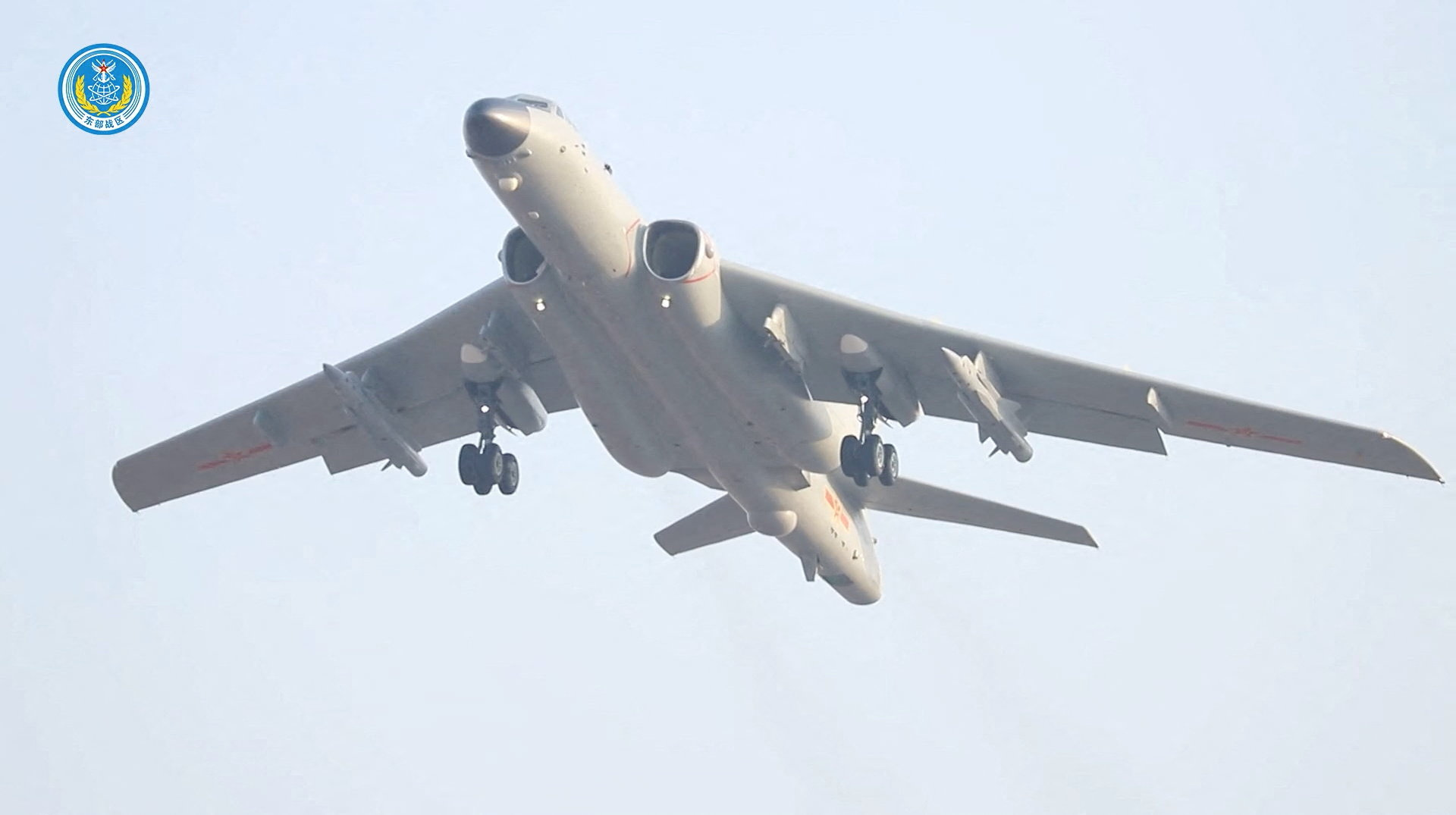
How many countries has Trump bombed in 2025?
 31 December 2025

This week, United States President Donald Trump confirmed that the US had struck a docking facility in Venezuela, marking the first military action on the South American country’s land since it began targeting Venezuelan shipping in the Caribbean and eastern Pacific in September 2025.
Speaking to reporters as he met in Florida with Israeli Prime Minister Benjamin Netanyahu, Trump said there had been “an explosion in Venezuela”, at a facility where boats the US believes to be carrying drugs usually “load up”.
- list 1 of 4US claims attack on dock in Venezuela, as missiles also kill two in Pacific
- list 2 of 4Iran warns of ‘severe’ response in wake of Trump’s new strikes threat
- list 3 of 4Trump bombs Venezuelan land for first time: Is war imminent?
- list 4 of 4US says it killed or captured 25 ISIL operatives in Syria over nine days
end of list
“There was a major explosion in the dock area where they load the boats up with drugs,” he said. “They load the boats up with drugs, so we hit all the boats, and now we hit the area. It’s the implementation area. That’s where they implement. And that is no longer around.”
Trump did not reveal more details about the strikes.
Despite modelling himself as the “president of peace” deserving of a Nobel Peace Prize, who – he claims – has ended eight wars around the world this year, Trump’s Venezuela strike was just the latest in a string of his administration’s military attacks around the globe since its inauguration in January.
Armed Conflict Location & Event Data or ACLED, the nonpartisan conflict monitor, told Al Jazeera that the US had carried out – or been a partner to – 622 overseas bombings in all, using drones or aircraft, since January 20, 2025, when Trump took office.
The attacks contrast with his promise to voters to end US involvement in foreign conflicts.
Which countries has the US bombed this year?
The US carried out military attacks against a total of seven countries in 2025.

Venezuela and the Caribbean Sea
This week, the US confirmed one strike on a docking facility on Venezuelan territory, as part of the Trump administration’s escalating war on boats it claims are smuggling drugs from the country to the US.
Advertisement
No details about where the strike took place have been released.
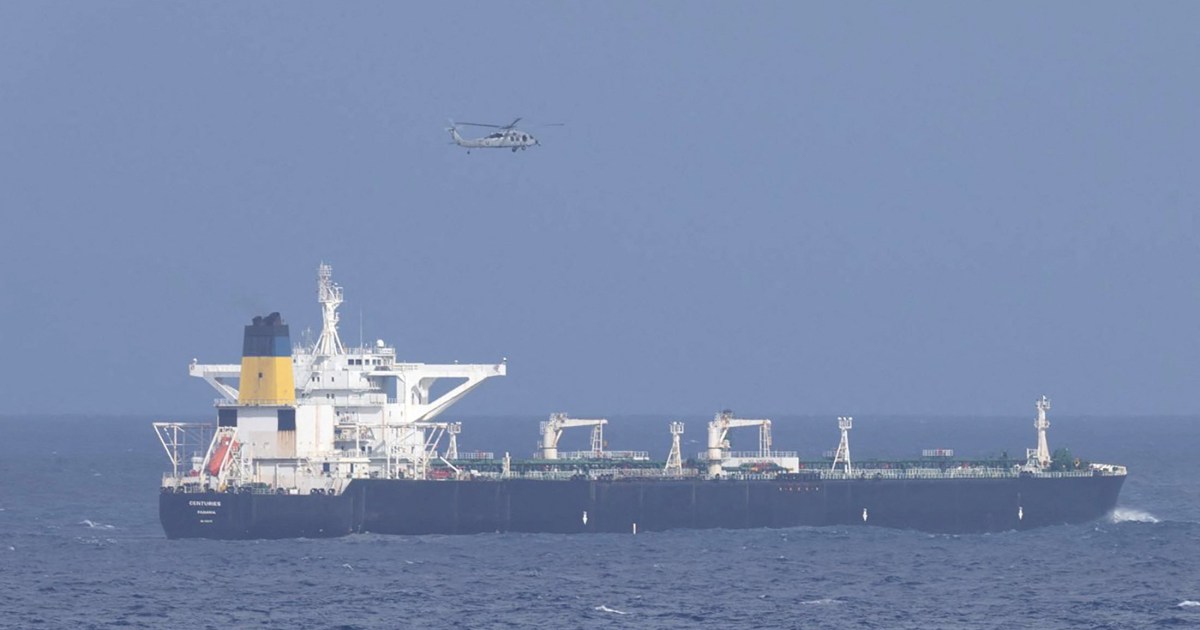
That followed the US Navy’s seizure of two oil tankers off the Venezuelan coast earlier in December, in an apparent attack to choke Maduro’s main economic lifeline. Washington claims the vessels are part of a “shadow fleet” of tankers smuggling sanctioned oil.
Since August, the US has amassed the largest military presence in the Caribbean Sea in decades, causing alarm among governments there. The Trump administration claims this is warranted because the trafficking of drugs to the US constitutes a national emergency, but multiple reports have shown that Venezuela is not a major source of drugs being transported across borders.
On September 2, the US began striking small boats in the Caribbean that it alleges were trafficking drugs. It is thought it has struck more than 30 vessels since then. The Trump administration says the vessels are operated by Venezuelan “terrorist” organisations, including the Tren de Aragua group and the Colombian National Liberation Army. However, it has provided no evidence for this.
At least 95 people have been killed in the boat strikes, Human Rights Watch revealed on December 16, accusing Washington of “extrajudicial killings”.
In early December, US lawmakers from both Republican and Democratic sides urged the Pentagon to release full footage of the first strike on September 2, which has proved even more controversial following revelations that the vessel was subject to a “double tap” attack – two survivors of the first attack clinging to debris in the water following a first strike were killed in a follow-up strike.
Defense Secretary Pete Hegseth has said the footage will not be released.
Caracas accuses the US of using claims of drug trafficking as a cover for seeking a government change in Venezuela. Trump, meanwhile, has called Venezuela a “narco state” and said President Nicolas Maduro’s days “are numbered”.
Nigeria
On Christmas Day, the US launched the first of what Trump said would be “powerful and deadly” strikes against groups Washington claims are affiliated with ISIL (ISIS) in Northwest Nigeria’s Sokoto State.
It followed weeks of diplomatic pressure on the Nigerian government, which Trump and senior conservative Republicans, including Ted Cruz, have accused of enabling a “Christian genocide” in a country whose population is a nearly even mix of Christians and Muslims.
Nigeria has been plagued by violence from armed groups linked to al-Qaeda or ISIL, operating in the predominantly Muslim northeast and northwest regions. Abuja denies allegations of genocide and says Muslim and Christian communities alike are affected by the violence.
Advertisement
Furthermore, alleged attacks on Christian farmers in Nigeria have taken place in a completely different part of the country. US Senator Ted Cruz first accused Nigeria’s government of enabling a “massacre” against Christians in October 2025, citing a rising number of attacks against the community in the country’s central Middle Belt region, which is separate from the violence in the north.
Even though these two issues are separate, Abuja, under pressure, agreed to the US military operation in the north of the country on December 25.
Details of that strike are still emerging. The US Africa Command said in a statement that “multiple ISIS terrorists were killed in the ISIS camps”, and Nigeria’s Ministry of Foreign Affairs said the strike was “successful”.
It appeared to target the newly emerged “Lakurawa” group, which conflict monitors say is made up of armed fighters from Mali and Niger who may be linked to ISIL or al-Qaeda.
The group is known to operate in forested corridors between Sokoto and Kebbi states. At least one US missile, or debris, hit Jabo town in Sokoto. The Nigerian military, speaking to local media, later confirmed strikes on armed group hideouts in Buani Forest, but did not reveal casualty numbers.
The US and Nigeria have a long history of security collaboration through training and intelligence sharing, but the Christmas strikes marked the first known kinetic US military action in the West African nation.
It was timed, analysts say, to appease Trump’s Christian supporters as Washington doubles down on a narrative of “saving” Nigerian Christians, although Nigerian authorities insist the strikes are not about any one religion.
Trump said more strikes will follow.

Somalia
The US has long trained Somali forces and conducted air attacks in the region against armed groups, including al-Shabab, a group affiliated with al-Qaeda, which has launched several attacks in Somalia and in neighbouring Kenya. They also target an ISIL offshoot known as ISIS-Somalia.
Al-Shabab, which has about 7,000 fighters, holds large swaths of land in south-central Somalia, while the smaller ISIS-Somalia, which has about 1,500 fighters, is active in the mountainous regions of autonomous Puntland, in northern Somalia. In the past year, 7,289 people have been killed by armed group activity, according to the US-based Africa Center for Strategic Studies.
In his first term as president, Trump withdrew most US troops from the country, but the Biden administration redeployed them in May 2022.
In Trump’s second term, the US has remained active in the country, at Somalia’s urging. Washington has dramatically intensified air attacks since February, according to the New America Foundation.
Overall, at least 111 strikes have been recorded this year, surpassing the number carried out under the George Bush, Barack Obama, and Joe Biden administrations combined, monitors say.
Advertisement
Civilians have been killed in the Somalia attacks. Investigative site Drop Site News revealed in December that at least 11 civilians, seven of them children, were killed in a strike in the Lower Juba region, in Somalia’s southwest, just last month.
The US does not reveal the number of civilian deaths in Somalia.
Syria
US strikes on 70 ISIL-positions in Syria on December 19 were carried out in retaliation for a shooting in Palmyra which killed two US soldiers and a civilian interpreter a week earlier.
Three other Americans and two members of the Syrian security forces were injured in the shooting. No group has claimed responsibility for the attack, but Trump placed the blame on ISIL.
Syria’s Ministry of Interior Affairs later said an individual who targeted the US troops had been a member of the state security service slated for dismissal for hardline views.
The US retaliatory operation, dubbed “Hawkeye” in reference to Iowa, the “Hawkeye State” where both killed soldiers were from, damaged several ISIL weapons storage facilities in locations across Syria, an official told CNN.
“I am hereby announcing that the United States is inflicting very serious retaliation, just as I promised, on the murderous terrorists responsible,” Trump posted on Truth Social on December 19.
“We are striking very strongly against ISIS strongholds in Syria, a place soaked in blood which has many problems, but one that has a bright future if ISIS can be eradicated,” he added, warning against further attacks on US service members.
Hegseth said in a post on X on the same day that the strikes represented a “declaration of vengeance” on ISIL.
US troops have long been stationed in Syria to target ISIL, which once controlled large areas of land across Syria and Iraq in the mid-2010s.
Under the Biden administration, about 900 US troops were stationed in the country until December 2024, when the Pentagon said numbers were temporarily doubled to fight ISIL, amid the collapse of the Bashar al-Assad government. The US has carried out more than 80 operations aimed at neutralising armed operatives in Syria, according to the US military’s Central Command.
At the time, Trump, as the president-elect, warned against US interference. He posted on Truth Social: “Syria is a mess, but is not our friend, & THE UNITED STATES SHOULD HAVE NOTHING TO DO WITH IT. THIS IS NOT OUR FIGHT.”
Fewer than 1,000 troops remained in Syria by April, according to the Pentagon.

Iran
Amid short-lived hostilities which broke out between Iran and Israel earlier this year, the US intervened and struck three key nuclear sites in Iran on June 22. Analysts said it was a highly sophisticated mission involving the US Air Force and Navy.
In a televised address, Trump justified the attacks on Iran’s Natanz, Isfahan, and Fordow nuclear sites, saying they would curtail the “nuclear threat” posed by Tehran.
The three sites were involved in the production or storage of enriched uranium, which the US claimed had become or was approaching “weapons grade”.
Iranian Foreign Minister Abbas Araghchi later confirmed that some of the sites had sustained extensive damage, and the Pentagon estimated the attack set back Iran’s nuclear program by about two years.
Under pressure to respond in a manner that appeared proportionate, Iran struck a US airbase in Qatar the day after the US strikes, in what was likely a symbolic action as no injuries or deaths were reported.
Advertisement
On June 22, Trump declared a ceasefire between Iran and Israel, bringing the 12-day war to an end. More than 1,100 Iranians and 28 Israelis were killed during the open hostilities.
But during his meeting with Israeli Prime Minister Benjamin Netanyahu this week, Trump threatened to hit Iran again.
“Now I hear that Iran is trying to build up again, and if they are, we’re going to have to knock them down,” he said, referring to the nuclear programme. “We’ll knock the hell out of them.”
Iran is forbidden from developing nuclear weapons as a signatory to the 1970 Nuclear Non-Proliferation Treaty. In 2015, it also signed the Joint Comprehensive Plan of Action with Western powers, including the US, agreeing to limit uranium enrichment levels in exchange for sanctions relief.
However, Trump withdrew the US from that pact in 2018 – during his first term as US president – claiming it had been badly negotiated under the Obama administration.
Yemen
Since January 12, 2024, the US has targeted Yemen’s Houthis, an Iran-aligned group that controls much of Yemen’s populous northwest, in a series of air and naval attacks.
The US says strikes were carried out in retaliation for Houthi attacks on Israeli-linked vessels passing through the Red Sea, in solidarity with Gaza.
The strikes escalated to daily attacks in March 2025 under the new Trump administration, under a mission codenamed Operation Rough Rider.
Dozens of people were killed, and the attacks extensively destroyed infrastructure, including ports, airports, radar systems, air defences, ballistic launch sites, and even migrant holding centres in Sanaa and Hodeidah.
The US strikes finally came to an end on May 6, following a truce brokered by Oman.
Casualty counts from both sides differ: The US claims to have killed about 500 Houthis, while Yemen’s Houthi-run Ministry of Health said 123 people, most of them civilians, had been killed by April, following the US escalation.
As many as 247 people, including many women and children, were injured, the ministry said.
Iraq
The US launched air strikes on Iraq’s al-Anbar province on March 13, killing a high-profile ISIL member, according to the US military’s Central Command (CENTCOM).
The group’s second-in-command, Abdallah “Abu Khadijah” Malli Muslih al-Rifai, and another unnamed operative were reported to have been killed in the strikes.
CENTCOM claimed both men were wearing unexploded “suicide vests” and were holding weapons at the time of the strikes. The US also said the strikes were carried out jointly with Iraqi intelligence, and that both sides confirmed the deaths through DNA tests.
In a celebratory post on Truth Social the day after, Trump praised US troops for the action.
“Today, the fugitive leader of ISIS in Iraq was killed,” Trump wrote.
“He was relentlessly hunted down by our intrepid warfighters. His miserable life was terminated, along with another member of ISIS, in coordination with the Iraqi Government and the Kurdish Regional Government. PEACE THROUGH STRENGTH!”
Iraq’s prime minister, in a statement on X, also on March 14, said “Adu Khadija” was known as ISIL’s “deputy caliph” overseeing operations in Iraq and Syria, and that he was “one of the most dangerous terrorists in Iraq and the world”.
The Obama administration previously authorised strikes on ISIL locations in Iraq back in 2014.

Trump earned widespread support from many Americans tired of the country’s costly involvement in the Middle East when he pledged during the campaign for his first term as president to put “America First” and stop US involvement in foreign conflicts.
In one presidential debate, Trump accused the former Bush administration of failing in its handling of the fallout of the 9/11 terrorist attacks on New York in September 2001, and said “the war in Iraq is a big fat mistake … We spent two trillion dollars, thousands of lives (lost).”
At the start of his second term in January 2025, Trump pledged to restore peace by bringing an end to ongoing global conflicts. His success, he said during his inaugural address, would be judged, “by the battles we win, but also by the wars that we end – and perhaps most importantly, the wars we never get into”.
While Trump has undoubtedly played a role in pausing some conflicts around the world this year, said Sarang Shidore, head of Global South at the US-based Quincy Institute for Responsible Statecraft, his efforts “lack the delicate, sustained, behind-the-scenes diplomacy usually required in global conflicts”.
Furthermore, in South America in particular, Trump appears to be reverting to the old days of the 20th century, when US intervention toppled multiple governments from Brazil to Bolivia.
“Washington’s escalated offensive in Latin America and strikes in Nigeria and Somalia are partly performative acts rooted in domestic drivers of foreign policy,” Shidore said.
Related News
Israel will never fully withdraw from Gaza, defence minister says
Thailand, Cambodia agree to build on ceasefire in talks in China’s Yunnan
‘We have to have it’: Trump renews push for Greenland as Denmark protests