High voter turnout among Palestinian citizens of Israel threatens Netanyahu
 28 October 2026
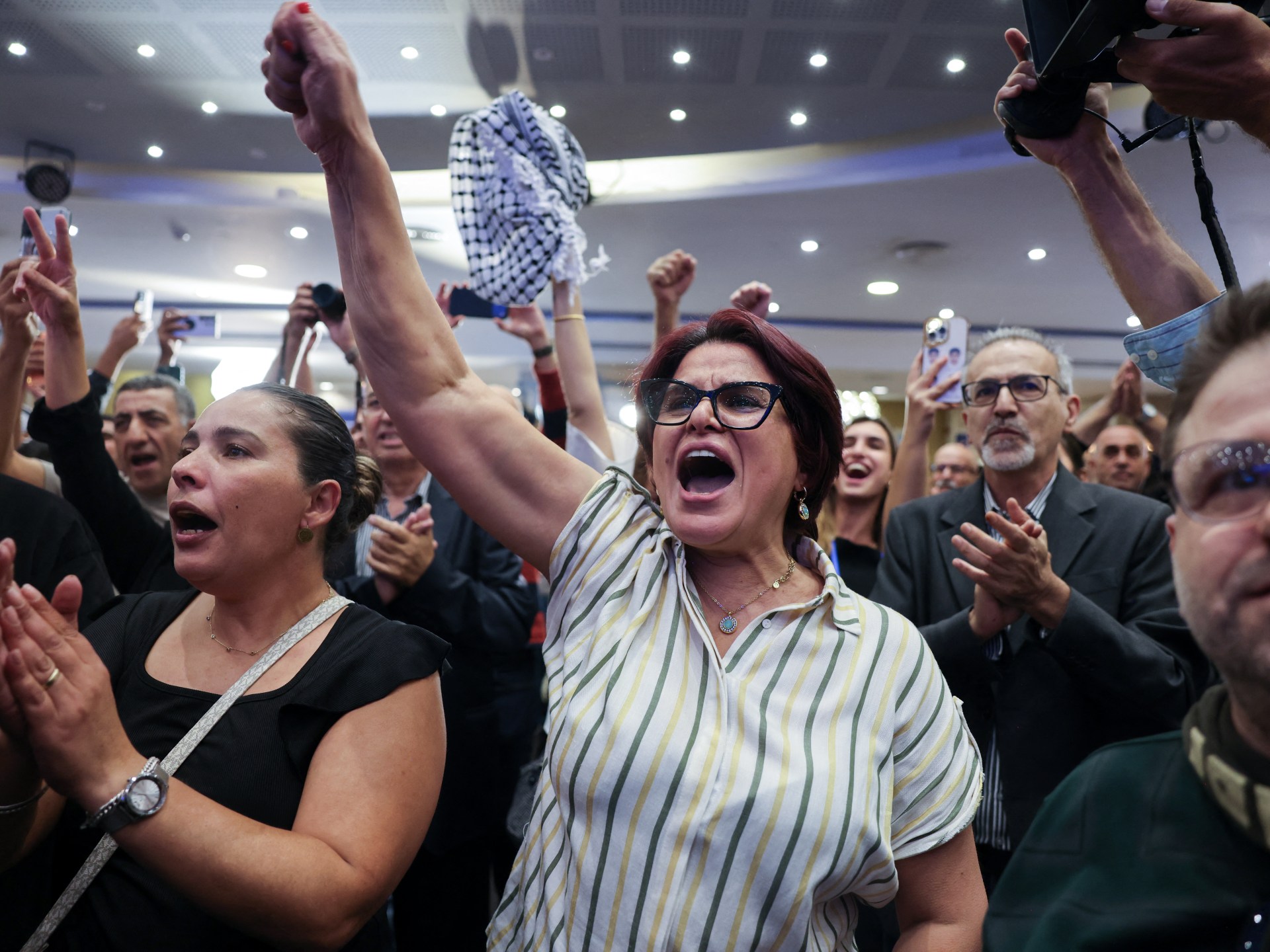

Palestinian citizens of Israel have turned out in unprecedented numbers for Israel’s parliamentary elections, with some towns reporting participation rates exceeding 70 percent.
Historically, however, Arab towns have witnessed lower participation rates in Israeli elections, ranging between 45 and 65 percent in recent years.
- list 1 of 3Israeli right makes provocative statements as election votes are counted
- list 2 of 3Israel’s stock market drops as exit polls show no clear election winner
- list 3 of 3Can you form Israel’s next coalition government?
end of list
This electoral surge from Palestinian citizens of Israel now threatens to unseat Prime Minister Benjamin Netanyahu and his right-wing coalition.
For many from this contingent, who might normally have abstained from voting, this election was perceived as a chance to defeat a government that was totally hostile to Palestinians and Arabs at large.
There have been a number of measures enacted by Israel’s current right-wing government that encouraged high turnout among Palestinian citizens of Israel in this election. These include attempts by Jewish settlers to establish an outpost on Palestinian land in Majd al-Krum in the Upper Galilee.
“The people who were indifferent to the elections, and who did not want to participate or vote, the matter provoked them,” Hussein Manna, a resident of Majd al-Krum, told Al Jazeera. “They know very well what awaits us if this government returns to power.”

Path to power
Netanyahu and his far-right allies, including National Security Minister Itamar Ben-Gvir and Finance Minister Bezalel Smotrich, have heavily targeted Arabs in their campaigning. But this appears to have backfired and instead encouraged Palestinian citizens of Israel to go out and vote for Arab parties, the Joint List and the United Arab List (Ra’am).
Advertisement
Preliminary reports suggest that these parties could secure up to 17 seats combined, enough to prevent Netanyahu from reaching the required 61-seat majority.
“It is fateful for Netanyahu and for his political future, and it is also fateful for the State of Israel because it will determine its identity later on,” Walid al-Omari, Al Jazeera’s bureau chief in Palestine, said.
He added that if Netanyahu’s coalition remains in power, Israel “will move more towards racism and towards extremism”.
Ahmad Tibi, head of the Arab Movement for Renewal, told Al Jazeera: “The first goal: bringing down the government of Netanyahu, Smotrich, and Ben-Gvir, the government of crimes, the government of failure, and the government of racism and incitement against us.”
But he warned that the leaders of almost all parties opposed to Netanyahu have ruled out an alliance with the Arab parties.
“What is the excuse? It is post-October 7, and this is a racist position,” Tibi stated. “We are ready to extend our hands to cooperate with the opposition to bring down the speaker of the Knesset [Amir Ohana] and also to prevent Netanyahu from becoming the head of a transitional government.”
In exchange for this tacit support, the Arab parties have strict demands. “The next alternative government is not our knight in shining armour and will not be a government of peace, but it will not have Ben-Gvir and Smotrich and the racist ministers,” Tibi said.
“Accordingly, we will make room for the establishment of another less bad alternative government that dialogues with us on issues that concern our society as a safety net for our society, such as issues of crime, violence, personal security, home demolitions and racism, as well as an important political horizon on our part because we have a clear political position on the occupation and on the crimes of the occupation and war crimes.”
Al-Omari said if Gadi Eisenkot’s Yashar party, Netanyahu’s main opponent in the election, gets 53 seats, and Ra’am, headed by Mansour Abbas and most acceptable to the Eisenkot-led alliance, wins eight, then a coalition of 61 members could be formed.
‘Voter intimidation’
When the prospect of high Palestinian voter turnout emerged, Netanyahu and the far right launched a frantic campaign, warning supporters about this.
Netanyahu posted AI-generated images of Arab voters to incite his base, a move the Joint List condemned as an attempt to create a “misleading scene”.
Mohannad Mustafa, an academic and expert in Israeli affairs, believes that Netanyahu considers the Arab vote illegitimate. He said racist fearmongering and a hostile environment during the campaigning set a dangerous precedent.
Advertisement
“This is also what led to the assassination of Rabin in 1995 when Netanyahu said Rabin’s government in approving the Oslo Accords relies on the Arab lists in the Knesset,” Mustafa added, referring to former Prime Minister Yitzhak Rabin.

There were also reports of right-wing parties deploying activists to polling stations, which was widely interpreted as a form of intimidation against Palestinian citizens of Israel who were voting.
“I toured the ballot boxes here in Taibe, Tira and Qalansawe; in every box there is [someone] obstructing the electoral process and slowing it down specifically so that long queues form at the boxes,” Tibi stated.
He believes the right hoped such tactics would make Palestinian citizens of Israel tired of waiting in line at the polls and leave without voting. Instead, he saw the community’s “determination to stay until the voting is done”.
The outcome of the election carries significance for the broader Middle East, with Netanyahu launching the genocide in Gaza, killing more than 74,500 Palestinians, and assaults on Syria, Lebanon and Iran during his term.
Tariq Hamoud, a political analyst, noted that an Israeli government without Netanyahu might have implications for these ongoing military engagements.
What could determine the election, though, is that Netanyahu “bears responsibility for the security failure on October 7, which opened the doors” to these wars.
Related News
Who is the mystery co-pilot behind the Flydubai attack?

‘Foreign policy is the economy’: How Iran war is shaping US midterm vote
Israel’s election: Five key things to know