Guatemala prisoners take workers hostages in riots across three facilities
 18 January 2026

Prisoners in Guatemala have taken at least 46 workers hostage in riots across three detention centres, according to authorities.
Officials said the incidents, which began on Saturday, appeared to be coordinated by gang members in response to their leader seeking a transfer to another facility for better conditions.
- list 1 of 3US judge blocks government from deporting unaccompanied Guatemalan minors
- list 2 of 3Photos: Women in remote Guatemala find strength in shared voices
- list 3 of 3Amid Trump threats, what has the US’s ‘war on drugs’ achieved in 50 years?
end of list
There were no reported deaths or injuries among the hostages, Interior Minister Marco Antonio Villeda said at a news conference.
Villeda said those behind the riots were members of the Barrio 18 gang, while the Interior Ministry described the unrest as a “direct reaction” to its moves to revoke privileges from gang leaders.
“I am not going to make any deals with any terrorist group. I will not give in to this blackmail, and I will not restore their privileges in exchange for them stopping their actions,” Villeda said.
The hostages are mostly guards, but also include a psychologist, a prison official said.
At the Renovacion 1 maximum security prison in Escuintla in Guatemala’s south, police and soldiers formed a perimeter around the prison, as ambulances and firetrucks were standing by to intervene if necessary.
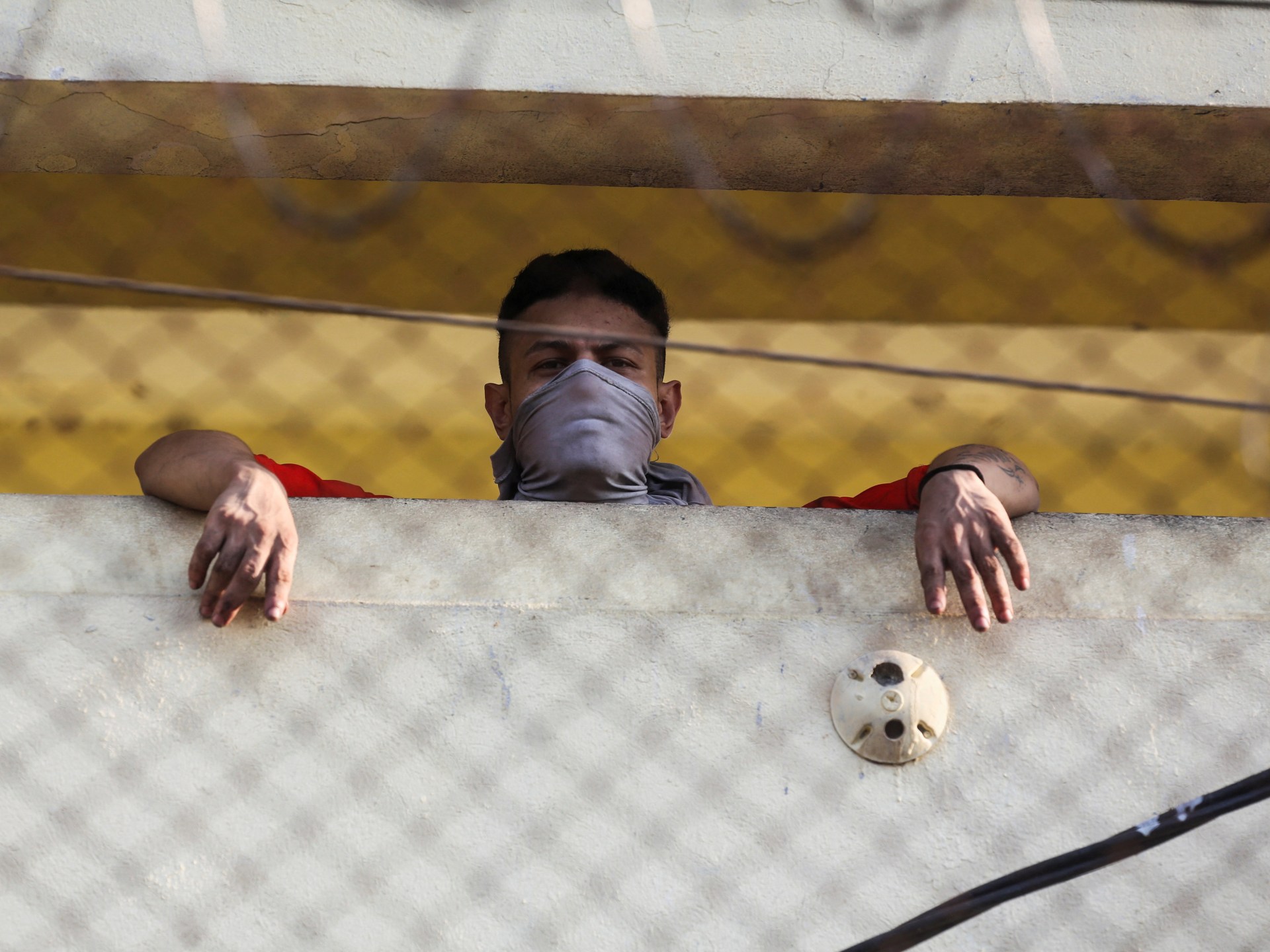
Inmates, some wearing jumpsuits but most in tank tops and shorts, their faces covered by masks improvised with pieces of clothing, watched from above, perched in the prison’s patrol towers.
One masked inmate, speaking from behind barbed wire, said they were not safe at the prison and were demanding to be moved.
“They can’t even guarantee their own security, so how are they supposed to guarantee ours?” he said, referring to prison authorities.
Guatemala has struggled to control its prison population in recent years amid rampant gang influence. Inmates, meanwhile, have reported harsh and dangerous conditions.
Advertisement
In October, President Bernardo Arévalo accepted the resignations of three top security officials after 20 gang members escaped over a period of days.
“The link between the prison system and the criminality outside has to be cut,” Arevalo said in an interview with The Associated Press news agency earlier this week.
“That’s why all this effort to regain control of the prison system is very important.”
Related News
Syria imposes curfew in Aleppo districts as army, SDF clashes intensify

Reza Pahlavi vows to recognise Israel, end nuclear programme if he led Iran

Geoeconomic confrontation world’s top threat, global leaders say