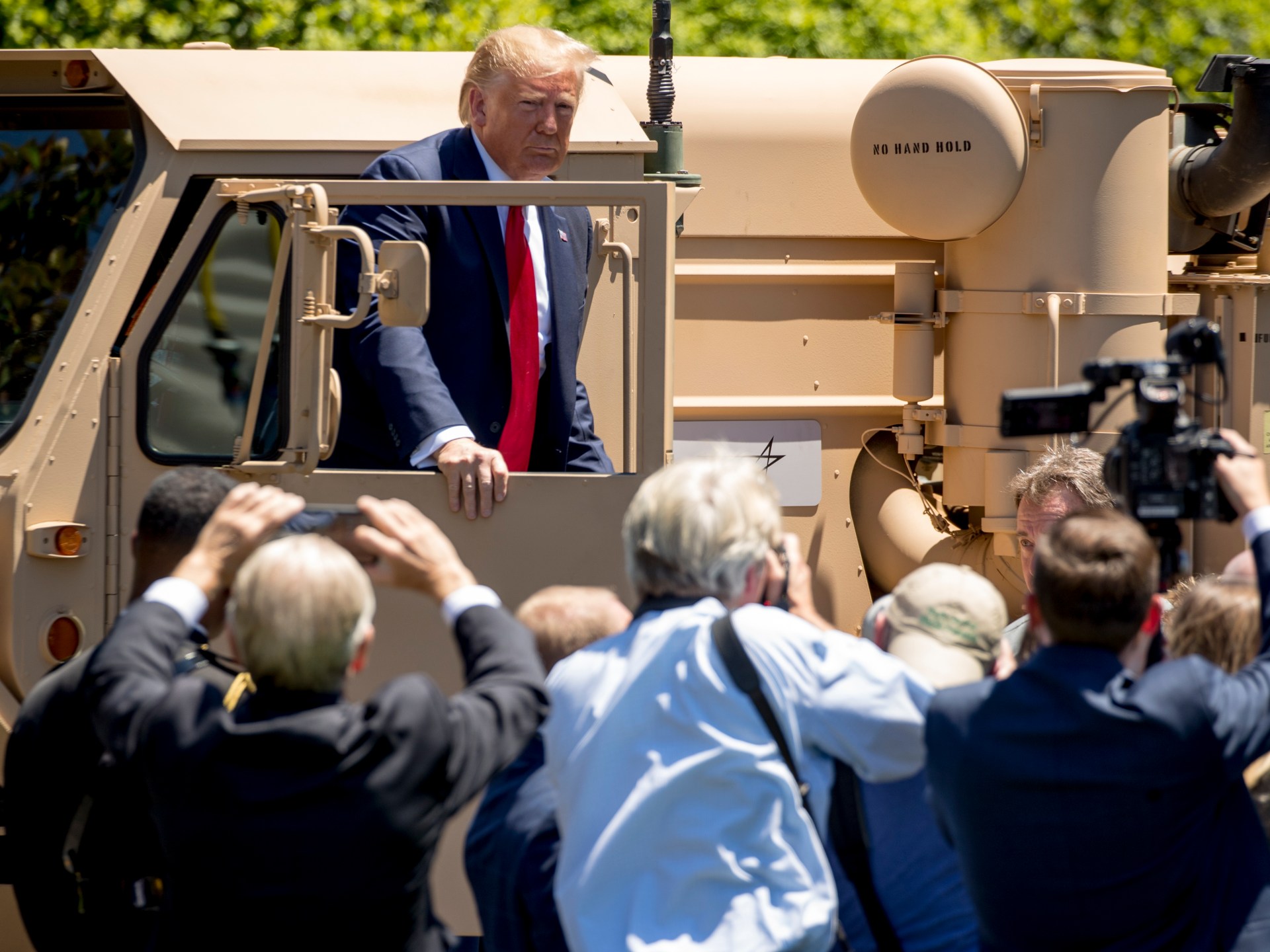
France walks ‘fine line’ as US-Israel war on Iran escalates
 12 March 2026

Paris, France – Nearly 50 years ago, the former Ayatollah Ruhollah Khomeini spent about three months in the village of Neauphle-le-Chateau, west of Paris, recording speeches that helped encourage the Iranian Revolution, before he returned to Iran to overthrow the shah in 1979.
On the heels of the death of his successor, Ayatollah Ali Khamenei, in the US and Israel’s assault on Iran, France and other European nations could be dragged into the conflict in the Middle East.
- list 1 of 4After Iran’s warning, Europe fails to unite on war launched by US, Israel
- list 2 of 4France preparing to escort ships in Strait of Hormuz when war calms: Macron
- list 3 of 4Europe’s hard right fractures over US-Israel war on Iran
- list 4 of 4Iran reports hospitals, civilians affected during war with US, Israel
end of list
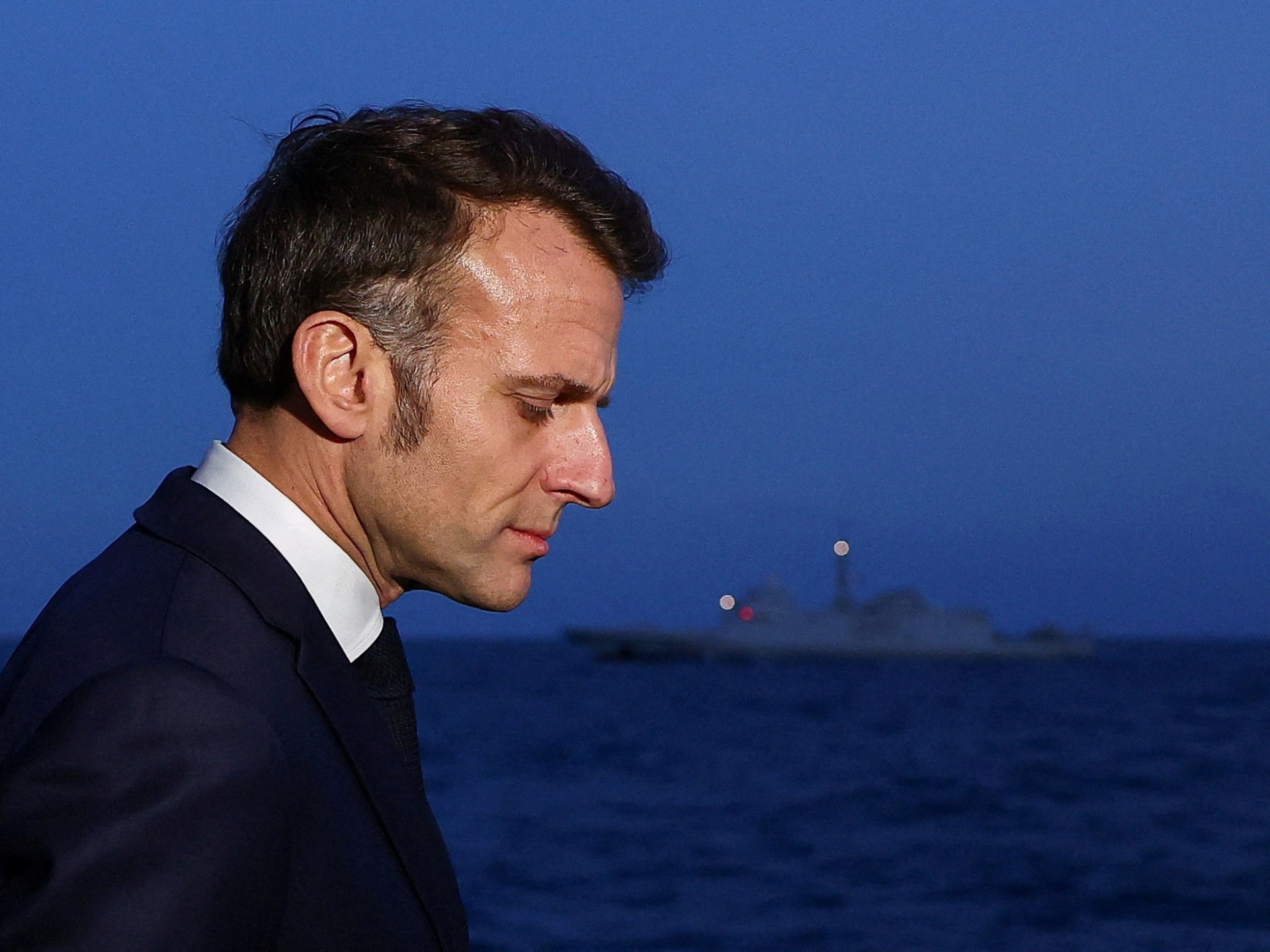
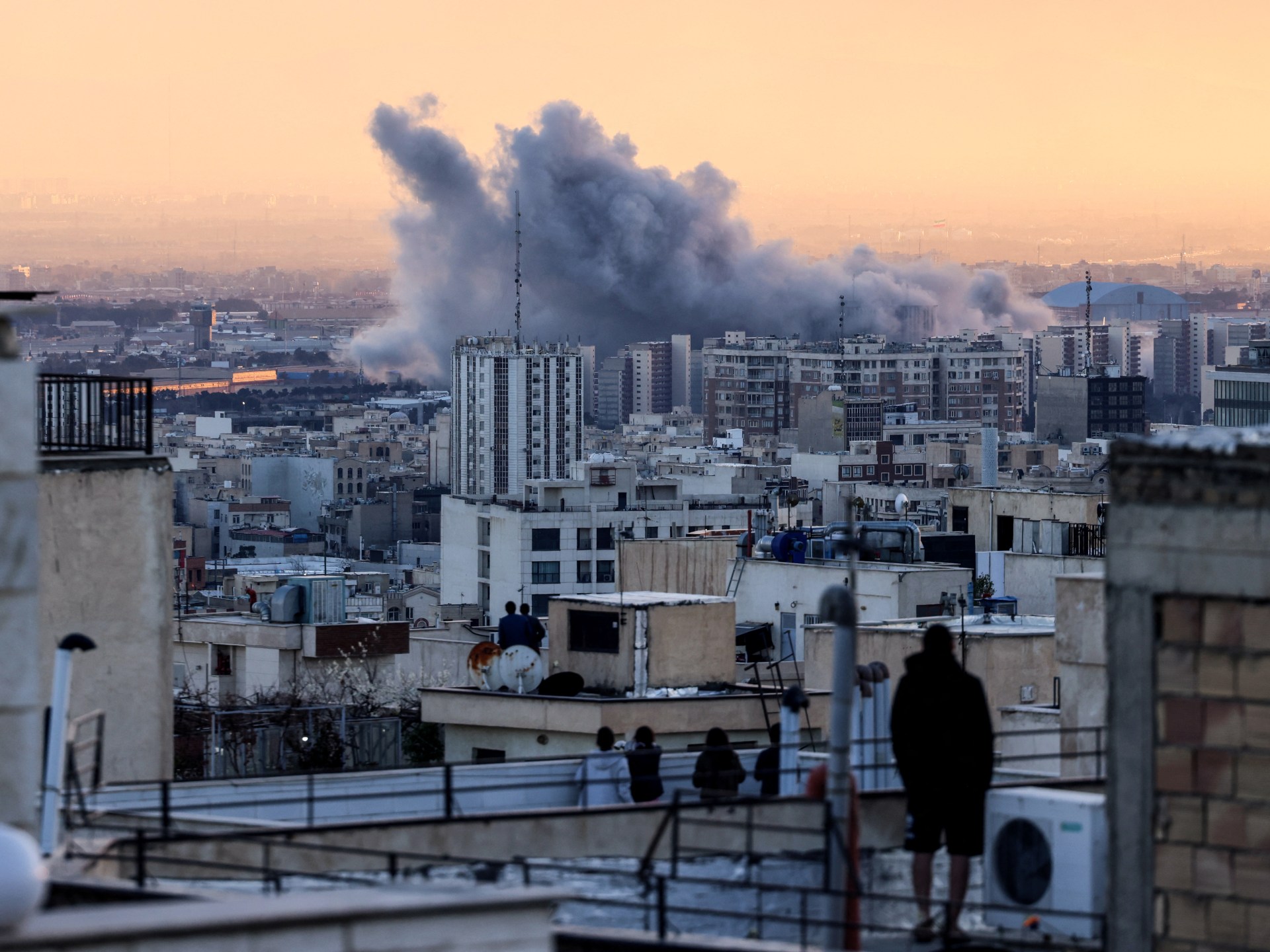
Since the start of the war that has killed more than 1,200 people in Iran, French President Emmanuel Macron has balanced between condemning it, calling the strikes illegal, but stating that Iran “bears primary responsibility” for the outbreak of the conflict.
“France’s position is somewhat of a fine line,” Laure Foucher, a researcher at the French think-tank Fondation pour la Recherche Strategique (Foundation for Strategic Research, or FRS), told Al Jazeera.
“Macron’s position recognises that this operation was executed outside the framework of international law. At the same time, France is not condemning it strongly because we believe that the responsibility lies primarily with Tehran, which was unwilling to compromise,” said Foucher.
But France remains critical of the US and Israel’s military intervention.
“The French are very clear in saying that the nuclear issue in Iran and the threats coming from Iran cannot be resolved with a military operation from the outside – and [Israeli Prime Minister Benjamin] Netanyahu and [US President Donald] Trump’s stated goal of regime change, even less so,” Foucher added.
Advertisement
Although the US and Israel initially went after Iran’s leadership, missile arsenal and nuclear technology, the two nations are advocating for overthrowing Iran’s government.
Given the region’s history, the French government is sceptical of militarised action dedicated to regime change, Foucher noted.
“We have the precedent in Iraq. We know where that led,” she said.
Attacks on Iran ‘completely unjustified’
The sentiment among the public is that Israel and the US are operating outside of international law.
“The American and Israeli attacks on Iran are completely unjustified,” said Adele Supau, a 23-year-old in Paris.
“I could never speak on behalf of an entire people or on something I’ve never experienced … But this is not the way to change things. So, I can’t say that I could ever agree with the Americans and the Israelis,” she told Al Jazeera.
In response to the escalating conflict, France is sending 10 warships to the eastern Mediterranean, the Red Sea and the Strait of Hormuz. Macron already deployed two ships in the Mediterranean to maintain key shipping lines and protect French citizens. Approximately 400,000 French citizens live in the Middle East.
“This is not an offensive mission,” Macron said in a recent news conference. “It is an escort and support mission.”
In a similar vein, Macron has called for creating an international coalition to secure the commercial shipping paths that are “essential to the global economy”.
Supau said that she wished France pushed back more against the US and Israeli attacks.
“I understand France’s response. I would have liked us to be more forceful in rejecting and countering Trump’s action,” Supau said.
“The Spanish response is much more decisive, regarding the attack and, in general, on Trump’s and the United States’ actions. I found it very commendable,” she added. “I would like it if all EU countries could respond similarly and stand up against the extreme power that Trump is wielding over the whole world.”
France’s role in the Middle East
The war could also strain French alliances in the region.
France has defence agreements with several Gulf states, and Macron has promised to defend those.
“What is happening in the Middle East could lead to an extremely dangerous escalation, particularly with regard to the Gulf states. We have partnerships with Gulf States,” Foucher said.
Beyond the Gulf states, Lebanon, previously a French protectorate, is another key concern.
Lebanon has been under heavy fire from Israel, after Hezbollah sent rockets into Israel.
Advertisement
Macron called for a truce from regional leaders, including Israel, and raised the issue in a phone call to Trump.
“Everything must be done to prevent this country, which is close to France, from being dragged into war once again,” the French president wrote on social media.

France promised to provide armoured transport vehicles to Lebanese armed forces to help fight against Hezbollah, as well as humanitarian aid for displaced people.
The expanding conflict and global instability are leading to a shift in people’s minds about France’s position in the world, Supau noted.
“Everyone is much more fearful about the future, and European and nationalist sentiments are taking hold. The conflict is still geographically far away in people’s minds, but personally, I am quite concerned, not out of fear for myself, but for all the people who are there,” she said.
Iranian diaspora split
In France, the Iranian community is divided.
Sarra, 27, who spoke under a pseudonym to protect her identity, grew up in Iran and lives in Paris. She opposes the conflict.
“I am against war. Being against war does not mean I support the regime. Unfortunately for the majority of Iranians abroad, [war] is the solution. I don’t think so. I don’t believe that war could bring freedom, and the United States and Israel brought this war to Iran. It’s a war of opportunity for them,” Sarra said.

Foucher said, “Some people believe that even though the regime is terrible, this war is dangerous because the objectives are completely inconsistent with the demonstrations in Tehran and elsewhere.
“Another group believes that while there are certainly valid criticisms of the American and Israeli military intervention, it could weaken the regime, and that is all they want today.”
While some community members support the war, Sarra said the sentiment among people she knows still living in Iran is not the same.
“I have family and friends in Tehran. War is not what they want; it is not the solution for freedom. There are people who were happy about certain events, like the death of Khamenei, but it is still war,” Sarra said.
Ultimately, outside military intervention is not the way for Iran to gain freedom, Sarra noted.
“I hope that the future of the Middle East and Iran will not be decided in Washington or elsewhere. Above all, I hope that Europe and France will truly realise the importance of defending international law.”
Related News
At least 9 killed in pro-Iran protest at US consulate in Pakistan’s Karachi
Are US-Israeli attacks against Iran legal under international law?
Iran live news: US embassy in Dubai hit; Israel pounds Tehran, Beirut