
Force majeure: What is it and why have some Gulf countries invoked it?
 13 March 2026
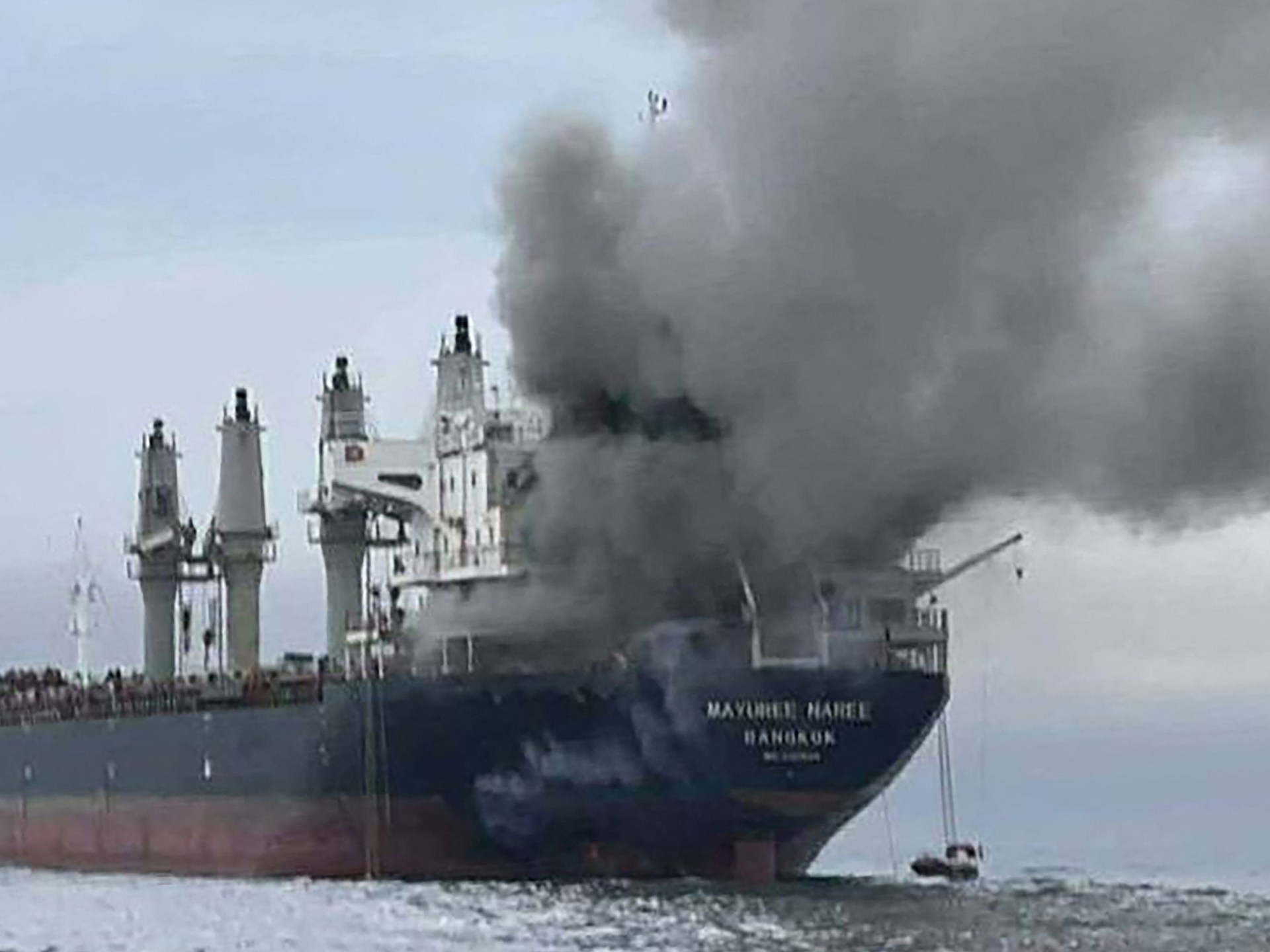

Gulf countries, including Qatar, Bahrain and Kuwait, have declared force majeure on gas exports following the United States-Israel war on Iran, now in its third week, and the disruptions to shipping through the Strait of Hormuz, as Tehran has retaliated across the region, targeting US assets.
QatarEnergy was among the first to halt production, shutting down gas liquefaction on March 2 and sending ripples through global energy markets. Kuwait Petroleum Corporation and Bahrain’s Bapco Energies followed days later, while India invoked emergency measures to redirect gas supplies to priority sectors.
Oil prices also soared to more $100 a barrel as war intensified and uncertainty grew over energy shipments through one of the world’s most critical maritime chokepoints.
Here’s what we know about force majeure and what Gulf countries invoking it means for global oil and gas markets.
What is force majeure?
Force majeure, from the French meaning “superior force”, is a clause in contracts that allows a party to be excused from its obligations when an event beyond its control prevents performance.
This legal move can allow a party to suspend its obligations temporarily, be released from them partially or fully, or adjust them to reflect the new circumstances.
Why are Gulf countries invoking force majeure?
Companies in Qatar, Kuwait and Bahrain have invoked it following severe disruptions to shipping through the Strait of Hormuz caused by US-Israeli military strikes against Iran that started on February 28.
Advertisement
Following these attacks, a commander in Iran’s Islamic Revolutionary Guard Corps (IRGC) said on March 2 that the Strait of Hormuz was closed and warned that any vessel attempting to pass through would be attacked, a statement echoed by Iran’s new supreme leader, Mojtaba Khamenei, on Thursday.
As a result, Gulf companies started invoking force majeure, in order “to avoid paying damages or other financial penalties under their contracts”, Ilias Bantekas, a professor of transnational law at Hamad bin Khalifa University in Qatar, told Al Jazeera.
“These companies are most likely unable to fulfil their obligations, for example, to deliver shipments of oil and gas to other countries, or for shippers to transport them across the Arabian Gulf,” he said.
Does war qualify as force majeure?
No. For war to qualify as force majeure, it must either be covered by the contract or actually prevent one or both parties from performing their obligations.
Companies and states typically include force majeure clauses that define which events qualify, meaning that when force majeure is invoked, the parties rely on provisions they previously agreed upon.
“War can always be foreseen, but perhaps not at the level at which it is being waged right now,” Bantekas said, adding that under general contract provisions, ships carrying goods are usually expected to find another route, “even if it is more costly to them”.
“What we could never have foreseen is that the Strait of Hormuz could be closed to shipping altogether, even if Iran were attacked in the brutal way it is now. I think that, on its own, could be sufficient to constitute a force majeure event,” he said.
“However, only a court would have the authority to make a definitive determination as to whether this kind of war, under these particular circumstances, amounts to force majeure,” he added.
Will LNG and oil markets be affected?
Yes. QatarEnergy’s declaration of force majeure alone has already significantly disrupted the global LNG market, as Qatar accounts for nearly 20% of global supply.
Gas prices soared immediately following the country’s halt of gas production, and global gas markets are expected to experience shortages for weeks, if not longer.
“The lack of visibility over the likely duration of force majeure, and of the broader military conflict, is injecting extreme uncertainty into global oil, gas and LNG prices,” Seb Kennedy, global gas and LNG analyst, told Al Jazeera.
“Prices will necessarily keep rising as volumes are withheld from the market, until price pain triggers demand destruction in price-sensitive areas of the economy,” he noted.
Advertisement
Which other countries have invoked force majeure?
On Tuesday, India invoked force majeure to redirect gas supplies from non-priority sectors to key users after disruptions to liquefied natural gas shipments through the Strait of Hormuz, according to a government notification.
But India’s measures are a “domestic demand-management response”, Kennedy said, as its government is relocating its limited gas supplies internally “to protect critical sectors such as households, small businesses, power generation and city gas distribution”.

Kennedy said the move reflects the difficult choices facing LNG-dependent economies, where governments may prioritise households and power generation over industrial users.
This prioritisation of LNG for domestic use “highlights the tough choices facing LNG-dependent countries”, he noted.
Aside from India, Omani trading house OQ also declared force majeure to a customer in Bangladesh after the Qatari supply was halted.
How will this affect US and European markets?
US LNG exporters are likely to benefit from the disruption. Analysis by Energy Flux estimates that US LNG exporters could generate about $4bn in windfall profits in the first month of the disruption alone.
If the situation persists, “US LNG windfall profits could reach $33bn above the pre-Iran average within four months. Over eight months, that figure rises to $108bn,” says Kennedy.

These gains largely come at the expense of European consumers, Kennedy notes, as Europe is the main destination for US LNG and remains heavily reliant on those supplies to refill gas storage and ensure winter supply security.
European stock markets fell last week, while the region’s natural gas prices rose sharply again.
What does this mean for Asian markets?
Major Asian economies such as India, China and South Korea rely heavily on imported LNG.
On the other hand, Southeast Asia alone has significant fossil fuel resources, but the region still depends heavily on imported oil and gas, much of which is transported through the Strait of Hormuz.
“Wealthier buyers such as Japan and South Korea can generally outbid others to secure cargoes during periods of extreme scarcity,” Kennedy said, noting that price-sensitive importers, especially in South and Southeast Asia, tend to be “forced out of the market” whenever prices soar, “leading to demand destruction, fuel switching, or industrial curtailment”.
“In that sense, the crisis does not hit all LNG importers equally: It becomes a contest of balance sheets as much as a question of physical supply.”
Can force majeure be challenged?
If a force majeure clause is written in the contract, then it stands because the parties have consented to it.
Contrary to that, if it has not been written in the contract, then any unforeseen event would potentially be open to legal challenge, and it becomes a matter of convincing the courts that the event could never have been foreseen and that it makes obligations on one of the parties impossible to perform.
Advertisement
“However, in the present circumstances, the stronger parties – the ones waiting for deliveries of oil and gas elsewhere in the world – may actually be harming themselves if they refuse to accept force majeure,” Bantekas said.
“Doing business with Gulf countries could become more difficult in the future, and premiums would likely rise significantly. So, I do not think they will be taking these matters to court,” he noted.
Related News

Zelenskyy offers Saudi Arabia’s MBS help countering Iranian drones
Despite antiwar MAGA wing, Trump gets Republican support for Iran strikes
Russia accuses Ukraine of drone attack as gas tanker sinks in Mediterranean