‘Cycle of chaos’: Israel killing Gaza civil officials to derail its future
 15 July 2026
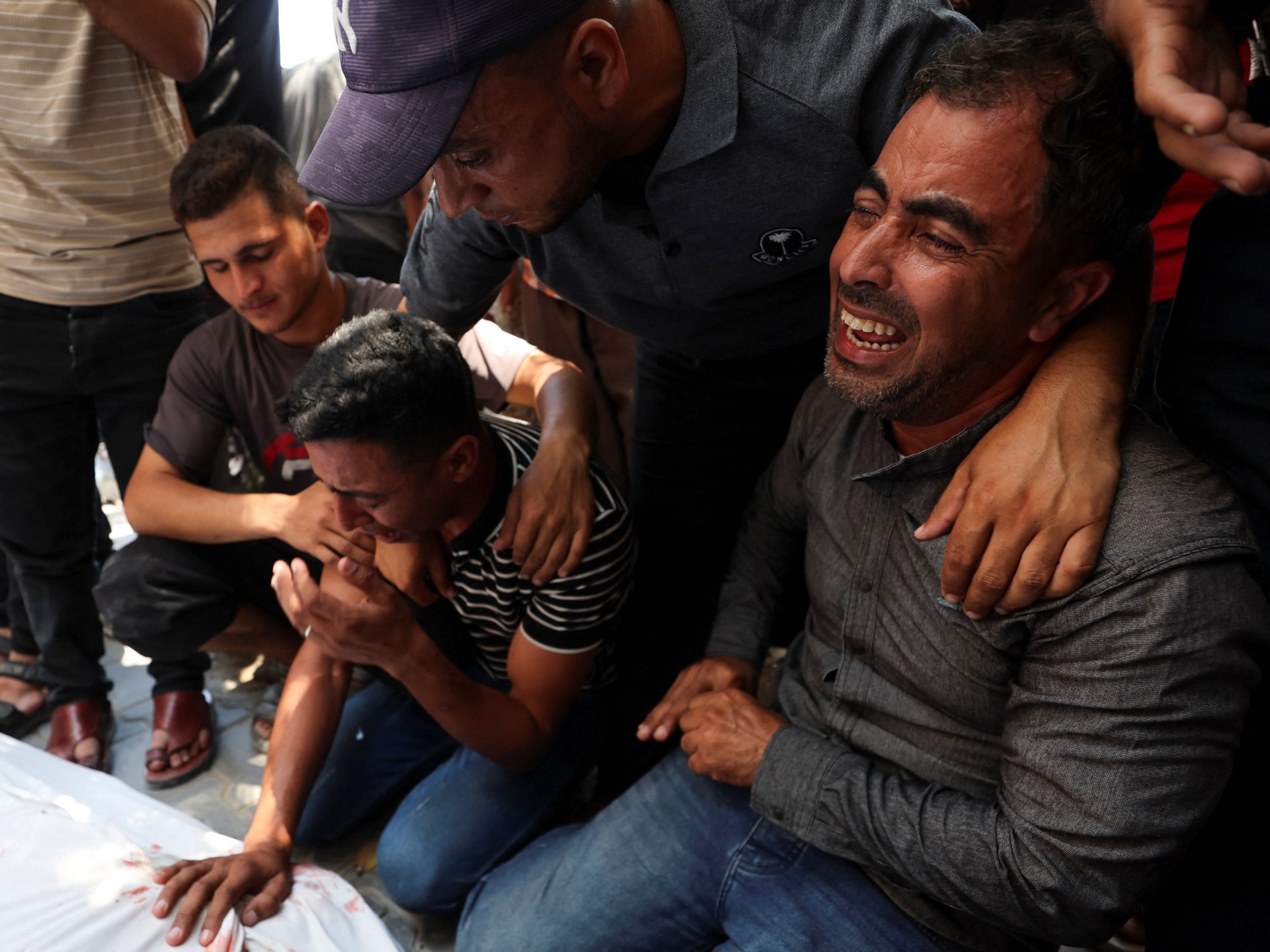

An Israeli attack in northern Gaza’s Jabalia camp on Tuesday killed the director of a police station and several officers, adding to a mounting civilian death toll.
Despite a months-long “ceasefire”, Israel continues to launch deadly raids across the Palestinian territory, citing the presence of Hamas fighters and “imminent threats”.
However, political and strategic analysts warn that these daily incursions are not isolated security operations, but rather part of what appears to be a calculated pattern to kill law enforcement officers, medical professionals, government officials and intellectuals. These killings, they warn, could systematically derail the United States-backed plan for a post-war Gaza, paralyse the so-called Board of Peace set up under the Trump administration plan, and effectively allow Israel to maintain indefinite control over a territory that is otherwise uninhabitable.
Normalising the killing
Since the “ceasefire” agreement took effect, Israel has conditioned the international community to accept daily breaches and killings in Gaza as the new normal, effectively acting as if the pact does not restrict its military freedom, analysts said. This ongoing violence has pushed the total death toll since October 7, 2023, to at least 73,233, with 173,707 injured.
According to the Government Media Office in Gaza, there have been 3,689 recorded Israeli violations during the 275-day “ceasefire”, resulting in 1,122 Palestinians killed and 3,599 injured. Furthermore, the humanitarian situation continues to deteriorate under the ceasefire, with Israel allowing only 35 percent of the expected aid trucks and 36 percent of permitted travellers to cross the borders.
Advertisement
The deliberate targeting of Gaza’s civic foundation extends far beyond military objectives, deeply affecting those tasked with maintaining order and providing essential services.
The United Nations Human Rights Office (OHCHR) reported that Israeli attacks are systematically targeting police officers, whose role is essential for civic order and any future reconstruction. Since January 2026, OHCHR has recorded at least 12 attacks on police, killing 35 personnel, including officers targeted while directing traffic or overseeing markets. In one instance, on May 23, an Israeli attack on a Gaza City checkpoint killed at least five officers.
Alongside law enforcement, Gaza’s educational and medical sectors have been decimated. Most hospitals have been bombed and destroyed, with numerous medical teams killed in the process. The education system has suffered a similar fate. According to the Palestinian Ministry of Education, at least 441 teachers and other personnel have been killed, alongside more than 11,000 schoolchildren.
The intellectual and bureaucratic leadership of the enclave has also been systematically eliminated. At least 117 academics have been killed, including prominent figures like Sufyan Tayeh, a mathematician and president of the Islamic University of Gaza, who was killed with his family in a Jabalia refugee camp bombing.
Ahmed al-Tanani, a writer and political analyst based in Gaza, noted that Israel’s pretexts for these strikes have shifted from “security events” to “killing on intention”, striking individuals citing baseless claims that they intend to attack Israeli forces.
The recent targeting of police officers and civil personnel reveals a broader objective. According to al-Tanani, the strikes are a direct response to Hamas demonstrating political flexibility, including its recent decision to dissolve its governmental administrative committee in the enclave.
“Israel is saying clearly that its problem in the Gaza Strip is not with Hamas; its problem is with the entire national structure in Gaza, with the society, and with any possibility of recovery,” al-Tanani told Al Jazeera. “Israeli missiles primarily aim to push the Strip into a continuous cycle of death, non-recovery, chaos and internal security tampering.”
Making Gaza ‘uninhabitable’
For Israel, the immediate goal of this escalation is to prevent the implementation of the Trump plan, while its long-term objective remains the indefinite occupation and expansion of settlements in Gaza, say analysts.
Advertisement
Mohannad Mustafa, an academic and expert in Israeli affairs, told Al Jazeera that Israel is employing three primary tools to achieve this. First, it is normalising daily attacks by conducting regular strikes under the guise of enforcing the “ceasefire”, a tactic mirroring its operations in Lebanon.
Second, Israel is expanding its occupation footprint, increasing military control from 50 percent to 70 percent of Gaza, accompanied by the systematic destruction of infrastructure and homes.
Finally, Israel is blocking political transition by preventing the entry of the Palestinian national committee, obstructing humanitarian aid, and halting reconstruction efforts to ensure Gaza remains strictly a “military and security issue” rather than a political one.
This strategy of devastation is openly endorsed at the highest levels of the Israeli government. Speaking to Israel’s Channel 14, Israeli Defence Minister Israel Katz recently stated that the destruction of Gaza is a deliberate policy to neutralise threats, adding that seeing the devastation brings him a feeling of comfort.
“What Katz said sparks no debate in Israel; this is the general mood inside Israel — that Israel must destroy the Strip, and this is what it is doing,” Mustafa said, noting that resettling Gaza remains a core objective for the government.
Paolo von Schirach, president of the US-based Global Policy Institute, echoed this grim assessment. Reacting to Katz’s comments, von Schirach told Al Jazeera that taking comfort in the destruction of Gaza goes beyond fighting Hamas. The idea, he said, was “to make this place uninhabitable, hoping the people will disappear and go somewhere else”.
Paralysis of Board of Peace
Israel’s strategy has severely undermined the Board of Peace, a body championed by US President Donald Trump to oversee Gaza’s post-war transition, governance and peacekeeping.
“The Board of Peace was supposed to gradually take the reins, control the Strip to establish a form of governance … and eventually bring in a peacekeeping force to maintain order, thereby removing the Israeli army and disarming Hamas,” von Schirach said. “None of that has happened, or is happening.”
Von Schirach pointed out that the board currently lacks the tools and security forces required to assert control, rendering the US-led diplomatic initiative increasingly embarrassing for the White House. While Washington may be distracted by the renewed crisis in the Strait of Hormuz, its failure to pressure Israel into compliance remains glaring.
However, Mustafa argued that this is not merely a lack of US leverage. He suggested that the US and Israel share the fundamental goal of disarming Hamas, differing only in their methods. “Israel is encouraged by the Board of Peace itself adopting the Israeli position regarding linking the entire agreement to disarmament,” he said.
Removing pretexts
To break the deadlock, Palestinian factions have leaned heavily into diplomacy. By dissolving its governance committee in favour of a technocratic body, Hamas has sought to remove any Israeli pretext for stalling the implementation of the ceasefire.
Advertisement
Al-Tanani noted that Palestinian factions are currently working with mediators in Cairo — Egypt, Qatar and Turkiye — to forge a unified Arab and Islamic stance. This bloc is expected to pressure the US to move beyond broad endorsements of the “ceasefire” and enforce the plan’s specific, operational details.
“This requires translating [US] statements and positions into practical measures to pressure Israel to end the humanitarian catastrophe and implement the ceasefire agreement,” al-Tanani said. Until then, observers warn, Gaza will remain trapped in a calculated limbo of destruction and occupation.
Related News
Turkiye accuses Israel’s Netanyahu of ‘genocide’, seeks Interpol warrant

Saudi Arabia, US carry out strikes on Iran-backed groups in Iraq
Houthi attacks on gov’t forces hint that a major battle in Yemen is brewing