COMMENTARY: The Post-Convention Decline Of The United Progressive Party
 03 May 2026



THE POST-CONVENTION DECLINE OF THE UNITED PROGRESSIVE PARTY
By Charlesworth C. M. Tabor, Attorney-at-Law
The United Progressive Party (UPP) came into existence in 1992 through the merger of the Progressive Labour Movement (PLM), the United National Democratic Party (UNDP) and the Antigua Caribbean Liberation Movement (ACLM). They came together as a unified opposition force to the governing Antigua Labour Party (ALP) that has dominated the governing of the State for decades.
After years in the political wilderness the UPP assumed State power in 2004 under the leadership of Baldwin Spencer, winning twelve of the seventeen electoral seats. The Baldwin Spencer led Administration governed Antigua and Barbuda from 2004 to 2014. After the 2014 general elections the Antigua Labour Party (ALP) was returned to governance with a majority of fourteen seats. Then followed the 2018 and 2023 general elections where the ALP won fifteen (15) and nine (9) seats respectively.
The results of the 2023 general elections were a tremendous improvement in the electoral fortunes of the UPP where they moved from one (1) parliamentary seat to six (6). Despite this positive electoral result the leader of the Party, Harold Lovell, immediately relinquished his leadership of the Party and also announced his disengagement from electoral politics. I have always maintained that this was a premature and strategic error and his subsequent return to electoral politics in 2026 is ample justification for my intial assessment and an addition to the comedy of his errors.
On Lovell’s resignation as leader of the UPP, the Deputy Political Leader Jamale Pringle assumed the position of interim Political Leader pending the Party’s Convention in April, 2024.
As a rule, political conventions are by nature generally contentious and divisive because they are essentially a competition for leadership, invariably between different factions. The UPP Convention on 20-21 April, 2024 under the theme “Together in Unity: Forward to Victory” was no exception to the rule. In fact, the aftermath of the UPP Convention went way beyond the exception to the rule despite the theme. The ensuing chaos and resignation of senior members from the Party has sent the Party into a downward spiral from which it has not recovered to this day.
The leadership race at the Covention was between the interim leader Pringle and the challenger Lewis. A week or two prior to the April Convention, the vast majority of the Party’s Parliamentarians indicated in a letter that was leaked to the media their support for Lewis as the Leader. Coupled with that information, it also came to light that a poll was done which indicated that Lewis was the preferred candidate of many including the business community. Many of the constituency branches as well favoured Lewis. Did this indicate strong support for the interim leader? Of course this is a competition for leadership and the Pringle faction, led by the Chairman of the Party and members of the leadership hierarchy, got to work and by whatever means necessary ensured that the Pringle faction prevailed at the Convention.

I suspected that the two former Leaders of the Party, Baldwin Spencer and Harold Lovell, were also quite pleased with the results of the Convention. The Covention was declared by many to be democratic hence the people spoke with the voice of God “vox populi vox dei”. What human would dare to question a decision sanctioned by God? However, this is not the realm of heaven. This is the realm of Realpolitik where pragmatism and objectivity should be guiding factors in a Party’s decision-making. Essentially, the primary role of a political party is to win and exercise State power. However, this objective will be difficult to achieve in the face of disunity, weak leadership and rampant individual self-interest that works against the GREATER GOOD. It begs the question, therefore, what is the Greater Good. In this discourse, the Greater Good is primarily achieving State power. The next big task for a political party is to determine the modalities and instrumentalities that would effectively facilitate the achievement of the Greater Good.
Now, the internal discord and disunity that became the aftermath of the Convention, ultimately resulted in cataclysmic consequences for the Party. First came the resignation of Anthony Smith from the Party and him becoming an Independent Member of Parliament. Subsequently, other high ranking and brilliant executive members of the Party resigned. What I will posit now might be hard to believe by many people, but it is my strong belief that these post-convention resignations were due primarily to the weak leadership and management of the Party where persons were blinded by rampant self-interest and not the GREATER GOOD for the Party. The members who supported the Lewis faction in the Covention were treated as outcasts and enemies. No serious attempts were made to try to diffuse the tensions and bring the Party together. In fact, an attempt was made to bring a noted attorney from Barbados to come to Antigua to conduct a mediation between the parties but this was blocked by the leadership hierarchy. The internal dynamics of the Party were clearly toxic and dysfunctional, but that might have been the environment that some in the leadership wished to perpetuate.
Even the question of the selection of the two Deputy Leaders of the Party post-convention should have been seen as a most important and critical matter. This is a mandatory requirement of the Party’s Constitution. However, at no time did the Party have two Deputy Leaders in place in its history. It has always been one. In the case of Baldwin Spencer the Deputy was Wilmot Daniel and for Harold Lovell the Deputy was Jamale Pringle. This fact might seem harmless and not significant, but it underscores the internal discord and division that has been like a millstone around the neck of the Party. With respect to the 2024 post convention; a visionary, strong and strategic Political Leader would have ensured that Richard Lewis was appointed as one of the Deputy Political Leaders. However, this was never a serious objective pursued by the Political Leader because as I have stated before Richard Lewis and the members of his faction were treated as outcasts. It is this lack of pragmatism and strategic thinking by the leadership of the Party that has plummeted the Party into the ensuing post-convention chaos.
As a student of one of the Caribbean’s foremost intellectuals, CLR James; like him, I also believe that “any cook can govern”. However, as Lenin added the “cook must first learn to govern”. I have said all that to preface my discussion on the question of Leadership within the UPP.
The UPP at its April, 2024 Convention elected Jamale Pringle as the Leader of the Party, a role he has acted in following the resignation of Harold Lovell after the January, 2023 general elections. Jamale Pringle was also the Party’s sole representative in Parliament after the March, 2018 general elections. The latter fact has created a lot of emotionalism among members of the Party and even some members who one could consider to be intellectuals. I am making this point because I have heard some of the members who could be considered intellectuals declaring that Jamale Pringle should be the Leader of the Party because he was the “Sole Pringle” in Parliament. To state that such emotionalism should have no place in politics and in particular the selection of a political leader would be a gross understatement.
It is accepted that political parties exist to pursue ceratin principles and long-term goals which would redound to the benefit of the State and its residents. Based on the political philosophy of utilitarianism, this is expressed as the greatest good for the greatest number. However, no political party can achieve those principles and long-term goals that would benefit the State and its residents unless the Party assumes State Power.
Now, to assume State Power, which I have characterized already as the GREATER GOOD, a political party must take the necessary steps to achieve that objective. Emotionalism must be banished from the Party’s political ethos. Pragmatism and objectivity should be the guiding yardsticks in a political party’s decision-making. It is this absence of pragmatism and objectivity on the part of the leadership of the UPP that has contributed to its present lethargy and malaise.
Despite the UPP presenting a united face to the public on 7 April, 2026 at the ratification of its candidates for the general elections, that can be described as too little too late and simply a stratagem for public consumption. It is a public secret that Harold Lovell on his return to electoral politics and being declared as the Caretaker for the All Saints West Constituency, was still entertaining ambitions of challenging Jamale Pringle for leadership.
In any aspect of life leadership matters. It matters because a leader can determine whether the entity that is led (whether school, church or poltical party) progresses, stagnates or declines. The leadership of Jamale Pringle of the UPP was always problematic from the start because of perceptions of his intellectual standing in the Party. Generally, a political leader should stand out intellectually in his Party and that appeared to have been absent in the case of Pringle. Moreover, the important role of appearing to be the Party’s chief strategist and public advocate was missing from his modus operandi. Pringle’s problem was further compounded by the fact that many in the electorate had a negative perception of his ability as a leader. While we do not have a Presidential System of election, leadership does matter and the perception of the leader can affect voting behavior.
The million dollar question now is whether the post-convention decline of the UPP has contributed to their poor general elections results.
While many would argue that there is no utility in engaging in counterfactual analysis, I would beg to differ since such analysis brings into focus the causal impact of actions. What I wish to posit, therefore, is that the aftermath of the UPP’s Convention with its ensuing discord, fragmentation and defections were the major reasons for its disastrous election defeat.
While the Party tried to project an image of unity to the public in a few weeks before the polls, that certainly could not overcome the perception in the eyes of the electorate of a disunified group of people with subterranean, unresolved issues. The UPP dropped the ball when they failed to select the best person to lead the Party into the general elections. The members of the Party in Parliament (which is a powerful group in any Party) and polls did not see Jamale Pringle as the best leader. However, a Party which has breached its own Constitution so many times, has argued that Pringle was elected by a democratic process in the Convention and his leadership is impregnable and beyond reproach, despite the fact that the said Convention was believed by many to have been rigged by the Party hierarchy. Again, emotionalism and blind, rampant self-interest were allowed to prevail over pragmatism by allowing the status quo to remain.
Now, for the counterfactual analysis following the 30 April, 2026 general elections results. The raison d’etre of any political party is to win State power so that it can implement its policies for the benefit of the State and its residents. It was always my contention that the UPP would have been a more formidable force in any election with Richard Lewis as the Leader, backed by a united and committed Party. However, that was not the case because the Party leadership and hierarchy failed to grasp and internalize the concept of the Greater Good. The greater good required that you put the modalities and instrumentalities in place that would give you the best chance of winning State power. That was not done because emotionalism and rampant self-interest of key personnel in the Party’s leadership hierarchy triumphed over Realpolitik and the Greater Good. Moreover, the UPP must genuinely learn to drink “bush tea”for the people’s cold.
The results of the 2026 general elections are clear and shocking, with 15 seats for the ALP and 1 for the UPP. It might appear now that the Requiem Mass for the UPP is on the horizon. Yes, Pringle has won his seat because All Saints East and St. Luke is a UPP stronghold. However, the quintessential problem with the UPP is leadership and until that is understood and addressed the fortunes of the Party will remain in the doldrums.
Advertise with the mоѕt vіѕіtеd nеwѕ ѕіtе іn Antigua!
We offer fully customizable and flexible digital marketing packages.
Contact us at [email protected]

Related News
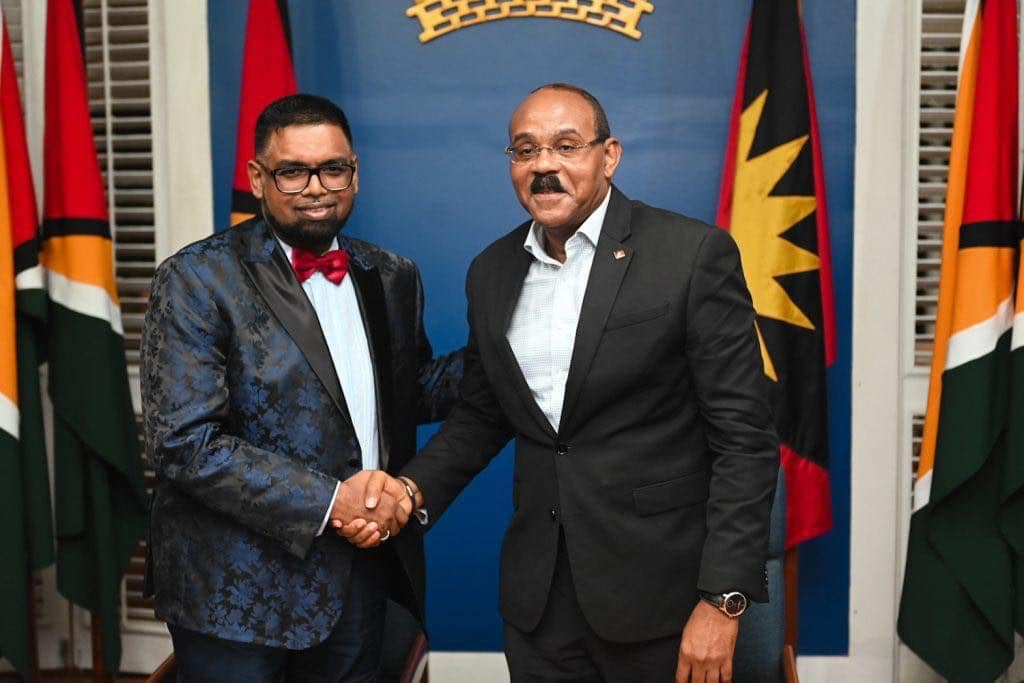
Guyana President Irfaan Ali Congratulates Gaston Browne on Fourth-Term Victory
ABLP to Launch Manifesto Today as Campaign Enters Final Phase
Benjamin Rejects Four-Day Work Week as “Theoretical” for Antigua and Barbuda