
COMMENTARY: Can There Be Black History (Heritage) Month Without the History of Africa?
 23 February 2026
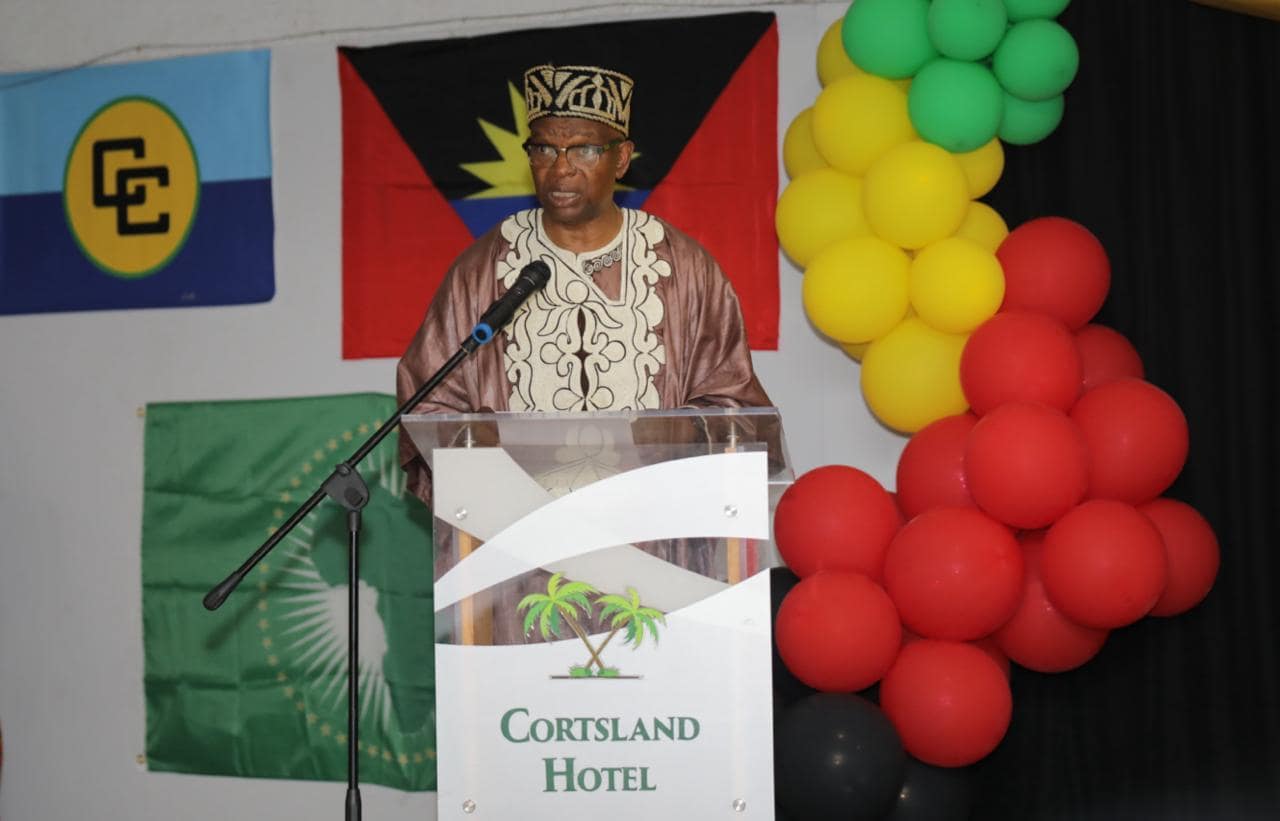




CAN THERE BE BLACK HISTORY (HERITAGE) MONTH WITHOUT THE HISTORY OF AFRICA?

Dr. Lenworth Johnson
Heritage Month in Antigua and Barbuda (the month of February) is a welcome offshoot of Black History Month, celebrated in the United States. Black History Month began as Negro History and Literature Week in 1924, the brainchild of the famed Black American educator Carter G. Woodson. Dr. Woodson chose the month of February because it is the birth month of President Abraham Lincoln, who freed the slaves in America, and also the birth month of the distinguished American author and Pan-Africanist W.E.B. Dubois. Negro History and Literature Week became simply Negro History Week in 1926. In 1976, President Gerald Ford officially recognized Black History Month. Heritage Month in Antigua and Barbuda focuses on the country’s history, which is admirable.

In his classic book “The Mis-Education of the Negro,” first published in 1933, Dr. Woodson advocated, among other things, reclaiming African American history, culture, and identity as essential steps toward liberation and progress. Similarly, I have long advocated teaching African history at the primary, secondary, and tertiary levels. The underlying reason is to instill pride in our Black race.

A review of the Caribbean History and Caribbean Studies syllabi at the Caribbean Secondary Education Certificate (CSEC) and Caribbean Advanced Proficiency Examination (CAPE) levels shows that African history is scarcely mentioned as an area of study. The only substantive mention is an “Overview of West African societies in the 15th century: economic, religious and political organization and social relations.” It is essential, of course, to study Caribbean history, and I commend those hardworking people at the Caribbean Examinations Council (CXC) who put the courses together. Yet Afro-Caribbean history did not begin with the trans-Atlantic slave trade, which commenced in the late fifteenth century. Afro-Caribbean history, in my view, begins with the history of Africa and the Black man in Africa. Further, when I say the history of Africa, I mean its history from the beginning of time – its geography, geology, politics, society, economy, etc. The entire history of Africa must be studied, the good and the bad, warts and all, with appropriate detail and intensity at the primary, secondary, and tertiary levels. Black history is no different from the history of other races, with literary, scientific, and engineering achievements, wars and rebellions, great kingdoms, political machinations, etc.
Pride in our Black race will be fostered when we read and learn that Egypt was first a Black country and that Egypt is the cradle of civilization. Cheik Anta Diop and other historians have proven this time and again with irrefutable evidence. Indeed, it is generally recognized that Africa is the mother of humanity. The history of Egypt goes back over 8000 years. Egypt is replete with accomplishments in science, architecture, engineering (witness the Pyramids), philosophy, medicine (the great Egyptian Imhotep is the real father of medicine), agriculture, and many other areas. The great Kingdoms of Africa must be studied – the Kingdoms of Mali, Ghana, Songhai, Asante, Aksum, Kush, Zimbabwe, and so on. So must the great Kings and Queens – Mansa Musa, Shaka Zulu, Sunni Ali, Hatshepsut, Sundiata Keita, Nzinga, etc.

One ground on which European enslavers wrongly justified the institution of slavery was the claim that Black people were subhuman and could not reason like other races. As evidence, they would say that Black people had no history and had never accomplished anything of consequence. This attitude still permeates Caucasian (white) thinking today. It is no accident that President Trump recently reposted a meme depicting President Obama and his wife, Michelle, as apes; this was meant to show that Black people, even one who has risen to be President of the United States, are less than human. It is no accident either that certain school districts in Florida and Texas have removed or watered down Black history events and data from their textbooks. This is meant to show, again, that Black people have no history.
We must resist this effort to demean and dismiss our history. As Marcus Garvey said, “A people without the knowledge of their past history, origin, and culture is like a tree without roots.” Peter Tosh also put it beautifully – “Don’t care where you come from; as long as you are a Black man, you are an African.” There must be a way to include more African history in Caribbean History and Caribbean Studies at the CSEC and CAPE levels. I know that introducing new curricula and textbooks takes a long time; however, I think it is worth it to do something that will increase pride in our race. Alternatively, and this is my preference, African History should be studied as a standalone subject at all stages of our education system.

Should there be Black History (Heritage) Month without substantive consideration of Africa’s history? I think not. And I think most people, upon reflection, would answer no. For completeness, should more African history be included in the CSEC and CAPE curricula, preferably as a standalone subject? I definitely think yes.
Dr. Lenworth Johnson is a chartered accountant and an attorney-at-law, as well as a former member of the Senate, the Upper House of Parliament in Antigua and Barbuda. In 2024, he graduated from the University of the West Indies with the degree of Doctor of Education. He is a member of the Antigua Barbuda Airport Authority.
Advertise with the mоѕt vіѕіtеd nеwѕ ѕіtе іn Antigua!
We offer fully customizable and flexible digital marketing packages.
Contact us at [email protected]

Related News
Delecia Weste Crowned Winner at Antigua and Barbuda Girl Guides Show
West Indies Sail Heritage Foundation Donates Second Upcycled Plastic Bench to Newfield Pri...

All Saints Man Charged Following Firearm and Ammunition Seizure