Bolivia revives anti-drug alliance after nearly 18-year break with US
 24 February 2026
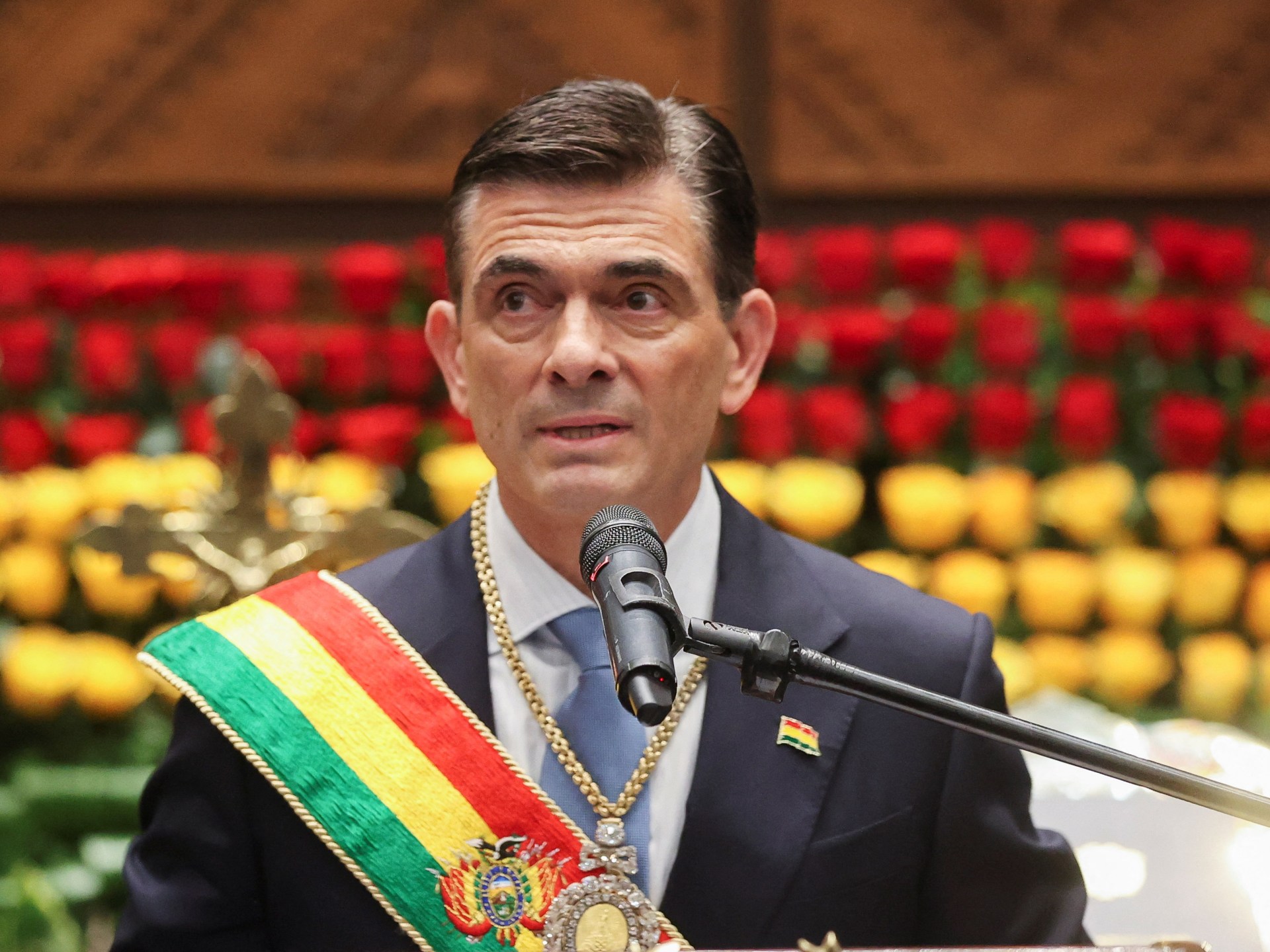

In a significant foreign policy shift, Bolivia has reopened its doors to the United States Drug Enforcement Administration (DEA).
The move, confirmed on Monday, ends a nearly two-decade hiatus in bilateral efforts to stem drug trafficking.
- list 1 of 3Gustavo Petro: Colombia’s former rebel fighter turned president
- list 2 of 3Bolivia’s ex-leader Morales reappears in stronghold after 7-week absence
- list 3 of 3Latin America: In the Shadow of the US | Ep 3 – Chaos
end of list
Bolivian Minister of Government Marco Oviedo told local media this week that DEA agents were already operating in the country.
“The DEA is in Bolivia,” he said. “Just as the DEA is now present, we also have cooperation from European intelligence and police bodies.”
Oviedo explained that the initial focus of the law enforcement efforts would be to tighten border surveillance and dismantle trafficking networks.
He added that the cooperation with the DEA and European agencies was only the start of Bolivia’s expanded international efforts.
“We want neighbouring countries’ anti-narcotics agencies on board as well,” Oviedo said.
End to Morales order
The announcement marks an end to an order issued under former left-wing President Evo Morales in 2008, effectively expelling all DEA agents from the country.
Morales, the leader at the time for Bolivia’s Movement for Socialism (MAS), had accused the US of using drug enforcement efforts to pressure countries in Latin America to bend to its political and economic agenda.
Under Morales, all drug enforcement cooperation with the US came to a halt, and he refused to let DEA officers into the country, accusing them of destabilising his government. Diplomatic relations were likewise suspended.
In turn, MAS received strong support from rural parts of Bolivia, where the cultivation of coca, the raw ingredient in cocaine, is a key economic driver.
Advertisement
Bolivia, along with other Andean countries like Colombia and Peru, is a key producer of coca, which has traditional uses, including as a remedy for altitude sickness. Morales himself led a union of coca growers, or cocaleros, before taking office.
Advocates have accused the US’s militaristic “war on drugs” of harming impoverished rural farmers through the forced eradication of coca crops. Such campaigns, they argue, can leave farmers without a means of supporting themselves and their families.
MAS remained in power from the start of Morales’s term in 2006 until 2025, when its coalition fractured amid economic instability and internal fighting.
New political direction
In October 2025, two right-wing candidates proceeded to a run-off for the presidency: centrist Rodrigo Paz of the Christian Democratic Party and a former right-wing president, Jorge Quiroga.
It was the first presidential run-off in modern times for Bolivia, and it marked a sharp turn away from two decades of socialist government.
Both candidates made improving the relationship with the US a central pillar of their campaigns, viewing it as essential to solving Bolivia’s severe economic crisis.
Paz, who was educated in Washington, DC, argued that normalising ties would attract the international investment needed to modernise the energy and lithium sectors.
Meanwhile, Quiroga, a conservative who studied at Texas A&M University, campaigned on a more aggressive platform, including fiscal austerity and security partnerships with the US.
His vice presidential candidate, Juan Pablo Velasco, is credited with popularising the tagline “Make Bolivia Sexy Again”, a twist on US President Donald Trump’s slogan, “Make America Great Again”.
Paz ultimately emerged as the victor in the race, with nearly 54.9 percent of the vote. After his inauguration in November, Paz moved quickly to fulfil his promises by restoring diplomatic ties with the US.
The US, meanwhile, called Paz’s presidency a “transformative opportunity” for the region.
Earlier this month, both Bolivia and the US agreed to appoint ambassadors to one another’s countries for the first time in nearly 18 years.
Uncertainty remains
But it is unclear to what extent the DEA will be operating in Bolivia. Left-wing leaders like Morales continue to have strong pockets of support, particularly in highland and rural areas.
Bolivian Foreign Minister Fernando Aramayo has said negotiations are still under way to finalise the specific areas of cooperation between his country and the DEA, as well as operational limits for the US agency.
Advertisement
A full agreement outlining the scope of the agency’s activities is expected in the coming months.
Since returning to office on January 20, 2025, Trump has intensified the US campaign against drug trafficking in Latin America, including by designating several major cartels as “foreign terrorist organizations”.
Trump has also pressured Latin American governments to take more aggressive actions against the illicit drug trade, using economic sanctions and military threats as leverage.
Already, in late December and early January, Trump has authorised two strikes on Venezuela on the premise of combating drug trafficking.
One, on December 29, targeted a port that the Trump administration said was used for drug smuggling. The second, on January 3, resulted in multiple explosions, dozens dead and the abduction of Venezuelan President Nicolas Maduro. He remains in custody in the US, where he faces drug trafficking and weapons possession charges.
Critics have argued that Trump’s anti-drug campaign has blurred the line between law enforcement and military activities.
The increasing use of military force against criminal suspects has raised concerns that human rights are being violated and legal processes circumvented, including through the use of extrajudicial killings.
One example has come as part of a military campaign called Operation Southern Spear.
On September 2, the US announced the first of nearly 44 “lethal kinetic strikes” against suspected drug-smuggling vessels in the Caribbean and Eastern Pacific.
As many as 150 people have been killed in the attacks. Operation Southern Spear has continued, despite international organisations like the United Nations questioning its legality and calling for its end.
Related News

Iran banks big on murky oil ‘trustees’ as war with US on the horizon
Photos: Bangladeshis turn out for historic election after Hasina’s downfall
The killing of Mexican drug lord El Mencho: How it unfolded