
Antiguans and Barbudans, Dominicans no longer receiving 10-year U.S visas, stay cut to 3 months single entry
 27 February 2026
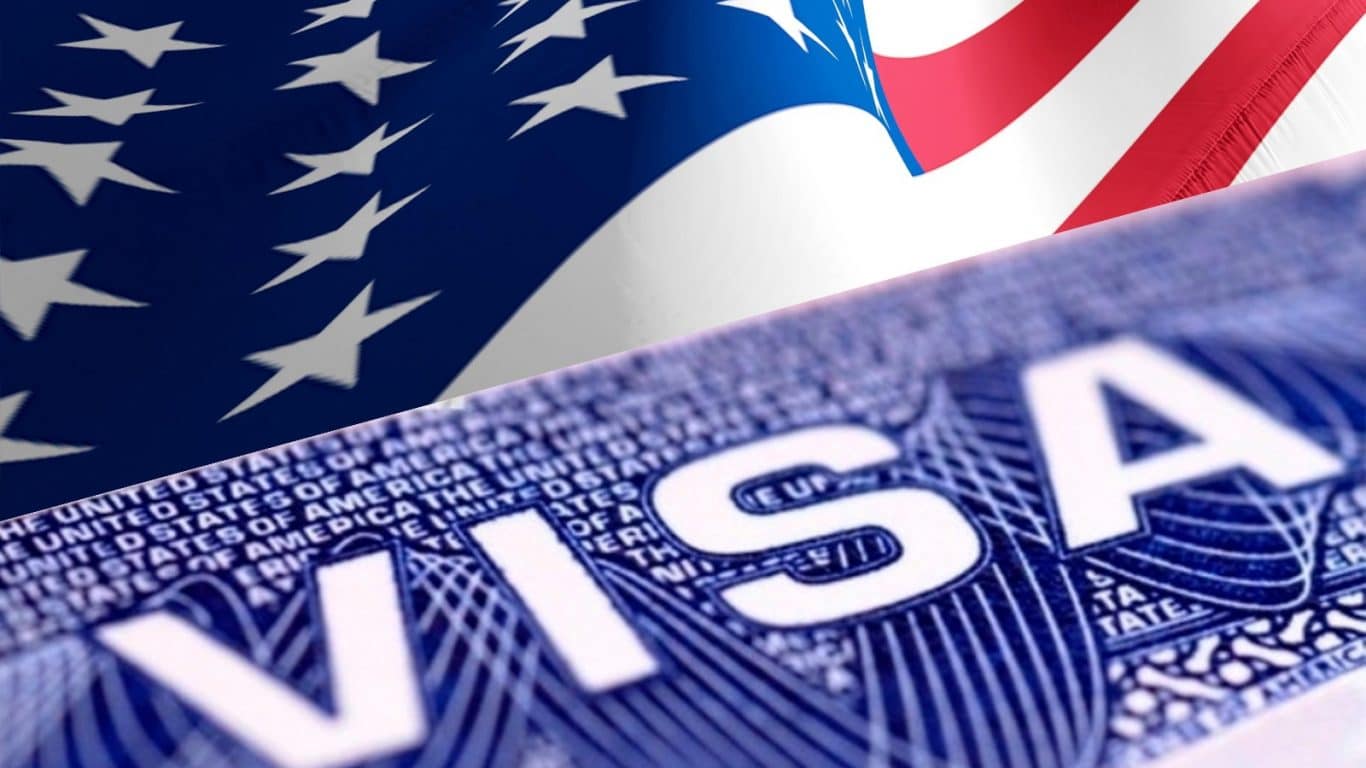



SOURCE- THE VIRGIN ISLANDS CONSORTIUM-Updated U.S. Department of State reciprocity schedules indicate that Dominican nationals seeking several U.S. nonimmigrant visas may now receive visa stamps valid for three months and limited to a single entry, a sharp shift from the longer multi-year, multiple-entry terms many travelers were used to.

Dominica is not the only country reflected in recent reciprocity tables with tightened terms. Antigua and Barbuda’s reciprocity schedule shows the same three-month, single-entry validity across key categories, meaning the change is not limited to Dominica alone. In contrast, other Caribbean countries continue to show longer validity and multiple-entry terms for certain visitor visas, underscoring that the updates vary by nationality under the reciprocity framework.
The reciprocity schedule governs the visa stamp’s validity period and number of entries for travel, but it is separate from the length of time a traveler is allowed to remain in the United States after admission. Authorized stay is determined at the port of entry and reflected on the I-94 record, which is not the same as the visa stamp’s validity window.

Why this may be happening

The tightening of visa validity for Dominica and Antigua and Barbuda comes against the backdrop of intensifying international scrutiny of citizenship-by-investment programs, often called “golden passport” schemes. Investigative reporting in recent years has raised concerns that some individuals who obtained Dominican citizenship through investment later appeared in law-enforcement or sanctions-related contexts, prompting questions about the strength and consistency of vetting. U.S. government assessments cited in public reporting have also criticized due-diligence standards in Dominica at points in the past, while European Union institutions have warned that screening and vetting across five Eastern Caribbean investor-citizenship countries may not be sufficient to prevent security risks tied to visa-free travel. In late 2025, Reuters reported that U.S. actions expanding travel restrictions to include Dominica and Antigua and Barbuda were linked to national security concerns focused on passport security and citizenship-by-investment programs. Together, those developments provide context for why U.S. visa policy and visa validity rules could be tightening for nationals of countries operating such programs.
Dominica’s CBI program and the controversy around it

Dominica has operated a citizenship-by-investment program for decades, allowing qualified applicants to obtain citizenship through set investment routes, including contributions to government funds and approved real-estate options. The program has been a significant revenue source for the country, funding development priorities and public initiatives.
At the same time, Dominica’s program has drawn repeated scrutiny from external observers and media investigations. A major thread in that reporting has been whether the program’s transparency, disclosures, and due-diligence controls have consistently prevented problematic applicants from obtaining citizenship. Some investigations have alleged that the number of passports issued may have exceeded what was publicly disclosed at times, and others have highlighted cases involving applicants linked to criminal allegations or politically exposed backgrounds, renewing debate about how governments verify identity, background, and source of funds in a high-demand global passport market.

How Dominica compares to other Caribbean citizenship-by-investment programs
Dominica is part of a cluster of Eastern Caribbean jurisdictions offering citizenship by investment, alongside Antigua and Barbuda, Grenada, St Kitts and Nevis, and Saint Lucia. These programs share a similar economic purpose—attracting foreign capital for national development—but they differ in structure, price points, and branding.
- Dominica typically centers on government-fund contributions and approved real estate, with published minimums that now reflect higher thresholds than in earlier years.
- Antigua and Barbuda also offers a government fund option, plus approved real estate and other pathways, with published minimum contribution amounts and requirements that differ from Dominica’s.
- Grenada runs its program through its investment migration agency with a national development fund route and real-estate options, with published minimum contributions that differ by pathway and family composition.
- St Kitts and Nevis, which has one of the region’s longest-running programs, offers a government contribution route under updated branding and approved investment options.
- Saint Lucia offers multiple qualifying routes, including a national fund pathway and other investment avenues, with its own minimums and program mechanics.
In response to growing external pressure—particularly around due diligence, agent oversight, and harmonized standards—Eastern Caribbean governments have also moved toward deeper regional coordination. Public documents and announcements describe steps toward a regional regulatory framework intended to strengthen governance, unify baseline standards, and reduce “weak link” risk across the participating programs.
For travelers and applicants, the immediate practical impact of the updated U.S. reciprocity tables is straightforward: new visa stamps, if issued in affected categories, may be valid for a shorter period and allow fewer entries than before. The broader policy context suggests the issue is not confined to Dominica alone, but connected to wider security and credibility concerns now shaping how major partners evaluate investor-citizenship jurisdictions.
Advertise with the mоѕt vіѕіtеd nеwѕ ѕіtе іn Antigua!
We offer fully customizable and flexible digital marketing packages.
Contact us at [email protected]

Related News
Antigua and Barbuda U20 Benna Boys Set for CONCACAF U-20 Championship in Costa Rica

Media Houses Cautioned Over Detailed Reporting in Nigel Christian Murder Trial
Rubio flies into the Caribbean for talks with leaders unsettled by Trump policies