Angry Dutch farmers blamed for railway sabotage: What happened?
 16 September 2026
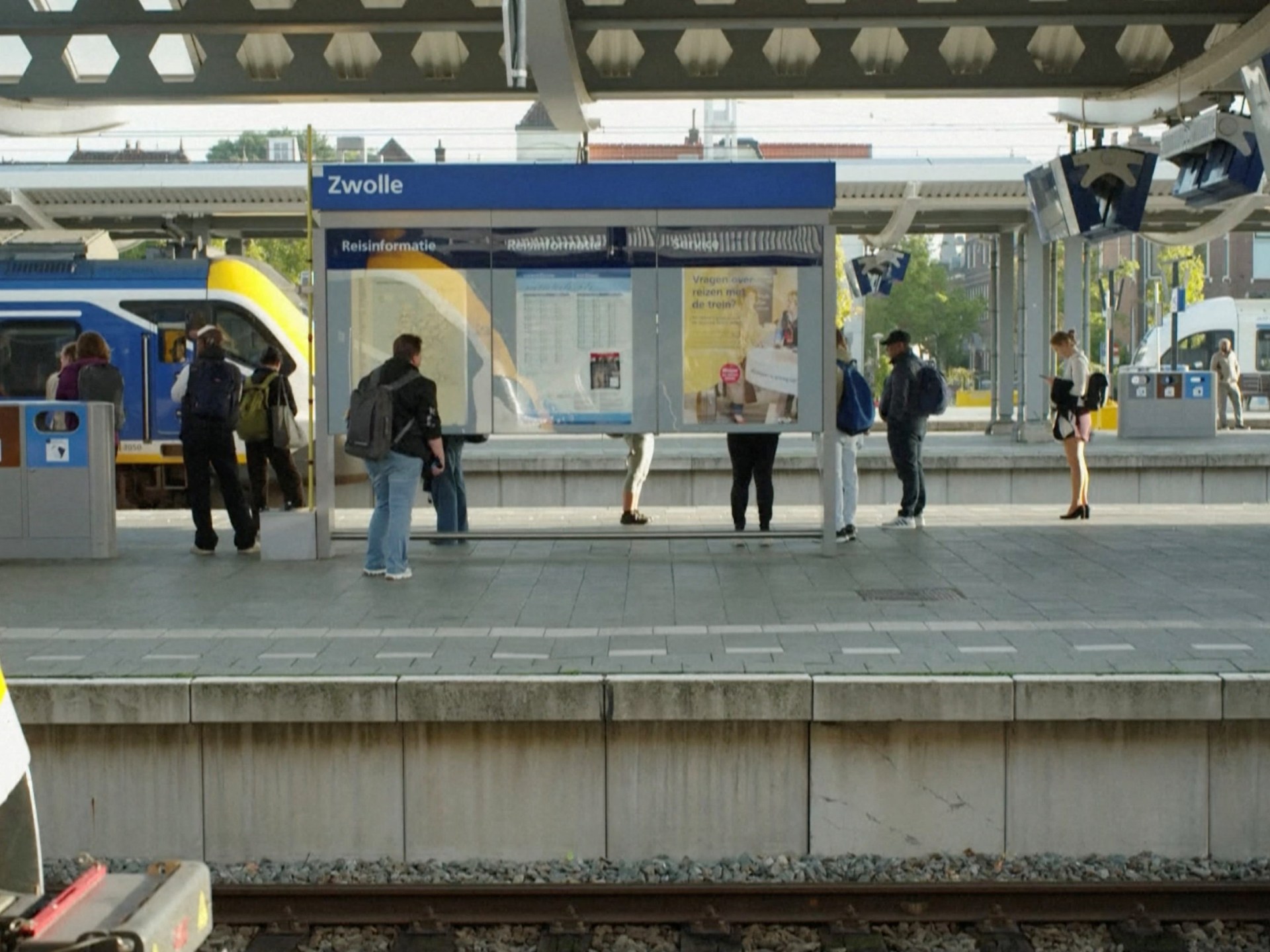

Railways in the Netherlands suffered massive disruption on Tuesday when pipes, cables and other materials were placed on dozens of tracks, halting trains and upending the commutes of hundreds of thousands of passengers.
While no one has been blamed for the suspected sabotage, the incident coincides with mass protests by farmers angered by government environmental policies, and took place amid reports in local media that farmers had discussed taking direct action against the railways.
- list 1 of 3Four railway workers killed by express train at station in Japan
- list 2 of 3Train crashes into truck at railway crossing in Gdansk, Poland
- list 3 of 3Trains get hack warning
end of list
The Tuesday, September 15 incident is being investigated by police.
So what happened, why are farmers under suspicion, and why would anyone target a railway?
What happened on the Dutch railways?
Trains in the Netherlands came to a standstill on Tuesday morning, causing delays and cancellations for passengers across central and northern parts of the country.
It emerged that items on the tracks had caused trains to be halted.
“Materials were found in several places along tracks that were deliberately placed there. This is causing section failures. It seems to be sabotage,” ProRail, the country’s rail infrastructure operator, said in a statement.
ProRail’s interim CEO Mirjam van Velthuizen said the incident demonstrated how dependent the Netherlands is on its railways and called for greater investment in contingency planning.
“In a world where uncertainties are increasing, we must ensure that the railway can absorb disruptions, that the impact remains limited as much as possible, and that we can recover as quickly as possible,” she said.
Advertisement
ProRail said there were no injuries reported.
“Placing materials on the tracks is extremely dangerous and unacceptable, and fortunately, it did not lead to any accidents today,” it said.
Sabotage is suspected by the Dutch police, which is investigating.
What sort of sabotage is suspected?
Pipes and cables had been fixed to railway tracks, causing at least 35 signal failures across the country’s network of trains, ProRail said.
“It appeared that pipes and cables had been laid on the tracks, causing our system to believe that a train was standing on the tracks,” the operator said. That caused the automatic system to change signals to red, preventing trains from passing.
“Unauthorised” materials were found in at least 20 locations in the rail network, the operator said.
The sabotage had been going on since Monday, according to some reports. In one case early on Monday, a train “struck metal” on the track near Steenwijk, in the country’s east, according to media reports.
ProRail said there was no damage because the train was not travelling at full speed.
Why are farmers under suspicion?
While the perpetrators have not been found, Dutch media has reported speculation that angry farmers are behind the sabotage.
ProRail sources told broadcaster NOS that they had spotted farmer groups discussing taking direct action, including by fixing metal pipes to train lines, on social media groups.
Farmers in the Netherlands have taken similar action in the past, in protest against the government’s nitrogen policy.
The Farmers Defence Force (FDF), a protest and advocacy group, said it was not behind the railway sabotage, but did not rule out individual farmers being responsible.
The activist group did, however, say members set hay bales and car tyres alight along various roads across the Netherlands on Tuesday afternoon, on the government’s budget day of Prinsjesdag, in protest.
FDF opposes planned government policies requiring farmers to reduce nitrogen emissions, arguing that they are being unfairly blamed for nitrogen pollution.
According to the United States Environmental Protection Agency (EPA), agriculture accounts for 60-80 percent of human-driven nitrogen emissions. “While nitrogen is a natural and necessary nutrient for growing food, modern industrial farming practices introduce far more nitrogen into the ecosystem than the earth and crops can naturally absorb,” the EPA states.
But farmers in the Netherlands say reducing these emissions will substantially increase the cost of livestock farming and force some agricultural businesses to reduce production or close down.
Advertisement
“We feel like the country is on fire. Farmers feel as though their businesses are on fire because of the government’s plans”, FDF spokesperson Sieta van Keimpema told Reuters.
The government has promised financial compensation for farmers whose businesses are hit by the proposals.

Why would saboteurs target railways?
According to the Mineta Transportation Institute (MTI) in San Jose, California in the US, railways have been targeted by groups ranging from al-Qaeda to India’s Maoist guerrilla fighters to extreme environmental groups in Europe.
“Derailments are intended to cause casualties, while attacks on tracks and other right-of-way infrastructure are primarily intended to cause disruption and attract attention,” a 2018 report by the institute explains.
Because of the expansive nature of a railway network, it is impossible to completely defend it from sabotage, making it an easy target for those seeking to cause disruption.
MTI’s database shows that between 1970 and the end of 2017, there were a total 282 attempts to deliberately derail trains and 817 additional attacks on railway infrastructure, including tracks, bridges, tunnels, signalling and other right-of-way equipment.
Western Europe has suffered the second-highest number of derailment attempts globally, at 10.6 percent, after South Asia, where the majority of railway attacks take place.
“The European groups have sought to attract public attention to their issues that motivate them and cause disruption. Their actions resulted in inconvenience, but no casualties,” said MTI in its report.
Where else has railway sabotage happened in Western Europe in recent years?
French media reported a derailment in Normandy on Friday that is also suspected to be an act of sabotage. A section of rail found on the track may have caused the crash, according to prosecutors, the BBC reported.
In July, the “Angry Birds Commando” group, a radical environmentalist group, said it had placed incendiary devices on the railway line between Cologne and Dusseldorf, in protest against industrial technology causing the destruction of the environment, Deutsche Welle reported.
Related News
Ed Sheeran concert set to go ahead after outcry over Gaza

China willing to ‘safeguard Iran’s legitimate rights’, official says

Hamas slams Board of Peace for refusal to work with UNRWA in Gaza