US court rules against Trump administration in California voting case
 26 October 2026
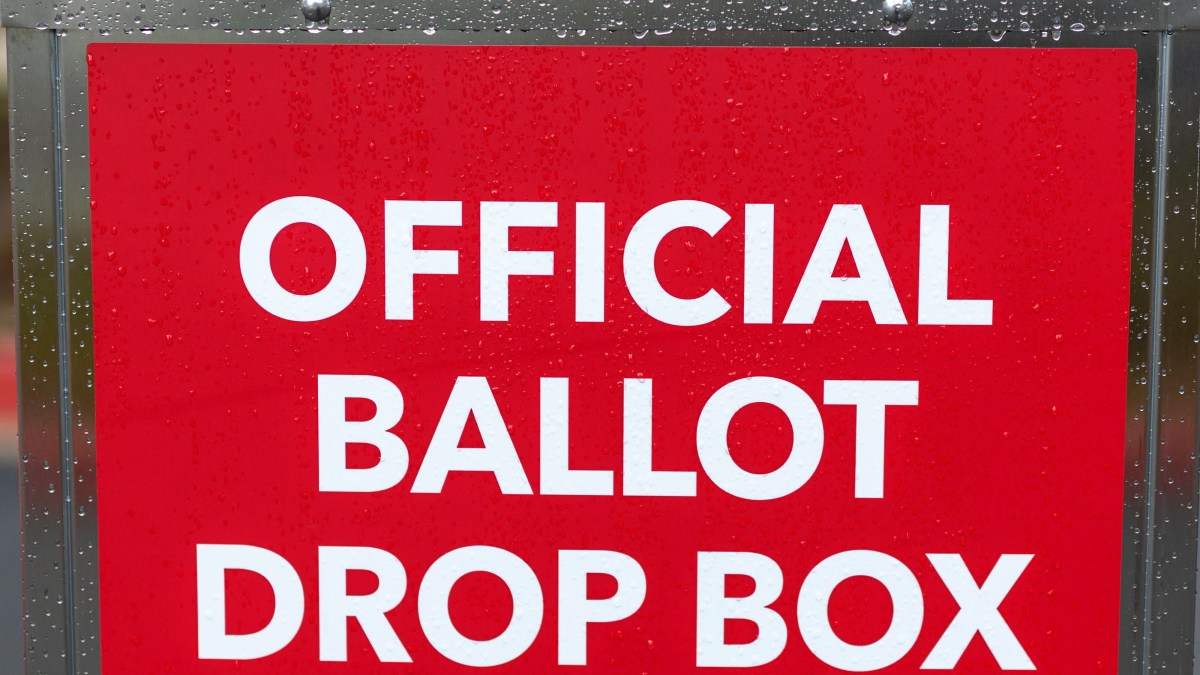

A United States appeals court has ruled against the administration of President Donald Trump in its bid to block the state of California from counting certain mail-in ballots this election cycle.
In a decision on Monday, the 9th US Circuit Court of Appeals denied a request from the government to sequester roughly 20,000 mailed ballots ahead of the November 3 midterm election.
- list 1 of 3US appeals court sceptical of Trump’s lawsuit over California voter rolls
- list 2 of 3All you need to know about US midterms 2026
- list 3 of 3US judge blocks federal operations seeking to identify non-citizen voters
end of list
The Trump administration had asserted that the ballots were sent to people who are “likely” non-citizens.
But it has not publicly revealed how it created its list or determined that the voters identified upon it were ineligible due to their citizenship status.
In a two-to-one decision, the appeals court said the Trump administration had not given lower courts enough time to review the case. It therefore declined to stop California’s ballot tabulation.
The court’s majority also underscored that election administration was the state’s responsibility under the US Constitution.
The Trump administration was asking “the federal court to dictate to a state legislature a matter squarely within the state’s traditional domain”, Judge Gabriel Sanchez wrote in his opinion.
Sanchez also warned that granting the Trump administration’s petition would be “inviting disorder and confusion for voters and election officials alike”.
The Trump administration filed its lawsuit against California on October 15, less than three weeks before the midterm vote on November 3.
California is a Democrat-led state, and Trump, a Republican leader, has repeatedly made unfounded claims that the state is prone to “cheating” in its elections.
Advertisement
The case is currently being weighed in a lower court, with a hearing scheduled for Tuesday.
But the Trump administration sought an expedited decision from the appeals court, pointing to the looming election date.
The midterm elections are critical to determine which political party holds power in Congress.
Currently, the Republican Party maintains slim majorities in both the House of Representatives and the Senate, but experts project the Democratic Party is on track to make significant gains, flipping one or both chambers.
In the lead-up to the midterms, Trump has raised the prospect of non-citizen voting as a threat to election integrity.
But experts say such voting is rare. California officials have likewise cast doubt on the administration’s claims of 20,000 ballots going to “likely non-citizens”, and they framed the administration’s lawsuit as an effort to interfere in the voting process.
“At best, this litigation is a reckless political stunt,” lawyers for California Secretary of State Shirley Weber said in a court filing on October 20. “At worst, it threatens to disenfranchise thousands of Californians this election.”
Trump’s Department of Justice has sued 30 states and Washington, DC, for complete access to voter rolls that include sensitive personal data.
It has argued that releasing such information is necessary to prevent alleged voter fraud.
But the department has lost 26 of those cases thus far, with opponents successfully arguing that such manoeuvres could scare away voters and interfere with state election administration.
The Trump administration has yet to win any of the 30 cases.
Despite claims to the contrary by Trump and his allies, cases of illegal voting, including by non-citizens, are few and far between. Non-citizens are barred from participating in federal elections in all 50 states in the US.
In July, an investigation by the news service Reuters found only 129 cases of noncitizens being charged by federal authorities with illegal voting since 1996.
Many of those cases involved mistakes, like administrative errors or individuals being uncertain of voting rules, rather than fraudulent intent.
Voting rights advocates have also pointed to flaws in how the Trump administration has identified potential non-citizen voting, signalling some eligible voters may be disenfranchised as part of its efforts.
Immigration agents under Trump have been assigned to ferret out non-citizen voters, in some cases knocking on doors to inquire about the citizenship status of the residents inside.
Advertisement
Last week, the administration charged 28 immigrants in California with illegally voting.
But reporting from the Los Angeles Times found that some of the accused reacted to the charges with confusion and maintained that they never registered to vote.
Trump has a history of promoting false claims of election fraud in order to justify greater federal influence over the voting process.
In 2020, he lost his bid for re-election to Democrat Joe Biden, but he denied his defeat, instead blaming vote “rigging”. That claim prompted some of Trump’s supporters to storm the US Capitol on January 6, 2023, in an apparent effort to halt the election certification.
Related News

Child, four women among Palestinians injured in West Bank pogroms
Trump’s ambassador to Greece asked to resign amid misconduct allegations
Kenya confirms first Ebola case after patient from DR Congo dies in Nairobi