Swiss voters set to reject tighter neutrality rules in referendum
 27 September 2026
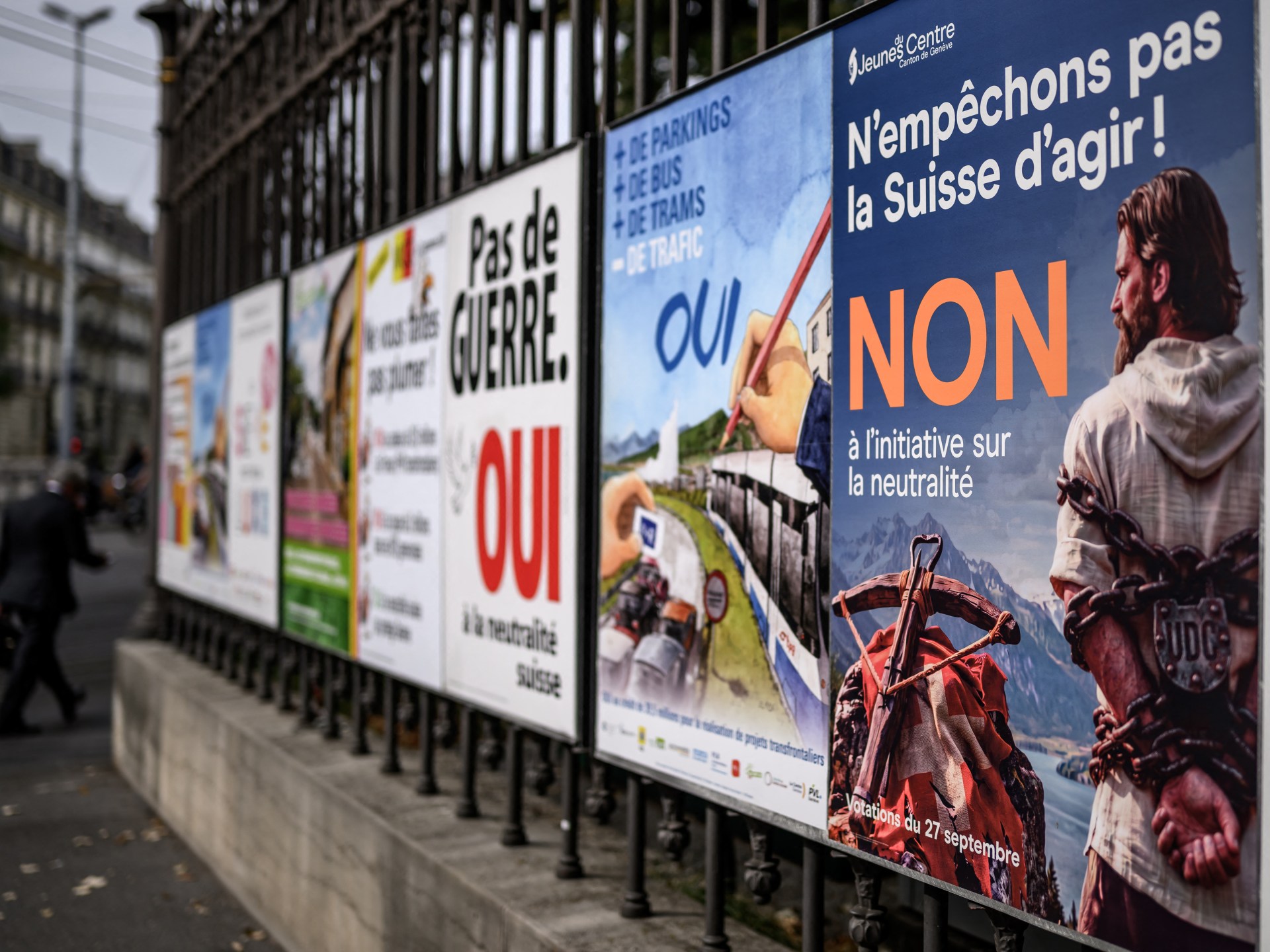

Swiss voters appear to have overwhelmingly rejected a proposal to impose stricter constitutional limits on the country’s longstanding neutrality.
About 71 percent voted against the initiative in a referendum on Sunday, according to a projection by the polling institute GFS Bern for the Swiss public broadcaster SRG.
- list 1 of 2Iran shifts trade north to Caspian Sea as war impairs Strait of Hormuz
- list 2 of 2Switzerland’s neutrality vote is asking the wrong question
end of list
The result would preserve the government’s ability to impose sanctions and cooperate with NATO, the transatlantic military alliance whose members include most of Switzerland’s larger neighbours, rather than lock those choices into a narrower constitutional definition of neutrality.
The initiative sought to define Swiss neutrality as “perpetual and armed”.
It would have barred Switzerland from joining or cooperating with military and defence alliances unless the country was under attack or an attack was imminent while allowing sanctions against states at war only when approved by the United Nations Security Council.
Pro Switzerland, a group that campaigns for national sovereignty, organised the initiative, which was backed by the right-wing Swiss People’s Party (SVP), Switzerland’s largest party.
Supporters argued that joining European Union sanctions against Russia and expanding security cooperation with NATO had weakened the country’s traditional neutral role.
The Swiss government, parliament and nearly all major parties opposed the proposal, saying it would leave the country less able to respond to international crises.
SRG said it projected about 29 percent support for the initiative.
Advertisement
The argument over neutrality sharpened after Russia launched a full-scale invasion of Ukraine in 2022.
Switzerland largely adopted EU sanctions against Moscow, prompting criticism from Russia and from supporters of stricter neutrality, who said the Swiss government was taking sides.
Switzerland has been internationally recognised as neutral since 1815, and neutrality has formed part of its federal constitutional framework since 1848.
Current policy still allows the country to cooperate with other states on security and to join sanctions while remaining outside military alliances.
The vote, therefore, centred less on whether Switzerland should remain neutral than on how much freedom its government should retain in applying that principle as Europe’s security environment changes.
Related News

Russian strikes kill two in Kyiv as Moscow targets capital’s fuel stations

US plans to sanction another bank to keep economic pressure on Iran
More than 112,000 displaced by Yemen fighting; thousands flee to Djibouti