What will happen to Trump’s agenda after Lindsey Graham’s death?
 13 July 2026
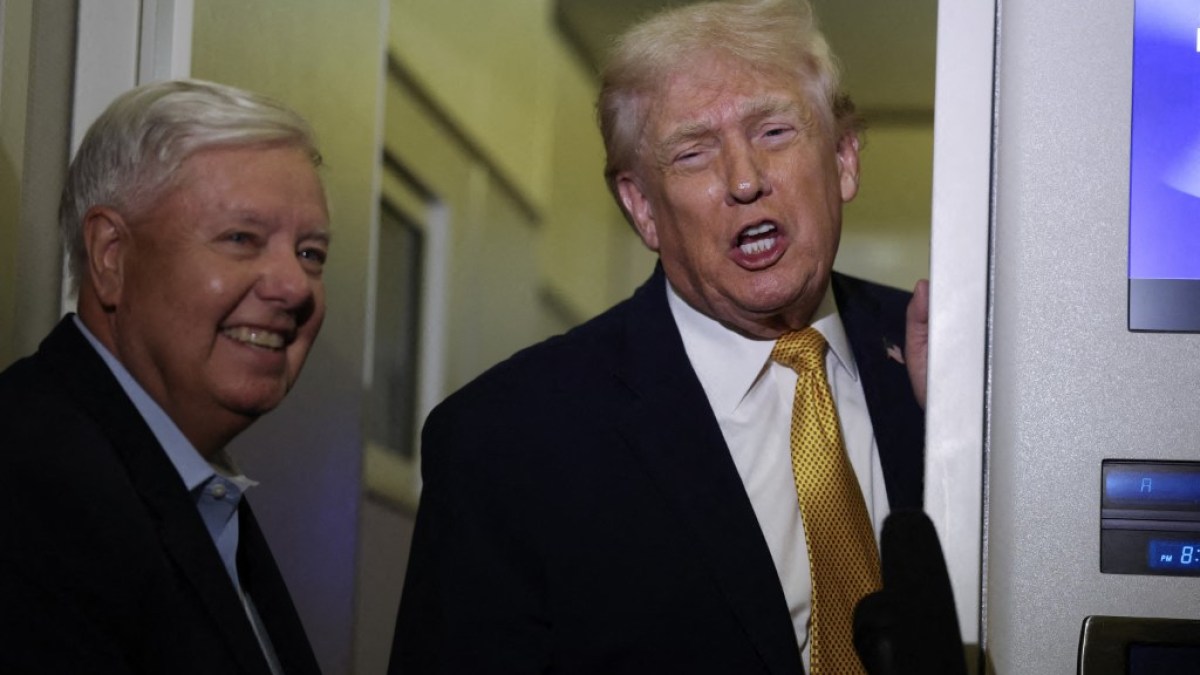

The sudden demise of longtime United States Senator Lindsey Graham could impact the country’s politics and upend the US Congress’s balance of power ahead of midterm elections scheduled later this year.
The 71-year old Republican Party politician was a close ally of President Donald Trump in the Senate, both on domestic and international matters, including the ongoing US-Israel war on Iran.
- list 1 of 3Leading US Democrats withdraw support for Platner after assault allegations
- list 2 of 3Republican Lindsey Graham dies at 71: World leaders, US politicians react
- list 3 of 3What made US Republican Senator Lindsey Graham a controversial figure
end of list
So how will his death impact Trump’s agenda? And what effect will it have on the Senate?
Here’s what we know:
What did Trump say on Graham’s death?
On Saturday evening, shortly after returning from a business trip to the Ukrainian capital, Kyiv, emergency services were called to Graham’s residence, according to US media reports.
Graham’s office initially said he died of a “sudden and brief” illness. It later shared that the preliminary medical examiner found that he had died after a tear in his aorta. The aorta is the main and largest artery in the human body, and a dissection in it is life-threatening.
Graham was scheduled to appear on an NBC news talk show on Sunday morning. Trump instead joined the programme and hailed his late ally as a “natural-born, hard-working politician skilled at dealing with people” from both major US parties.
“He’s a tough one to lose. He was great. He was unique in every way, actually,” Trump said by telephone.
He said they had spoken on Saturday evening as Graham returned from Ukraine, and they made tentative plans to meet on Sunday. “It could have been his last call,” Trump said.
Advertisement
He added that he could not believe that Graham was dead. “He was like a member of the family to me.”
What does his death mean to the Senate?
Graham’s death has narrowed the Republican Party’s majority in the Senate, now reduced to 51 in the 100-member chamber, after Senator Mitch McConnell on Sunday said a fall had led to his hospitalisation and he would not return to the Senate “quite yet”.
Graham’s passing and McConnell’s absence will temporarily whittle down the Republican majority in the chamber by two, compared with 47 in the Democratic caucus.
The reduced majority may create difficulties for the Republicans as they try to increase the budget for military funding and confirm Trump’s nominees ahead of the midterm elections.
As the US continues to strike Iran, it is unclear whether Graham’s death will impact how the Senate votes on continuing to fund the war.
But on Sunday, Iranian state television announced the passing in openly hostile terms. “I congratulate the great nation of Iran on Lindsey Graham, the warmongering and anti-Iranian US senator, having gone to hell,” the anchor said.
Trump said Graham knew how to get the Democrats to compromise and approve the US president’s policies.
“He could go in and get something approved,” Trump told NBC on Sunday. “He would just get people on his side. I wouldn’t often ask, but if I had a problem with a Democrat, he could work it out.”
Also on Sunday, Democratic Senator Richard Blumenthal said on X that while his views often differed with Graham, “he listened to me & others who might have opposing views & sought to bridge our differences”.
“There were so many important things we disagreed about, but he never let that stop him from trying to seek common ground where it could be found,” he posted.
What happens to the US stand on Ukraine?
Graham was among the US Congress’s strongest advocates for military aid to Ukraine in its fight against Russia.
A day before his death, he had met Ukrainian President Volodymyr Zelenskyy in Kyiv. “This is already his 10th visit to our country, and we appreciate this support,” Zelenskyy wrote on X.
Ian Lesser, a distinguished fellow and adviser to the president at the German Marshall Fund of the US, told Al Jazeera that leaving aside his varying relations with Trump and the Make America Great Again (MAGA) movement, Graham embodied a hawkish and security-driven approach to US foreign policy.
“His supportive stance on Ukraine and assertive posture towards Russia has arguably pulled US policy closer to the transatlantic mainstream, even for an administration inclined towards a different approach,” he said.
Advertisement
“He also embodied a more positive stance towards American alliances, especially NATO, in a manner reflected elsewhere in the Senate. It is a view that could shape ongoing debates about the US security presence in Europe,” Lesser noted.
“His loss could weaken these more cautious voices as the US reviews its force posture in the theatre,” he added.
Who will be Graham’s replacement?
South Carolina Governor Henry McMaster must choose a temporary replacement for Graham, who can serve until January while the state also prepares a special primary so voters can choose a new Republican nominee for the general election.
“In case of a vacancy in the office of United States Senator from death, resignation or otherwise, the governor may fill the place by appointment,” the law says.
A primary will be held next month to determine who will take his place as the Republican nominee. The first round of voting is set for August 11, and if no candidate wins a majority of the votes, a run-off would take place on August 25.
It is so far unclear who McMaster might select as Graham’s replacement. The governor might appoint a placeholder candidate who would fill the seat without seeking a full term in November’s midterms, to avoid influencing the election process.
In Graham’s case, however, the White House might weigh in. Trump has suggested that he is considering backing a candidate to replace the senator.
“I have somebody that I think would be great, but I don’t want to say it now because it’s just too soon with Lindsey,” the US president told NBC News on Sunday.
“I don’t want to even talk about anybody, but I do have somebody that I think is really good.”