Cuba’s foreign minister observes ‘no progress’ in US negotiations
 30 June 2026

Cuban Foreign Minister Bruno Rodriguez has described negotiations with the United States as hitting a wall, with no breakthroughs made towards ending sanctions against the Caribbean island.
“The discussions between the Cuban and US governments are showing no progress,” Rodriguez told a news conference on Tuesday.
- list 1 of 3Donated milk reaches Cuba amid deepening shortages
- list 2 of 3Ramiro Valdes, one of Cuba’s last living revolutionary figures, dies at 94
- list 3 of 3US Supreme Court OKs ExxonMobil lawsuit over Castro-era property seizure
end of list
He proceeded to reflect on the ongoing negotiations with the government of US President Donald Trump, who has heightened pressure on the Caribbean island since returning to office for a second term.
“The conduct of US government delegations — generally respectful — has been accompanied by constant threats against Cuba, the application of coercive measures, and offensive statements regarding our country’s independence,” Rodriguez said.
Since the 1960s, the US has imposed a total trade embargo on Cuba, as part of a long-running dispute with the island’s communist leadership.
But Trump has signalled he would like to see regime change in Cuba, and in January, he effectively severed Cuba’s supply of foreign oil by threatening tariffs against any country that provided it with fuel.
Trump has also mused about taking military action against Cuba once the US-Israel war against Iran comes to a close.
In March, Cuban officials confirmed they were in talks with the Trump administration, though the details of those negotiations have not been confirmed.
Reports emerged shortly afterwards that Trump was seeking the resignation of Cuban President Miguel Diaz-Canel, but the Cuban government has publicly refused such demands.
Advertisement
On Tuesday, Rodriguez said that, despite the impasse, Havana “will remain open to dialogue”.
He also accused the US of attempting to scuttle a planned debate at the United Nations General Assembly on July 7 to discuss Washington’s sanctions.
Nearly every year, the UN votes overwhelmingly to back a symbolic resolution urging the US to end its record-long embargo on the Cuban economy.
Rodriguez explained he called for the July 7 session out of concern for the growing tensions with the US.
“It’s urgent because the multi-faceted aggression of the US government against Cuba is already ongoing and intensifying,” Rodriguez said.
He also warned that the US Department of State, he said, was “pressuring and intimidating” UN members not to take part in the debate.
Since the Trump administration began its pressure campaign this year, Cuba has taken measures to address the long-running human rights concerns that have dogged its government.
In April, for instance, the government pardoned 2,010 prisoners in a so-called “humanitarian gesture”, though critics noted that the release did not include political dissidents jailed for “crimes against authority”.
Then, earlier this month, Cuba’s Communist Party approved several free-market reforms as part of an emergency economic package.
Those reforms included increased opportunities for private enterprises and foreign investment in Cuba, measures which would loosen the government’s grip on the economy.
Despite the unprecedented economic reforms, Cuba has declared its political model is not up for discussion and has pledged to resist any US invasion.
It has also denounced the US oil blockade and other sanctions as a form of collective punishment.
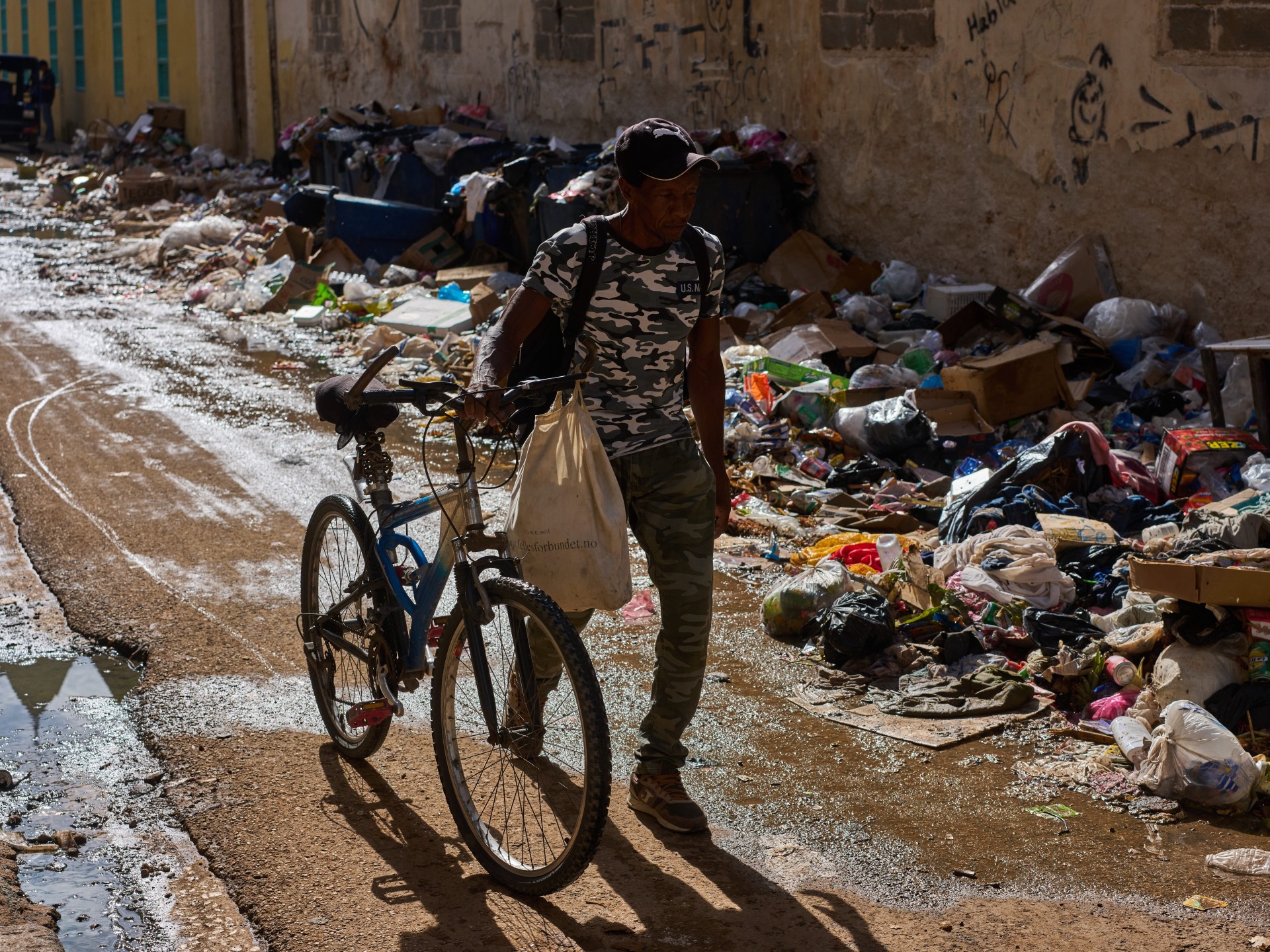
Cuba’s ageing energy grid is heavily reliant on fossil fuel products from abroad. Since January, however, that supply has all but ended, with only one Russian oil tanker reaching the island in March.
The resulting fuel shortages have exacerbated recurring power outages that can last up to 40 hours at a stretch. Public transportation has come to a halt in some areas, and hospitals are struggling to keep the electricity flowing.
At Tuesday’s conference, Rodriguez accused the US sanctions of “causing deaths” in Cuba.
His remarks echoed concerns from top humanitarian authorities, including Volker Turk, the UN’s high commissioner for human rights.
Last week, he pointed to statistics showing the infant mortality rate had doubled to nearly 9.9 for every 1,000 births.
“Children are dying because doctors lack access to essential medical supplies and medicines. This is unacceptable,” Turk said in a statement. “These sanctions must be lifted immediately.”
Advertisement
Still, Trump and his Secretary of State Marco Rubio, a Cuban American, have continued to increase pressure on the island.
In early June, the US imposed sanctions on President Diaz-Canel, his wife and stepson, as well as the son and a grandson of former President Raul Castro, the brother of the late former leader Fidel Castro.
The Trump administration also issued an arrest warrant last month against Castro, accusing him of participating in the 1996 downing of two activist planes, killing four.
The US also recently levied sanctions against the island’s state-owned oil and gas company, Union Cuba-Petroleo.
In a statement, Rubio, who has been hawkish towards the Cuban government, argued that Havana’s mismanagement is to blame for the worsening humanitarian crisis on the island.
“While the Cuban people have suffered fuel shortages and blackouts because of decades of under-investment in critical infrastructure, Cuba’s Communist leaders have diverted energy resources to line their own pockets,” Rubio wrote.
It has been nearly five months since the island was put under the US fuel blockade.
Related News
Photos: Israeli forces raid occupied West Bank’s Qalandiya refugee camp
Tate brothers arrested in Miami as UK adds rape, trafficking charges
Ukraine’s Zelenskyy meets with far-right US activist Laura Loomer