Food inflation hammers households in war-hit Iran
 10 May 2026
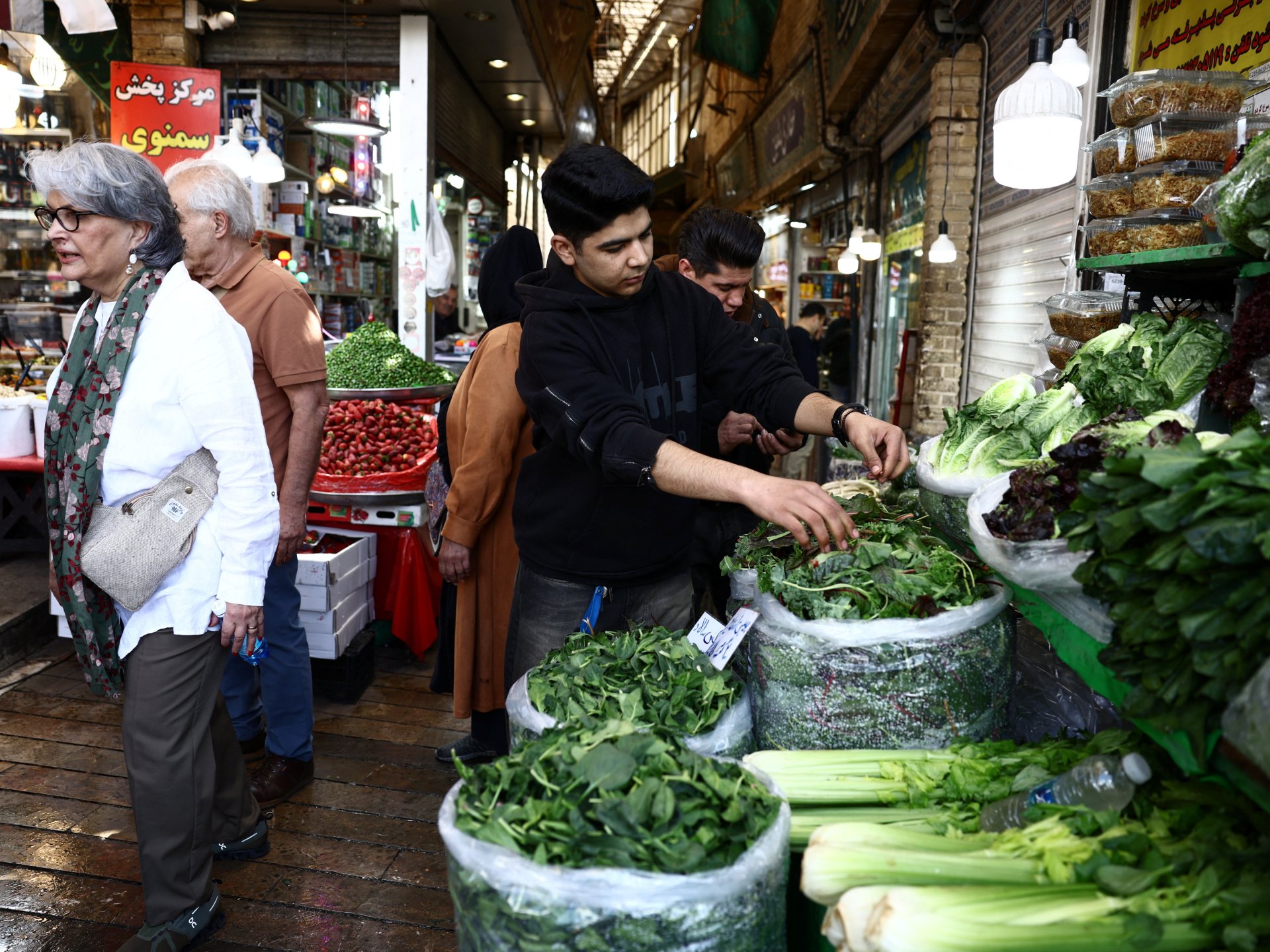

Tehran, Iran – Skyrocketing inflation is jeopardising food security among households in conflict-hit Iran, new figures show, as diplomatic efforts to end the war launched by the United States and Israel intensify.
“The people must realistically understand the conditions and restrictions of the country,” President Masoud Pezeshkian told a group of officials who gathered on Sunday to discuss rebuilding structures damaged or destroyed in US and Israeli attacks.
“It is natural that there are difficulties and problems in this path, but through people’s cooperation and reliance on national cohesion, problems can be solved,” he was quoted as saying by state media.
Pezeshkian’s comments came a day after the Statistical Center of Iran (SCI) said Farvardin, the first month of the Persian calendar year that ended on April 20, had an inflation rate of 73.5 percent compared to the same month of the previous year. The SCI also noted that inflation was five percent higher in Farvardin compared to the previous month.
The Central Bank of Iran, which reports figures based on a different method and with different data sets, reported a slightly lower inflation rate of 67 percent for Farvardin compared to a year earlier, and a seven percent monthly increase.
Although not matched, both figures indicate a considerably accelerating pace for general inflation, which has been among the highest in the world over recent years, and is continuously making Iranians poorer.
A Tehran resident told Al Jazeera she could no longer afford some of the items she could just last month.
Advertisement
“And it’s not just me – I think most people in society right now can’t afford many of the things they want,” she said.
Figures from the institutions also showed that food inflation is much higher than headline inflation, meaning that people are increasingly forced to pay an expanding share of their shrinking salaries on basic items.
The SCI reported a staggering 115 percent food inflation rate for the first month of the year, compared to the same period the year before, with several staple items more than tripling in price.
Solid vegetable oil had the highest increase at 375 percent, followed by liquid cooking oil at 308 percent; imported rice at 209 percent; Iranian rice at 173 percent; and chicken at 191 percent. The lowest price hikes were for butter, at 48 percent, followed by infant formula at 71 percent and pasta at 75 percent.
Majid, a young man who works at a liver kebab shop in the capital, said the eatery has increased prices three times in recent months.
“The price of liver has doubled. When we ask suppliers why, they either say there’s a shortage or that sheep are being exported. Honestly, there’s no real oversight,” he said.
The state-run Consumers and Producers Protection Organization said in a directive sent to 31 governors across Iran on Sunday that new price hikes for cooking oil are “illegal” and “must be returned to previous levels”, without saying how officials expected that to happen amid deteriorating economic conditions.
The country’s embattled currency, the rial, has also been registering new all-time lows over the past two weeks. On Sunday afternoon, it stood at about 1.77 million against the US dollar in Tehran’s open market after marginally recovering. The rate was about 830,000 per US dollar a year ago.
The response from the government has included offering subsidies and coupons, while trying to crack down on acts such as hoarding that are perceived to be contributing to price hikes.
But this has not been accompanied by a clear macroeconomic stabilisation package as the US presses on with a naval blockade of Iranian ports.
As Iranian media reported on Sunday that Tehran had sent an official response to the text for an agreement earlier proposed by the US through mediator Pakistan, Pezeshkian said, “If there is talk of negotiations, it does not mean surrender.”

The government hands out monthly cash subsidies and electronic vouchers to buy essential goods at select stores, which together amount to less than $10 each month per person. Authorities are considering raising the amount, but a hefty budget crunch has made that more difficult.
Advertisement
Pezeshkian and Central Bank chief Abdolnasser Hemmati have said they are aware of the price increases, but have blamed the war that began in late February while coordinating with the judiciary to act against price gauging and hoarding.
A number of lawmakers in Iran’s hardline-dominated parliament, as well as state television hosts and outlets linked to the Islamic Revolutionary Guard Corps (IRGC), have said the price surges are suspicious. They have described the runaway prices as being part of an “economic revenge” campaign by enemies who suffered failures in the military arena.
“I want the people of Iran not to be fooled by the enemy-made price hikes,” a guest on state television’s Ofogh network said on Saturday. “Great things have happened, and great things are ahead. The economic achievements of the war are unrivalled by any other period.”
But some of the economic pain continues to be inflicted as a direct result of a near-total internet shutdown now being imposed by Iranian authorities for a 72nd day.
Numerous officials in the government, internet infrastructure firms, telecommunication companies and other state-linked organisations have emphasised that they are against a tiered internet system that is now being implemented. But they have said they bear no responsibility, since the blackout, which is expected to remain in place until the war ends, is ordered by the Supreme National Security Council.
In the meantime, the combined impact of local mismanagement, Western sanctions, blockade, war and the internet shutdown is squeezing people and businesses hard.
“The startup ecosystem of the country is dead, we are searching for a tombstone for it,” the Guild Association of Internet-based Businesses said in a statement on Saturday.
Related News
US Army says ‘Project Freedom’ in blockaded Hormuz has ‘just begun’
Could the US-Iran war become a protracted ‘frozen’ conflict?
China urges reversal of UNIFIL departure from Lebanon as conflict escalates