What’s the significance of UAE’s Fujairah, hit on Monday?
 05 May 2026
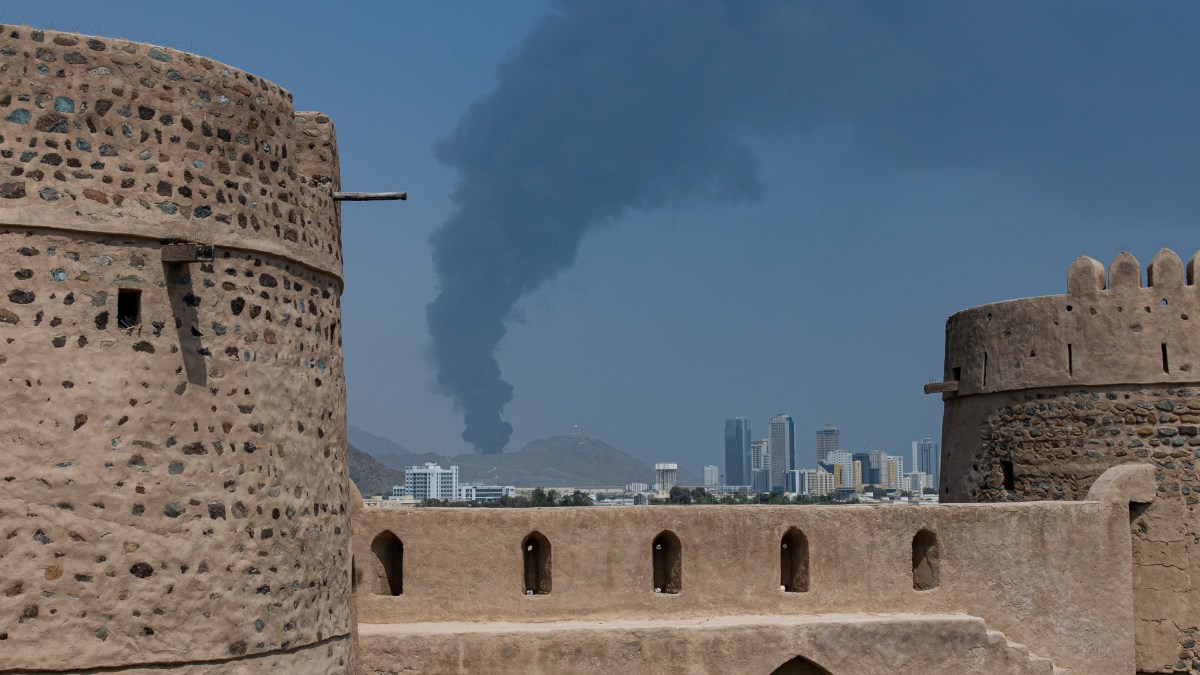

The United Arab Emirates (UAE) has accused Iran of launching “a barrage” of missiles and drones at the port of the eastern emirate of Fujairah, injuring three Indian nationals and setting an oil refinery at the Fujairah Petroleum Industries Zone ablaze.
The UAE’s Ministry of Defence said its air defences had “engaged” 12 ballistic missiles, three cruise missiles and four drones launched from Iran over the course of the day on Monday.
Iran’s state television reported that military officials laid the blame for the attacks on the “US military’s adventurism”.
Where is Fujairah?
Fujairah is one of the seven emirates of the UAE. It is home to a multipurpose deep-sea port, located on the Gulf of Oman.
The port lies about 70 nautical miles (roughly 130km, or 80 miles) outside the Strait of Hormuz and about 130km east of Dubai.
This is not the first time Fujairah has been targeted. On April 6, authorities in the emirate said they were responding to an “incident” in which a drone approached from Iran towards the building of the telecommunications company, du. They did not say whether the drone struck, and did not report any injuries.
The port serves multiple purposes. It is the terminus of the Habshan-Fujairah oil pipeline, also known as the Abu Dhabi Crude Oil Pipeline (ADCOP).
This 380km (235-mile) pipeline runs from Habshan, an oil and gasfield in southwestern Abu Dhabi, to the port of Fujairah.
The pipeline, which became operational in 2012, can carry about 1.5 million barrels of oil per day (bpd).
Advertisement
This is significant because it makes the Habshan-Fujairah pipeline one of the key routes in the Middle East, which producers may turn to as they assess ways to offset the disruption caused by the closure of the Strait of Hormuz.
On Monday, US President Trump said US forces would begin escorting stranded ships through the Strait of Hormuz, signalling a direct challenge to Iran’s closure of the strategic waterway, through which 20 percent of the world’s oil and liquefied natural gas supplies are shipped in peacetime. Iran’s threats to attack ships have kept the strait effectively closed since US-Israeli attacks started on February 28.
The closure of the vital maritime corridor has sent oil and fertiliser prices surging around the world and prompted fears of a global recession and food crisis.
It is unclear how much oil is now being transported through the Habshan-Fujairah pipeline. However, oil exports from Fujairah do appear to have risen in the past month since the closure of the strait, averaging 1.62 million bpd in March compared with 1.17 million bpd in February, Kpler analyst Johannes Rauball told the Reuters news agency.
Besides this, the Fujairah port is a major global hub for ship refuelling and also provides general cargo, dry bulk and container services.
What has the response been to the attack on the UAE?
After a day of reported drone and missile attacks inside the UAE, including the one that caused a fire in an oil refinery at Fujairah, the UAE said Iranian attacks marked a serious escalation in tensions in the Gulf and it reserved the right to respond.
India’s Ministry of External Affairs said in an X post on Tuesday that the attack was “unacceptable”.
“We call for immediate cessation of these hostilities and the targeting of civilian infrastructure and innocent civilians,” the ministry said.
Iranian authorities released a map of what they said was an expanded maritime area now under Iranian control, stretching beyond the strait to include lengthy sections of the UAE coastline, sparking fears of further regional conflict.

Related News
Families forced into displacement by famine in Sudan

Maldives police raid news outlet over report alleging president’s affair

Uganda court sentences man to death for killing four children at nursery