‘Neither war nor peace’: What Gaza looks like six months into ‘ceasefire’
 10 April 2026
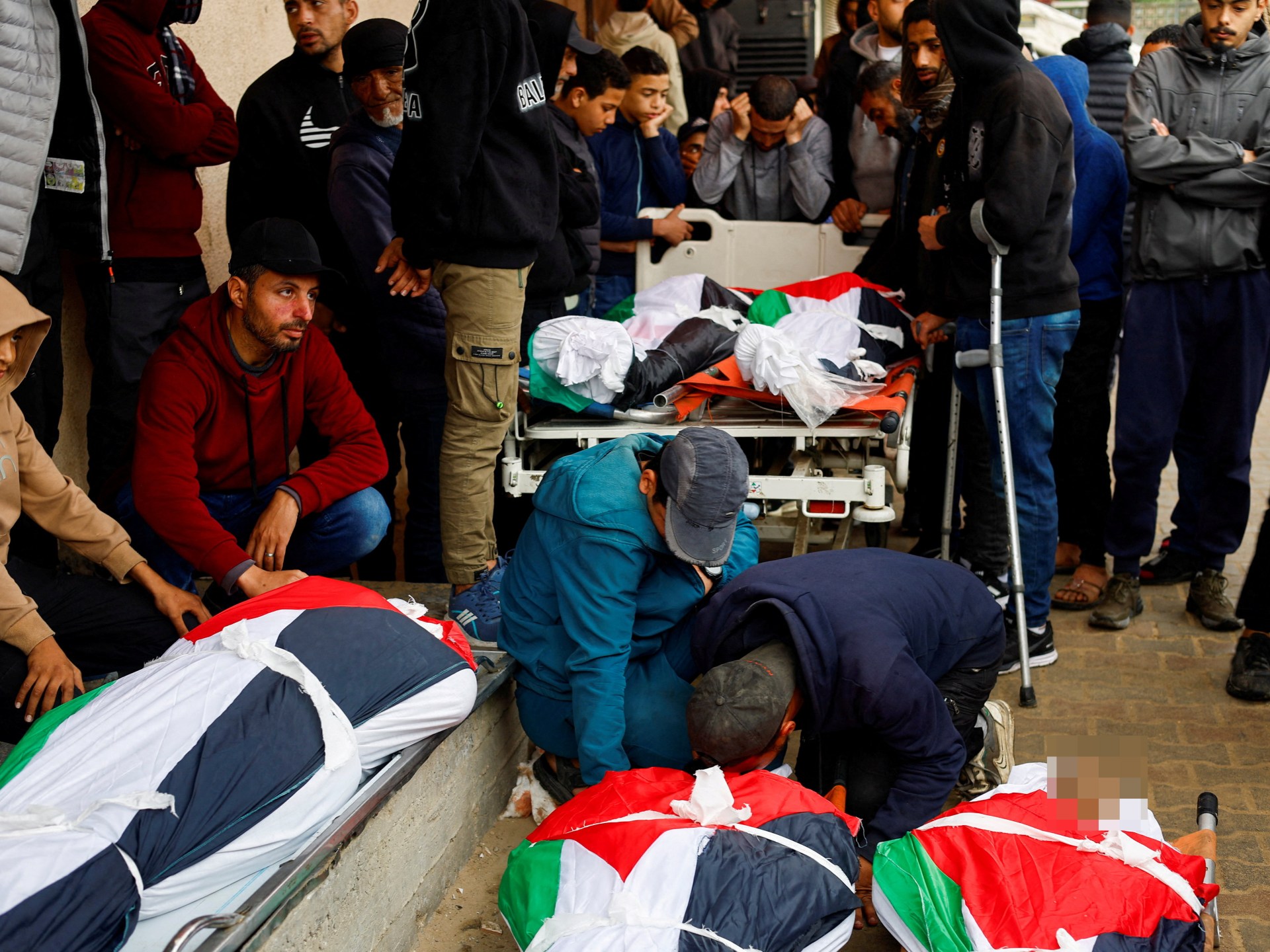

Gaza City, Palestine – Six months after a ceasefire agreement was signed on October 10, 2025, the reality on the ground in the Gaza Strip remains fragile, oscillating between relative calm and recurring escalation, with no tangible improvement in humanitarian or security conditions for Palestinian civilians.
The agreement between Israel and Hamas was brokered internationally after a devastating war lasting two years, resulting in more than 72,000 Palestinian deaths and tens of thousands of injuries. It was expected to mark a turning point towards ending the war and initiating a recovery phase for Gaza’s population.
- list 1 of 3Photos: Six months into ‘ceasefire’, Gaza suffers under Israeli attacks
- list 2 of 3‘How can I do this?’: Gaza families unable to bury dead months into truce
- list 3 of 3Gaza father searches for his children’s remains in the rubble for years
end of list
At its core, the agreement stipulated an immediate and comprehensive ceasefire, including the cessation of all ground and air military operations, alongside a gradual withdrawal of Israeli forces from within the Strip – particularly from populated areas – in order to reduce direct contact with civilians.
It also included expanded humanitarian arrangements, most notably the regular opening of border crossings like the Rafah crossing; enabling greater freedom of movement for individuals; and the improved entry of aid, including hundreds of daily trucks carrying food, medicine and fuel, with guarantees that assistance would reach all areas of the Strip without obstruction.
In parallel, the agreement outlined a reconstruction framework under international supervision aimed at rehabilitating destroyed infrastructure and housing, as well as phased prisoner and detainee exchanges, and the establishment of an international monitoring mechanism to oversee this implementation.
Advertisement
However, six months later, field data and reports from international organisations show that these commitments have not been fulfilled as promised.
No full ceasefire has been achieved, no comprehensive withdrawal has taken place, aid has remained below agreed-upon levels, and border crossings have continued to operate intermittently under shifting security and political conditions.
Amid this fluctuating agreement, people in Gaza remain trapped in instability, amid ongoing Israeli violations and daily volatility across all aspects of life. This has turned the ceasefire from a stable framework for ending the war into a partial, temporary truce used to manage rather than resolve the crisis.

Conflict: At least 700 killed during ‘ceasefire’
During the months that the agreement has been in place, the Israeli army has continued its attacks, raising questions about the fragility of the ceasefire and the role of mediators in enforcing its terms.
Gaza’s Government Media Office has documented more than 2,073 violations between October 2025 and March 2026, including Israeli air strikes, gunfire and incursions.
In the first weeks of the truce alone, about 497 violations were recorded, resulting in 342 Palestinian deaths, while by December, the toll had reached 379 killed and 992 injured, according to Ministry of Health data.
In the following months, violations continued at a lower intensity – but did not stop. Field reports consistently documented deaths resulting from air strikes and gunfire, including attacks near schools and residential areas.
By April this year, the total death toll since the start of the ceasefire has exceeded 700 Palestinians, according to official sources.
These figures suggest that the agreement lacks an effective enforcement or monitoring mechanism, and no guarantor capable of ensuring compliance on the ground. In practice, the ceasefire did not stop the killing; it reshaped it into a lower intensity but continuous pattern.
Humanitarian needs: High cost, low supply
The period following the October ceasefire has seen a relative improvement in the entry of food aid into Gaza, but this has been limited, fragile, and insufficient to meet accumulated humanitarian needs.
According to the United Nations Office for the Coordination of Humanitarian Affairs (OCHA), the agreement called for the entry of about 600 aid trucks per day; however, actual deliveries remained significantly below this threshold in the early weeks and have continually fluctuated since.
Advertisement
UN estimates indicate that these levels have failed to compensate for the severe collapse of supplies during the two-year war, meaning that food markets and costs have not yet stabilised.
Reports from the UN and humanitarian organisations also note that severe restrictions on food entry led to a collapse in food security, widespread malnutrition, and even famine-like conditions during the war. These effects have persisted after the truce.
Despite some food deliveries, due to inconsistent truck flow and distribution challenges in recent months, quantities still remain below minimum requirements, leading to continued shortages and sharp price increases.
The UN has repeatedly called for unhindered aid access, warning that restrictions on crossings and distribution systems impede access for the most vulnerable people.
Iran war: Regional ripple effect
In recent months, the humanitarian situation has been further impacted by regional tensions linked to the US and Israel’s war on Iran, which began on February 28 and lasted for 40 days until a two-week ceasefire was announced on April 8.
The regional escalation disrupted crossings and global supply chains through temporary closures and reduced cargo movement. Official sources indicate that this disruption affected part of the implementation of the Gaza ceasefire provisions, such as the entry of aid and movement through crossings.
On the humanitarian and logistical level, only 4,999 aid trucks entered Gaza out of 23,400 that were planned (21 percent compliance), while only 625 people of 7,800 were allowed to travel through crossings (8 percent compliance).
These reduced aid flows caused food prices to surge due to limited supplies and higher transport and logistics costs, deepening food insecurity for most Gaza residents who continue to struggle for survival.
During the war on Iran, Israel’s attacks on Gaza continued. The Gaza Government Media Office recorded 434 Israeli violations during this period, resulting in 104 deaths and 341 injuries.
These figures reflect a breakdown in implementation during regional escalation, highlighting how external conflict continued to affect Gaza’s internal situation.
Crossings: Halting aid, care, supplies
Following the October ceasefire, the Rafah crossing became one of the key points of contention, as the agreement’s provisions on opening crossings and facilitating movement were not fully implemented on the ground.
After Rafah’s partial reopening in February under ceasefire arrangements, movement remained heavily restricted. Despite provisions calling for full humanitarian and commercial access and reconstruction, operations were limited and tightly controlled.
According to the World Health Organization (WHO) and other UN agencies, only a few hundred patients were able to leave Gaza in the early weeks, while more than 20,000 patients are estimated to require urgent treatment outside the Strip, highlighting a massive gap between need and response.
The WHO also indicates that evacuation rates remain far below minimum requirements, meaning the process would take years to address existing needs.
Advertisement
This turned Rafah into a highly restricted and selective crossing, with medical lists subject to multiple security approvals and complex prioritisation mechanisms, leaving thousands of critical cases waiting inside Gaza.
Meanwhile, restrictions extended to reconstruction materials, with OCHA reporting continued bans or tight controls on “dual-use” items such as steel, cement, and heavy equipment, severely delaying reconstruction efforts.
Aid deliveries were also affected by inspection procedures and rerouting between crossings, reducing efficiency even when entry was permitted.
As a result, crossings, especially Rafah, shifted from a gateway meant to reflect ceasefire implementation into a tightly controlled political and security mechanism, limiting movement, slowing medical evacuation and freezing reconstruction.

Yellow Line: Consolidating Israeli control
On the ground, the Israeli army did not withdraw to pre-war lines. Instead, a so-called “Yellow Line” was established as a separation boundary dividing Gaza into zones of control.
According to estimates based on military mapping and UN-linked analyses, Israel maintains effective control over roughly 50–55 percent of the Strip, including large areas of Rafah, Khan Younis and northern Gaza, meaning the full withdrawal stipulated in the agreement was not implemented.
OCHA and field reports describe this line not as a fixed border but as a shifting buffer zone, sometimes marked by yellow indicators or temporary barriers, and often unclear on the ground, creating dangerous ambiguity for civilians returning to their homes or farmland.
This ambiguity has been accompanied by direct risks: UN and medical reports documented dozens of fatal incidents near the Yellow Line in its early phases, including at least 90 deaths in a short period due to proximity or crossing attempts, in addition to hundreds of injuries.
Reports also indicate the increased use of quadcopter drones in the area, contributing to surveillance and attacks that further restricted civilian movement, particularly for farmers and residents inspecting their homes.
The Yellow Line has effectively become a security reality rather than a political boundary, consolidating military control, restricting access to large areas, and creating a high-risk environment with frequent casualties and no clear civilian protections.
What do six months of ceasefire mean?
Six months ago, dozens of politicians, an international Board of Peace, and a United States-mediated process helped secure a ceasefire on paper. But for people on the ground in Gaza, it is a situation of “neither war nor peace”.
The intensity of the violence has decreased, yet attacks have not ceased, while no meaningful political or humanitarian stabilisation has been achieved. At the same time, no comprehensive reconstruction has begun, living conditions have barely improved, and more than two million people continue to face deep uncertainty.
During this period, there was also a noticeable decline in international media coverage of Gaza, as global attention shifted towards the US-Israel vs Iran escalation in 2026.
This shift reshaped news priorities, even as conditions inside Gaza remained unchanged. Media scholars suggest that major conflicts often usurp coverage of other crises, even when the intensity of the latter remains unchanged on the ground.
Advertisement
As yet, the ceasefire has not produced sustainable transformation and remains closer to a temporary truce than a final settlement.
Related News
Iran says it ‘would be dumb’ for US to let Netanyahu kill diplomacy
Cancer drug facility, religious site hit in Israeli-US strikes on Iran
FBI agents from US arrive in Cuba to probe lethal speedboat shooting