WATCH: Freeland Rejects Opposition Concerns, Defends Festivals Commission Bill in Senate
 31 March 2026



Freeland Backs Festivals Commission Bill as ‘Economic Engine’ for Carnival Growth

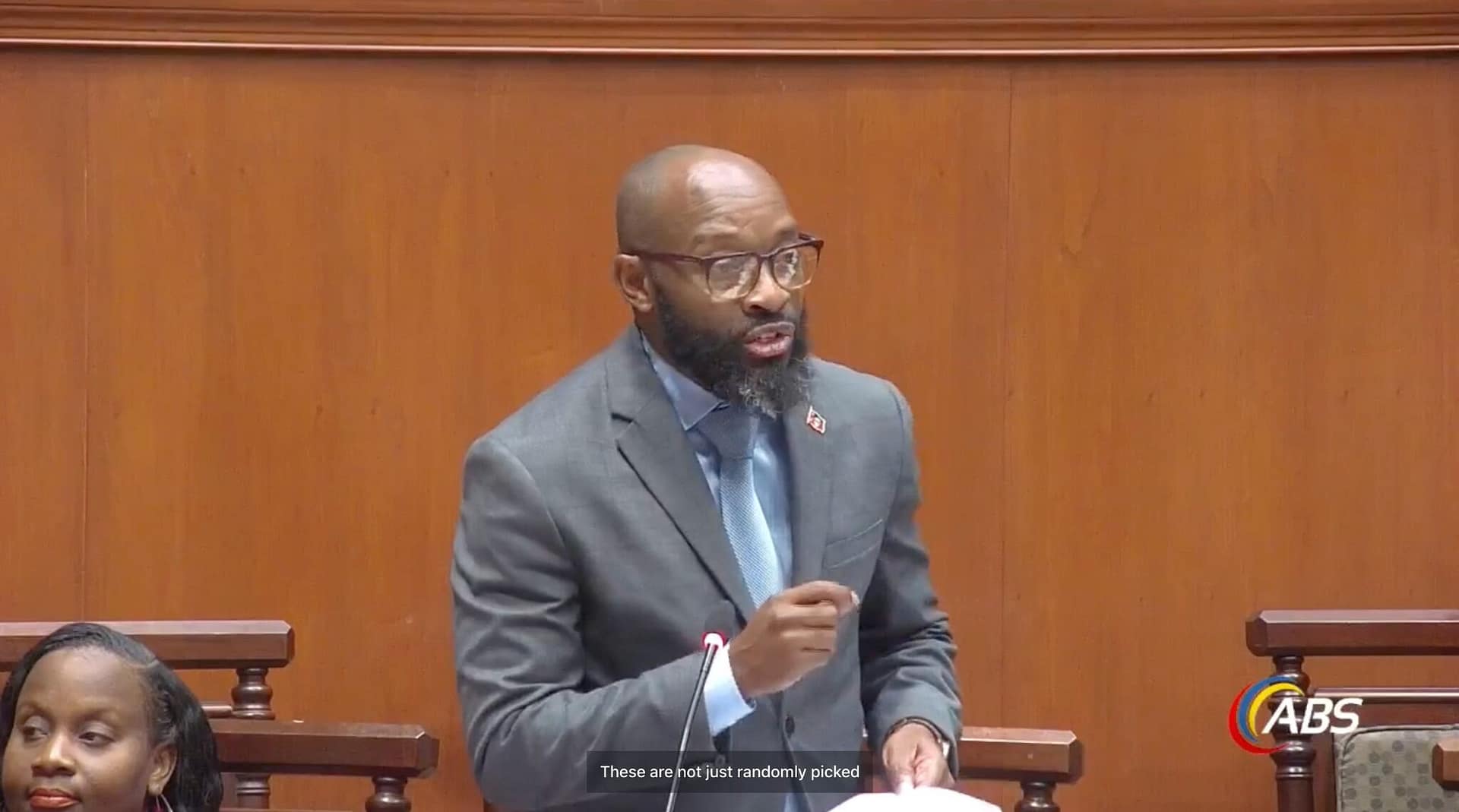
Senator Michael Freeland used his contribution to the Budget Debate in the Senate on Tuesday to mount a detailed defence of the Antigua and Barbuda Festivals Commission Bill 2026, arguing that the legislation is critical to modernising the management of Carnival and positioning it as a stronger economic driver.
Freeland, who identified himself as deputy chair of the existing Festivals Committee, said the bill was not only timely but necessary to correct longstanding structural weaknesses in how festivals are managed and executed.

He framed the legislation as a move to formalise and separate responsibilities between policy direction and operational execution, noting that under the current arrangement, expert advice from the commission had not always been effectively implemented.
“This is why we’re here,” Freeland told the Senate, pointing to past inefficiencies and breakdowns in coordination between the committee and the ministry.
Central to Freeland’s presentation was the argument that the bill introduces stronger governance and financial oversight mechanisms.

He highlighted provisions requiring Cabinet approval for bank accounts, ministerial oversight of signatories, internal financial controls, and mandatory reporting systems — all designed to ensure transparency in how festival funds are managed.
Freeland stressed that these safeguards were necessary given the scale of public spending on festivals and the need for accountability.
He also pointed to requirements for regular reporting and audit access, noting that such mechanisms had been lacking in practice in recent years, despite repeated requests.
A major theme of Freeland’s contribution was the economic value of Antigua and Barbuda’s festivals, particularly Carnival and the One Nation concert.
He described the festivals as “an economic engine,” noting that annual spending of between EC$5 million and EC$7 million circulates through the local economy, benefiting service providers, creatives, and small businesses.
Freeland argued that the goal is not merely to fund events but to build a model that recovers a significant portion of its costs through improved marketing, branding, and revenue streams.
“We want it to be self-sufficient,” he said, suggesting that achieving 70 to 80 percent cost recovery would mark a major improvement in sustainability.
Freeland placed the bill within a broader regional context, warning that Antigua and Barbuda must actively compete with other Caribbean destinations such as St. Lucia and St. Kitts, which have invested heavily in festival branding and production quality.
He pointed to initiatives already undertaken by the commission, including music production workshops aimed at improving local talent and raising the standard of the national product.
“We are not competing against Antigua — we are competing against the rest of the world,” he said, underscoring the need for continuous improvement.
The senator also emphasised the importance of intellectual property and branding provisions in the bill, describing them as untapped revenue opportunities.
He argued that properly managing festival branding could unlock additional income streams through merchandising, sponsorship, and international promotion — areas he said require a formal legal structure to be fully realised.
Freeland strongly defended the current Festivals Committee, stating that its members were selected based on expertise in areas such as event management, marketing, and entertainment.
He credited the committee’s work over the past three years with driving improvements in Carnival and the One Nation event, including growth in scale, quality, and international appeal.
According to Freeland, these gains demonstrate that the model works — but now requires legislative backing to operate more effectively and independently.
Addressing criticism from opposition senators about consultation and timing, Freeland rejected the notion that the bill was rushed, noting that similar legislation had already been debated in the Lower House.
He argued that the focus should be on execution rather than prolonged consultation, warning that delays could hinder Antigua and Barbuda’s ability to keep pace with regional competitors.
“How much consultation can you want?” he asked, suggesting that excessive deliberation risks stagnation.
Freeland described the bill as part of a broader transition to a “new era” for Antigua and Barbuda’s cultural industries.
He said the legislation would provide the institutional framework needed to expand the country’s festival product, improve efficiency, and maximise economic returns.
“This bill is one step to leveling up,” he told the Senate, urging support for its passage.
Advertise with the mоѕt vіѕіtеd nеwѕ ѕіtе іn Antigua!
We offer fully customizable and flexible digital marketing packages.
Contact us at [email protected]

Related News
Historic Catholic School to Become National Art Gallery
Dominica Suspends Processing of Citizenship Applications from Iranian Nationals
LISTEN: Wickham advises Pringle to offer his resignation as leader of the United Progressi...