COMMENTARY: The Return of Textbooks
 11 March 2026





The Return of Textbooks– by Derrick Nicholas

I recently wrote an article entitled ‘Gadgets Creating More Problems in Education’. In it, I made the point that technology through the steady introduction of electronic devices was threatening to erode the gains that traditional learning had brought.
The article went on to make the point that dependence on electronic devices have led to students’ inability to develop their critical thinking skills. Simple foundational tasks now require an electronic device of one kind or another.

Compounding the problem even further, is the Caribbean Examinations Council’s (CXC) sanctioning the ‘limited use’ of Artificial Intelligence (AI) in the preparation of candidates’ school-based assessments (SBAs).

We in this region seem to be quickly heading down a slippery slope from which we may never recover. Meanwhile in Denmark they have taken the bold decision to go in the opposite direction. The government has banned cellphones in classrooms, as well as other electronic devices. They are being replaced by traditional textbooks and students’ God given ability to think independent of another human being.
The decision to return to traditional textbooks instead of tablets and other digital devices was based on the fact that, over a period of one decade it was observed that students have trouble concentrating. Additionally, it was found that most students, instead of focusing on their classwork would be watching a video or worse.

In Denmark, computers are now used sparingly and ALWAYS under supervision. The data suggest that Danish teens spend an average of five hours per day on their electronic devices, and their mental health has worsened according to the Children’s Wellbeing Commission.

Textbooks have long been the cornerstone of educational resources, providing structured and comprehensive content that supports learning. Textbooks offer a coherent flow of information, guiding students through complex topics in a systematic manner. This helps students build upon their knowledge incrementally, reinforcing concepts. For example, mathematics textbooks often introduce fundamental concepts before advancing to more complex theories. This enable students to develop a strong foundation before tackling more challenging problems.

Textbooks provide detailed explanations, examples and exercises that promote critical thinking and problem-solving skills. Textbooks serve as valuable tools for long-term retention of information. Studies have shown that physical textbooks can enhance learning by reducing distractions that often accompany electronic devices.
Harvard University professor, Steven Pinker agrees with this assertion. He admits: “students do read less…they spend more time on extracurricular activities than on classwork.” Professor Pinker agrees with something that I have been saying for a long time “taking notes leads to better memory than using a screen.” He cites the principle of cognitive psychology: “when you have to think about something, you have got to process its meaning, when it’s not just a bunch of words, then you actually remember better.”
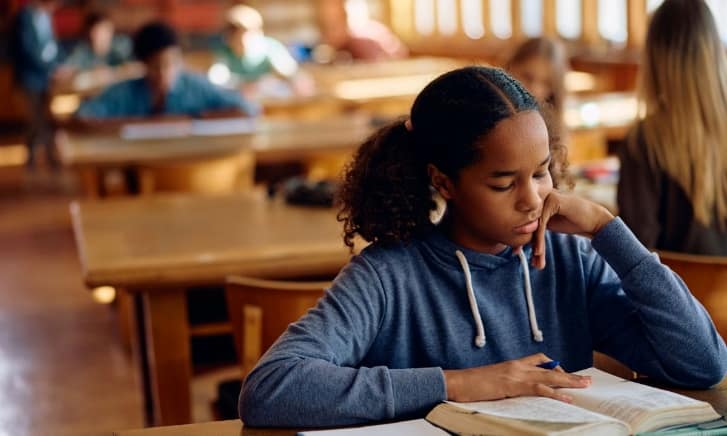
If we are to overcome the other challenges in education, we must find a way to make students read more. One sure way of achieving this goal, is by getting our students to read from actual textbooks, instead of an online version which is placed on Google Classroom. The tactile experience of flipping through pages can aid in memory retention, as students are more likely to engage with the material actively.
Antigua and Barbuda and indeed the rest of the OECS, need to go in the direction where the evidence points – not backwards. Our students deserve no less.
Advertise with the mоѕt vіѕіtеd nеwѕ ѕіtе іn Antigua!
We offer fully customizable and flexible digital marketing packages.
Contact us at [email protected]

Related News

APUA Addresses Industrial Action by Employees Covered Under AT&LU Collective Agreement

Turner Points to Stronger Laws and Special Court in Protecting Women and Girls
UWI Launches 2026 Council Meetings, Showcasing Year-in-Review Achievements and Strategic P...