Venezuela receives more than 1,500 amnesty requests under new law
 21 February 2026

More than 1,5000 political prisoners in Venezuela have applied for amnesty under a new law that came into effect just a few days ago, according to the head of the country’s legislature.
“A total of 1,557 cases are being addressed immediately, and hundreds of people deprived of their freedom are already being released under the amnesty law”, National Assembly chief Jorge Rodriguez told a news conference on Saturday.
- list 1 of 3Trump says planning to ‘make visit’ to Venezuela following Maduro abduction
- list 2 of 3Venezuela’s Rodriguez, Colombia’s Petro say they will meet ‘soon’
- list 3 of 3IMF warns Venezuela’s economy and humanitarian situation is ‘quite fragile’
end of list
Rodriguez’s announcement comes two days after the country’s legislature unanimously adopted a landmark amnesty law.
Amnesty is not automatic under the law: petitioners must ask the court handling their cases.
On Friday, the lawmaker overseeing the amnesty process, Jorge Arreaza, announced that prosecutors had asked courts to free 379 prisoners. They include opposition members, activists, human rights defenders, journalists and many others detained for months or even years.
So far, 80 prisoners have been freed, Rodriguez told the AFP news agency on Saturday. All of those released had been detained in the capital, Caracas, he said, without offering further details.
Further releases could be granted within 15 days, said Arreaza.
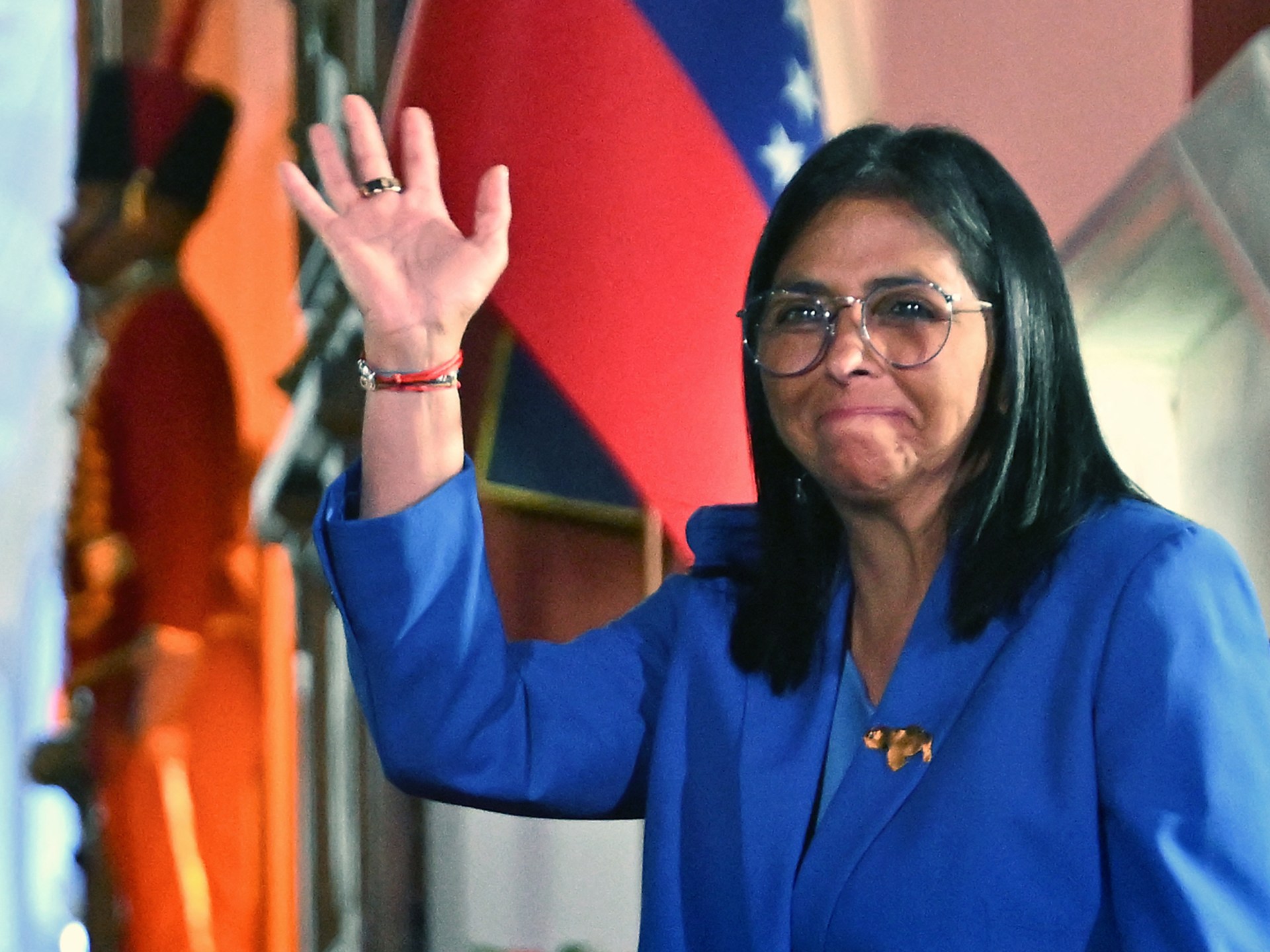
Venezuela’s interim president, Delcy Rodriguez, the sister of the top lawmaker, pushed for the United States-backed legislation after she rose to power following the US’s abduction of leftist leader Nicolas Maduro during a military raid on January 3.
The legislation’s approval marked a reversal for Venezuelan authorities, who have for decades denied holding political prisoners and say those jailed have committed crimes.
Advertisement
During its signing, Rodriguez said the law showed that the country’s political leaders were “letting go of a little intolerance and opening new avenues for politics in Venezuela”.
However, opposition figures have criticised the new legislation, which appears to include carve-outs for some offences previously used by authorities to target Maduro’s political opponents.
Human rights organisations are also calling for the law to be applied to all prisoners held for political reasons, even if they are not listed among the beneficiaries.
“It is discriminatory and unconstitutional to exclude imprisoned military personnel and persecuted political figures,” Alfredo Romero, president of rights group Foro Penal, said on X Saturday. Without this, “there can be no talk of national coexistence”.
The law explicitly does not apply to those prosecuted for “promoting” or “facilitating… armed or forceful actions” against Venezuela’s sovereignty by foreign actors.
Delcy Rodriguez has levelled such accusations against opposition leader and Nobel peace laureate Maria Corina Machado, who hopes, at some point, to return to Venezuela from the US.
Opposition politician Juan Pablo Guanipa, a close ally of Machado, had a house arrest order against him lifted, his brother, lawmaker Tomas Guanipa, told the Reuters news agency late on Thursday.
The law also excludes members of the security forces convicted of “terrorism”-related activities.
But the amnesty extends to 11,000 political prisoners who, over nearly three decades, were paroled or placed under house arrest.
“The law provides for those substitute measures to be lifted so that these people can enjoy full freedom”, Rodriguez told reporters.
Outside a national police facility in Caracas known as Zone 7, relatives – some of whom have been on site for weeks – waited patiently.
“Let’s hope it’s true,” Genesis Rojas told AFP.
A group of relatives who have been camped out for days chanted: “We want to go home!”
Hundreds have already been granted conditional release by Rodriguez’s government since the deadly US raid that resulted in Maduro’s capture.
Maduro and his wife are in US custody awaiting trial. He has pleaded not guilty to drug trafficking charges and declared that he was a “prisoner of war.”
Related News
Jesse Jackson helped empower US Arabs and raise Palestinian cause

At least 21 dead in ferry sinking in northern Sudan’s River Nile State
A pardon for a price? How Donald Trump has reimagined presidential clemency