Strike over labour reforms brings Argentina’s capital to a near-standstill
 19 February 2026
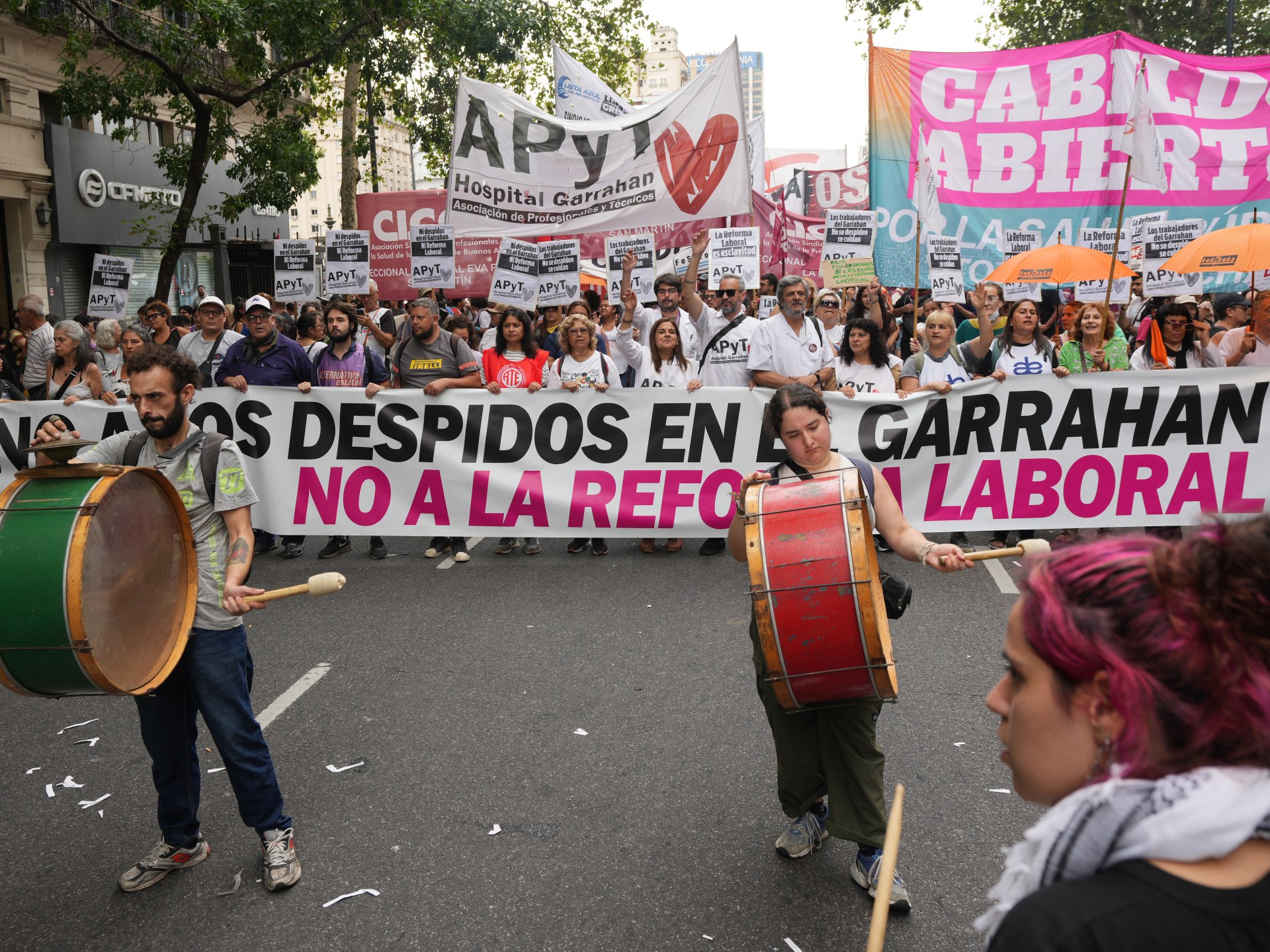

A strike has ground much of Argentina’s capital Buenos Aires to a halt, as businesses close and demonstrators take to the streets to protest against President Javier Milei’s proposed labour reforms.
Thursday’s 24-hour general strike was the fourth of Milei’s term as president, though smaller strikes have also been a regular occurrence since he took office in 2023.
- list 1 of 3Can Trump save Argentina’s crisis-stricken economy as he hopes?
- list 2 of 3Milei vetoes pension, disability spending increases as Argentina feels cuts
- list 3 of 3Protesters clash with police over bid to restrict Argentina’s labour rights
end of list
As a result of the protest, subways were shuttered in Buenos Aires. Fewer bus lines were running. And Aerolineas Argentinas, the state airline, anticipated cancelling 255 flights, at a loss of $300m. Even banks and schools were closed in solidarity with the strike.
One of Argentina’s largest unions, the General Confederation of Labor (CGT), called on citizens to show their opposition to the labour reform “in the streets, in Congress, in the courts and in every workplace”.
“If they attack workers’ rights, they attack national industry and the future of the country,” the union wrote in a social media post. “Rights are not negotiable.”
The general strike coincides with Argentina’s Chamber of Deputies debating the labour reforms on Thursday.

Milei, a libertarian politician, had campaigned on slashing regulations that he felt inhibited Argentina’s economy, famously wielding a chainsaw at rallies to illustrate his hardline approach.
His party, the right-wing La Libertad Avanza, has pushed a package of labour reforms that critics argue would weaken worker rights, reduce the number of jobs available, and set back the quality of life in the country.
Advertisement
The labour reform bill includes provisions to make it easier for companies to fire employees, as well as to reduce severance pay.
It would also lengthen the standard workday from eight hours to 12, and the right to strike would be curtailed, in part through an expansion in the definition of what constitutes essential work.
The Milei administration has argued that the measures are necessary to attract foreign investment and increase profitability by doing away with cumbersome labour restrictions.
Argentina’s ailing economy has long been a point of tension in Argentina, and at the time of Milei’s election, inflation had crested past 200 percent.
Milei, however, has the backing of United States President Donald Trump, a fellow right-wing leader whom he was visiting in Washington, DC, on Thursday for an inaugural gathering of the Board of Peace.
Before Argentina’s midterms last October, Trump pledged $20bn in a currency swap to the country — which he predicated on positive election results for La Libertad Avanza.
Milei’s coalition ultimately triumphed, earning more than 40 percent of the popular vote, more than any other party.
While his labour reforms are expected to face stiff opposition in the Chamber of Deputies, analysts believe they are projected to pass.
Already, a version of the bill passed Argentina’s Senate. If the Chamber of Deputies amends the legislation, as is expected, the reforms would have to pass back to the Senate for a final vote.
The General Confederation of Labor, however, argued that the general strike sent an important message to lawmakers.
“The strike was clear: There is widespread rejection of a labor flexibility law that we consider regressive and detrimental to the Argentine working class,” it wrote.
The union added that it would stand firm “against any attempt to roll back hard-won rights”.
Related News
Muslim countries slam Israel for ‘illegal annexation’ push in West Bank
Republicans condemn racist Trump video post depicting Obamas as apes
AU calls for end to ‘extermination’ of Palestinians, decries African wars