Gaza’s Rafah crossing with Egypt to open next week: Palestinian official
 22 January 2026
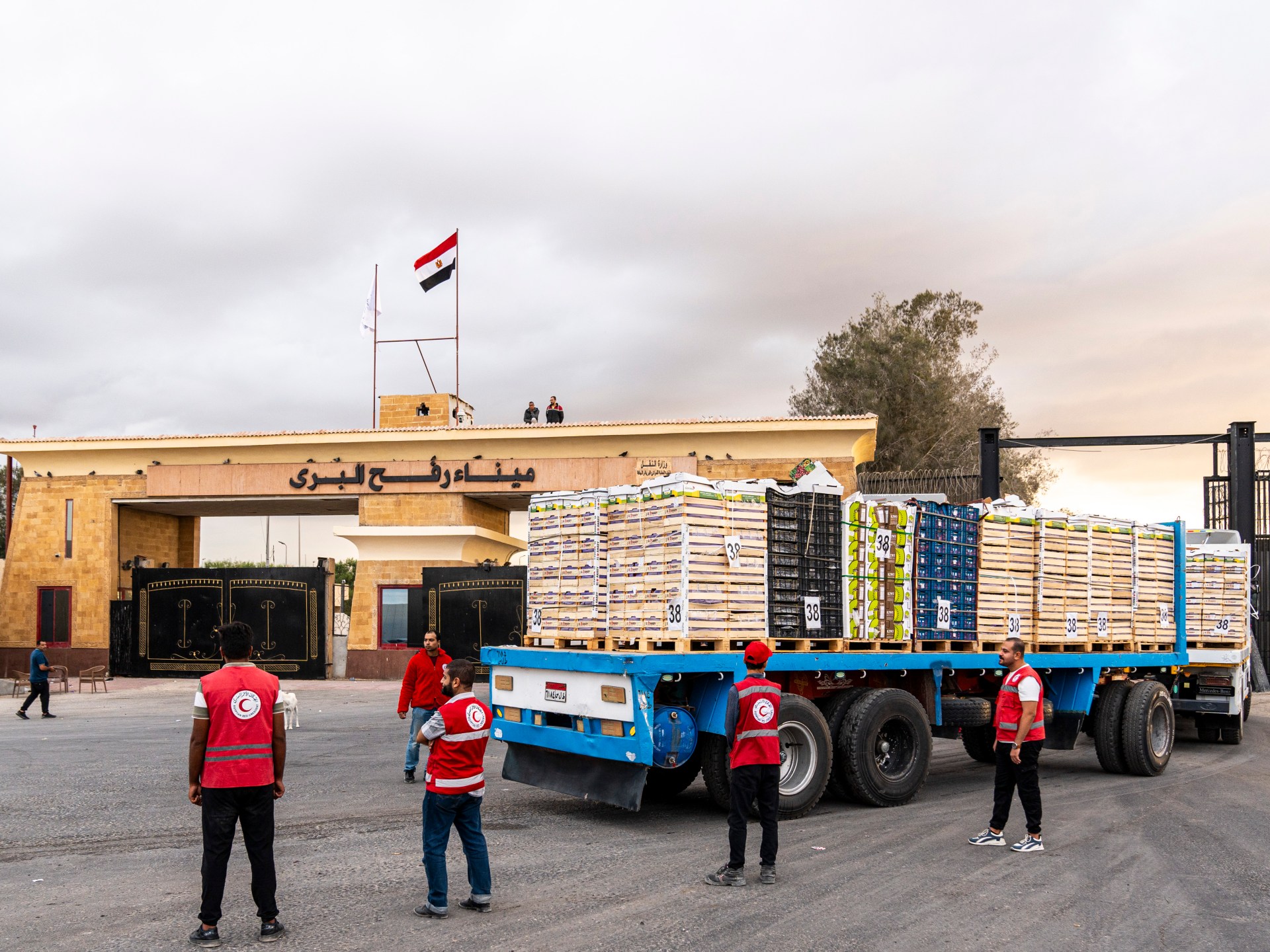

Gaza’s border crossing with Egypt will reopen next week, the Palestinian technocrat leader backed by Washington to administer the enclave has announced, after being almost completely shut during Israel’s genocidal war.
Ali Shaath made the announcement on Thursday by videolink during an event hosted by United States President Donald Trump at the World Economic Forum in Davos, Switzerland.
- list 1 of 3‘The end of the world as we know it’: Is the rules-based order finished?
- list 2 of 3Qatar, Saudi Arabia among nine countries joining Trump’s ‘board of peace’
- list 3 of 3Israeli minister approves gun licences for 18 illegal West Bank settlements
end of list
“I am pleased to announce the Rafah crossing will open next week in both directions. For Palestinians in Gaza, Rafah is more than a gate. It is a lifeline and symbol of opportunity,” Shaath said.
“Opening Rafah signals that Gaza is no longer closed to the future and to the war,” he added.
There was no immediate comment from Israel, which has controlled the Rafah crossing since 2024. Since the October 10 ceasefire took effect under Trump’s plan, Israeli authorities have stalled on reopening it to allow desperately needed aid to enter and people requiring medical treatment to leave.
The ceasefire deal left Israel in control of more than half of Gaza beyond what is known as the yellow line, including the area that abuts the border crossing.
If implemented, the reopening of the Rafah crossing would mark a shift from an earlier Israeli policy that stated the crossing would only open “exclusively for the exit of residents from the Gaza Strip to Egypt”.
The White House announced on Friday the 15 members of the all-Palestinian technocratic committee that will oversee the transition of power in Gaza. Shaath, a former Palestinian Authority (PA) deputy minister, was designated as the general commissioner of the body, known as the National Committee for the Administration of Gaza (NCAG).
Advertisement
In a statement following his appointment, Shaath said the committee would “embrace peace, through which we strive to secure the path to true Palestinian rights and self determination”.
Senior Hamas leaders have welcomed the formation of the committee as a “step in the right direction” that is “crucial for consolidating the ceasefire”.
Some Palestinians, however, worry that the NCAG’s technocratic approach may circumvent key political questions, such as the creation of a future Palestinian state and an end to Israel’s decades-long occupation of the Palestinian territory, in favour of a focus on economic development and outside investment opportunities.
As part of the second phase of the ceasefire deal, the technocratic committee would operate under the overall supervision of a so-called “Board of Peace”, to be chaired by Trump.
The US leader formally launched the body for resolving international conflicts – with a $1bn price tag for permanent membership – in Davos on Thursday.
The board was originally conceived to oversee the rebuilding of Gaza but a draft of the charter does not appear to limit its role to the Palestinian territory.
Trump has been critical of the United Nations and has previously hinted at the possibility that the board could replace the international organisation founded in 1945.
Related News
Renewables muscle fossil fuels out of EU electricity market, says research
Trump tells Norway PM not bound to ‘think purely of peace’ after Nobel snub
Syrian army takes control of east Aleppo towns as Kurdish fighters withdraw